Berkeley must take responsibility for its streets: Op-ed
"Berkeley can set clear rules for public spaces," former People's Park advocate Nicholas Alexander argues in today's guest essay.
Editor's Note: TBS publishes guest essays from community members on issues of concern. Today's piece was written by Nicholas Alexander, a former YEAH kid and UC Berkeley student, and an erstwhile defender of People's Park.
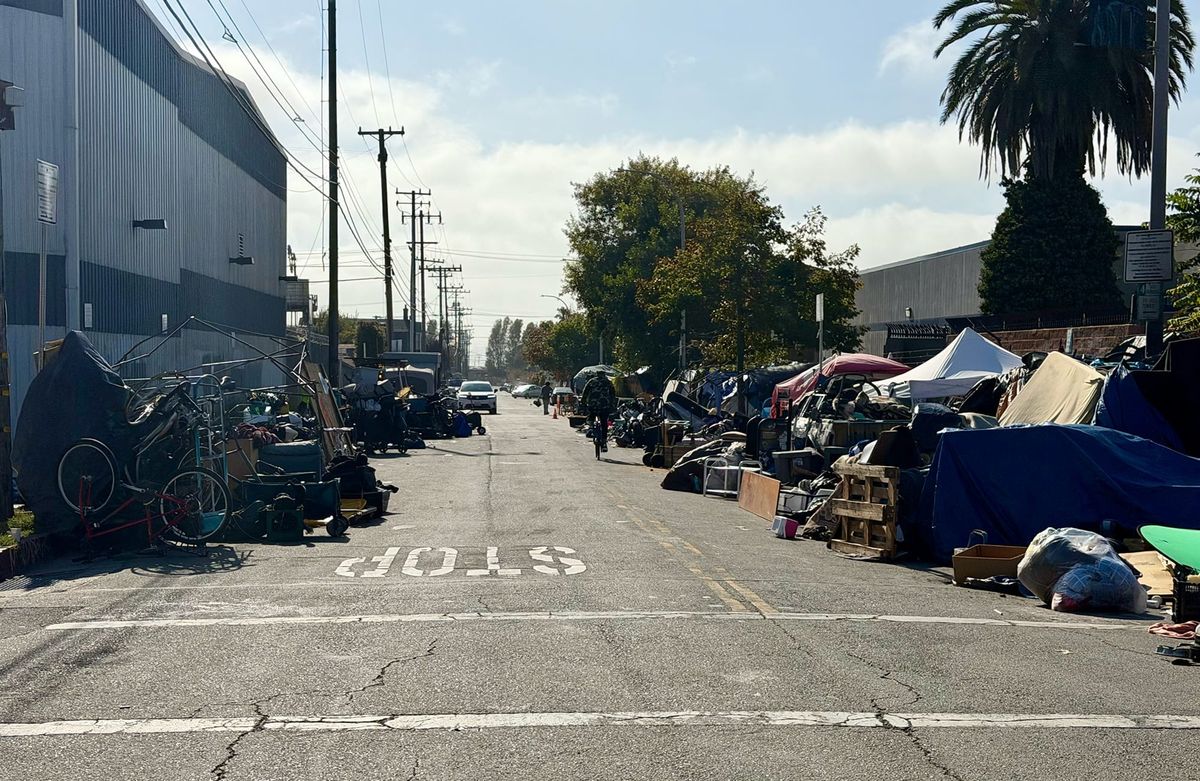
Berkeley should stop treating permanent public encampments as an inevitable feature of homelessness. I know the distinction firsthand: I lived on Berkeley's streets, attended UC Berkeley, and spent three years running the kitchen in the People's Park encampment.
I knew a street community where people survived with backpacks, sleeping bags, and tarps rather than establishing semi-permanent camps on public land.
Of course, not everyone faces the same circumstances or can manage without assistance, but homelessness and permanent tent encampments are not synonymous. Berkeley should question how these encampments became normalized and establish clear, consistently enforced rules for public spaces.
A common objection I hear is that a camping ban criminalizes homelessness. But prohibiting public camping is not the same as criminalizing someone for being homeless, and Berkeley's own history illustrates the distinction.
Generations of unhoused people lived here without setting up tents, in part because they understood that doing so could bring intervention from BPD or UCPD.
In People's Park, as elsewhere, BPD and UCPD made the expectation clear: Take down the tent or risk a citation. That enforcement helped establish boundaries around how public spaces could be used.
I believe Berkeley needs to restore that clarity — not to punish people for their circumstances, but to recognize that living without a home does not eliminate the need for shared rules and personal accountability.
Any policy must operate within the law and account for individual circumstances, but the absence of a permanent home cannot mean that public spaces become permanent camps without consequence.
Moreover, by perpetuating the misconception that a camping ban criminalizes homelessness, we risk depriving people experiencing homelessness of an important part of navigating life on the streets: learning how to adapt, take responsibility for their circumstances and figure out where to go next.
When I was homeless, I never imagined sitting around complaining that I couldn't figure things out. Nor did most of the people I knew.
We were survivors. Drop us into any city in America with nothing, and by the end of the day we'd find clothes, a backpack, a tarp, a sleeping bag, food for the day and a place to find the next free meal.
That resourcefulness was part of how we survived. I worry that today's approach, however well-intentioned, sometimes has the opposite effect.
In seeking to recognize the very real disadvantages facing people experiencing homelessness, some advocates risk infantilizing the community by treating its members as so marginalized or impaired that expectations of personal responsibility and accountability no longer apply.
Compassion should not mean abandoning those expectations. In fact, doing so may undermine the very agency people need to move forward.
But personal responsibility is only part of the equation. We also need to acknowledge the limits of what Berkeley can reasonably manage on its own.
A substantial portion of the unhoused population here comes from outside Alameda County. I believe Peter Radu cited around 40% during the Ohlone Park encampment meeting, and I suspect the actual number may be higher.
Building more "affordable" housing alone won't solve this problem. Many affordable housing developments reserve only a fraction of their units for people with little or no income, and access to those units may depend on rental subsidies or vouchers.
That leaves supportive housing as a critical option for people who need more intensive assistance. But supportive housing is extraordinarily expensive, and Berkeley has very limited control over who receives those placements; instead, it is the county that chooses who goes into these units, and these people could have been homeless anywhere in Alameda County.
This means Berkeley could continue investing in supportive housing without the ability to prioritize its own unhoused residents. We risk spending local resources on a regional crisis while lacking the authority to determine who those resources ultimately serve.
I am equally concerned when policymakers treat housing itself as a sufficient solution, particularly when they place people with significant mental health and substance use challenges in shared environments without providing adequate staffing, treatment, oversight or accountability.
Housing is essential, but how it's operated matters as much as the number of units available. I saw the consequences of these challenges firsthand when I lived next to the Hope Center.
I witnessed a shooting outside my window, and a friend experienced a separate shooting on the floor where he lived inside the building. There was a sexual assault of a 14-year-old at the Hope Center, drug dealing going on outside and frequent problematic episodes accompanied by police and fire department responses.
These experiences left me questioning whether this model provided residents and their neighbors with the stability and safety supportive housing is supposed to deliver.
These issues also raise serious questions about whether a sanctioned encampment would meaningfully address Berkeley's public camping problem, and whether Berkeley could manage such a space. I remain skeptical that it could.
Even if the city established a designated site, it would likely fill quickly. What happens to everyone who cannot get a place? Where do they go?
If Berkeley becomes known as a place where people can legally camp, it is reasonable to ask whether more people might arrive from outside the city and quickly exceed the site's capacity.
We could find ourselves right back where we started, with a sanctioned encampment alongside the same public camping problem we have today. We would have created another program without resolving the underlying issue of how to manage public spaces or meet the needs of people living outside.
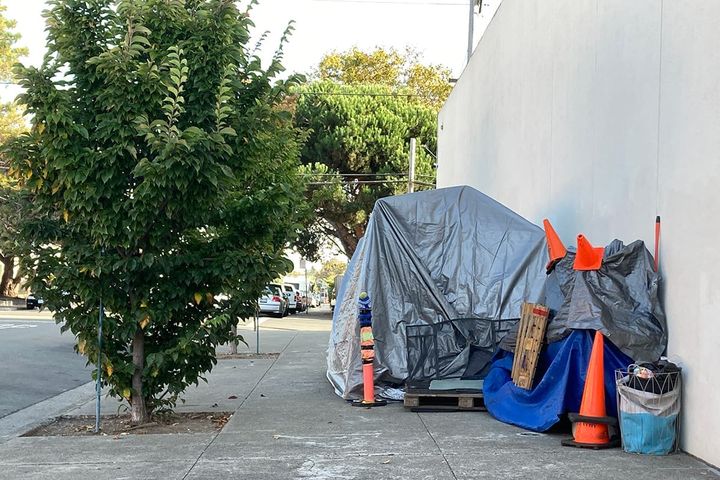
The real irony here is that Berkeley already has restrictions on camping. If you followed Judge Chen's hearings, you would have heard the city attorney repeatedly state that the city prohibits camping on city-owned property and vacant lots. So why, then, are people still living in encampments in front of our homes, on our sidewalks, in our parks and next to our preschools?
If the city already recognizes limits on camping, why does it seem so reluctant to take the next logical step and enforce clear, consistent rules?
After years of watching Berkeley move from a street culture where people often survived with a backpack and a sleeping bag to sprawling encampments that neither housing programs nor outreach alone have resolved, I have little faith that one more program will fix the problem.
A camping ban will not end homelessness, and neither will a sanctioned encampment or an endless expansion of housing that fails to provide the support people need.
Berkeley cannot solve this crisis on its own, but it can set clear rules for public spaces, enforce accountability and ensure compassion for the unhoused doesn't come at the expense of everyone else who calls this city home.
The question is no longer whether Berkeley can solve homelessness overnight. It is whether the city is willing to take responsibility for what happens on its own streets.
The Scanner will periodically publish guest essays from community members on issues of interest or concern. Submit your ideas to TBS.