This law was supposed to force more Californians into mental health treatment. What happened?
A new law was supposed to keep severely mentally ill Californians from falling through the cracks. So far, it’s resulted in few people getting long-term care.
This story was originally published by CalMatters. Sign up for their newsletters.
By Marisa Kendall and Jocelyn Wiener, CalMatters
Californians braced for major upheaval three years ago when Gov. Gavin Newsom signed a law meant to bring people with severe mental illnesses and addictions off the street and into involuntary treatment.
Families who championed the measure hoped it would be the answer to their prayers — a tool that finally would compel their loved ones to receive treatment through conservatorship.
Disability rights advocates who opposed the law warned it would traumatize large numbers of people by forcibly medicating them and removing their rights to make decisions about their own care.
County behavioral health officials worried the legislation would unleash a torrent of new referrals on programs that didn’t have the resources to keep up.
And leaders of already overcrowded hospital emergency rooms and psychiatric facilities braced themselves for a large influx of new patients.
So far, little of that seems to have happened.
In fact, data obtained by CalMatters shows that, in most of the state’s largest counties, the number of conservatorships has barely budged.
“It was not at all as big an impact as we thought it could be,” said Toni Navarro, director of behavioral health for Santa Barbara County, where the number of conservatorships has dropped 1% since the legislation took effect there in July 2025.
Senate Bill 43, signed into law in 2023, broadened a nearly 60-year-old framework known as the Lanterman-Petris-Short Act for determining when someone is so “gravely disabled” that they can no longer care for themselves.
The new law allows more people to qualify for involuntary treatment. “Gravely disabled” used to mean someone could not provide for their basic needs of food, clothing or shelter due to severe mental illness or chronic alcoholism. Now, it also includes people who cannot provide for their safety or medical care, as well as people who are incapacitated due to severe substance use disorder.
The state allowed counties to wait until January of this year to start using the new parameters, and many did. Some experts say in those counties, the real effect of the law won’t be apparent until more time has passed.
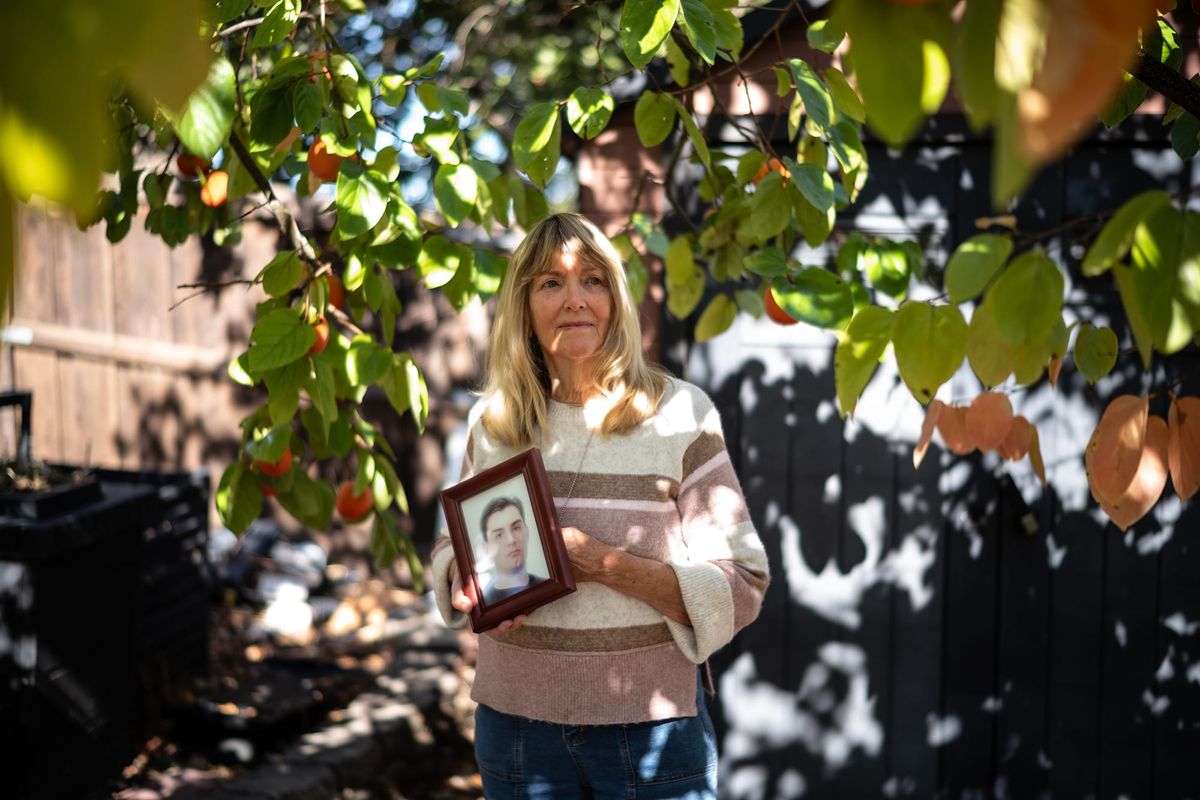
Annis Pereyra, whose son was shot and killed by Walnut Creek police in February, said she believes the new law could have saved his life — if the county had used it to compel him to take an antipsychotic medication that had worked for him in the past.
“His needs were ignored at every turn that happened. Every single turn,” she said. “He wasn’t put on the only medication that saved him from the horrors of his illness.”
To assess how the law is working, CalMatters requested data from the state’s 25 most populous counties comparing the number of people under a one-year mental health conservatorship right before the legislation went into effect with the number under a conservatorship now. The majority of counties that provided data reported that their numbers did not increase significantly.
There could be a number of reasons the numbers haven’t shown a dramatic increase. Some counties reported improving their voluntary mental health services around the same time that the new conservatorship law went into effect. As a result, more people chose care and fewer people were forced into conservatorships — something that’s widely considered a positive outcome.
Another reason could lie in the way the law was written, county behavioral health directors say. It tried to push addiction treatment into the existing mental health conservatorship framework, which isn’t necessarily a good fit.
But even though the new law doesn’t appear to have gotten many more people off the street and into conservatorships, health officials say it’s still accomplished good things, such as facilitating better addiction treatment for people on conservatorships and other involuntary psychiatric holds who have both a mental illness and an addiction.
“It has given us quite a lot of positive things that I think that no one is looking at,” said Veronica Kelley, director of the Orange County Health Care Agency. “But I think the end that everyone’s interested in: Did we get everyone now into (a Lanterman-Petris-Short) conservatorship? No, that hasn’t happened.”
How we obtained data for this story
CalMatters requested conservatorship data from the state’s 25 most populous counties for this story. We asked each county for the number of conservatorships on the day before SB 43 went into effect in their county (start dates range from Jan. 1, 2024 to Jan. 1, 2026) and the current number of conservatorships.
Nineteen counties provided that point-in-time data. For most, the data on “current” conservatorships is from September 2026. Two counties instead provided data from June and one from October.
Her agency has seen a 2% increase in conservatorship cases since January, when the law went into effect in Orange County.
Disability rights advocates, who strongly opposed the law, caution that it's too soon to measure its impact, which they still expect to be significant. Once more facilities are built, said Samuel Jain, a senior policy attorney at Disability Rights California, he and others anticipate seeing a lot more people forced into involuntary treatment,
Former Sen. Susan Talamantes Eggman, a Democrat from Stockton and the author of the legislation, didn’t respond to multiple calls requesting an interview.
Sen. Roger Niello, a Republican from Roseville and one of the legislation's 23 co-authors, worries society’s reluctance to overrule someone’s civil rights and compel treatment is jeopardizing the law’s effectiveness — but he said the jury’s still out because the law is so new.
The other thing standing in the way is money, Niello said.
“First we need funding,” he said. “If we’re not going to have funding, if we’re not going to increase the capacity for treatment, then I’m not sure there’s any (amount) of time that would show success.”
Some family members of people with serious mental illnesses say the law is just the latest in a series of failed promises made by the Newsom administration. A CalMatters investigation of CARE Court, Newsom’s signature effort to use the courts to get people into mental health treatment, found that program has helped fewer people than anticipated and left many families disappointed. A recent bond the governor backed has doled out billions for mental health treatment beds and treatment slots, but CalMatters found all the projects slated to open last year were delayed or canceled.
“It’s scary, the gaps are scary,” said Teresa Pasquini, a long-time mental health advocate whose own son lives with mental illness.
When it comes to the new conservatorship law, the biggest failure Pasquini knows of is the case of her friend Annis Pereyra’s son.
Begging for conservatorship
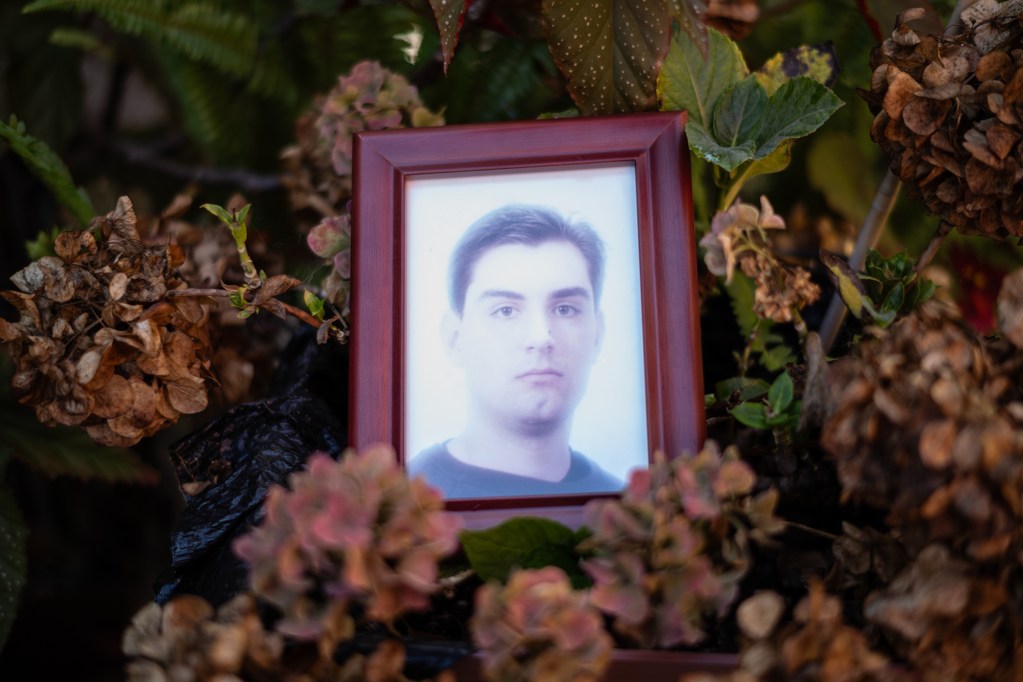
By the time Walnut Creek law enforcement officers shot and killed Joaquin Anthony “Tony” Pereyra while he was in the middle of a mental health crisis last February, his mother, Annis, had been begging Contra Costa County to force him to take medication for months.
Even before the new law took effect in the county, Annis had asked local leaders whether they could use it to compel her son to receive treatment.
Growing up, Tony had been a cheerful, brilliant child. In fifth grade, he started having irrational thoughts. In junior high, he began hearing voices. During his sophomore year, he experienced his first psychotic break and dropped out of high school. He was diagnosed with schizophrenia soon after.
In those early years, the county frequently placed Tony under temporary conservatorships and sent him to locked facilities, his mother said. After trying several other medications without lasting success, he finally landed on clozapine in his early 30s. It transformed him, his mother said. She described 15 good years, during which he was able to hold down a job, live independently and help her with myriad projects around the family home.
Then, in the summer of 2024, Annis had a medical emergency. His mother’s frailty terrified Tony. Now in his 40s, he took himself off clozapine. The voices, long quieted, grew louder.
On March 24, 2025, a distressed Tony appeared at his parents’ home and violently attacked them.
The couple told police they didn’t want to press charges. They just wanted someone to help their son. Tony was placed in locked facilities for several months under a temporary conservatorship, but was released to his apartment without going back on clozapine, his mother said.
The county’s attempt to reach Tony through CARE Court also failed, Annis said. So she turned her focus to the new conservatorship law. Her son was dangerous to himself and others, he wasn’t able to care for himself and he wasn’t able to recognize that he needed medication, his mother said. Surely, she thought, that would make him a candidate for a longer-term conservatorship.
Diane Burgis, the chair of the Contra Costa County board of supervisors, didn’t weigh in on Tony’s case, but said county leaders were aware of the high expectations families had as the new law rolled out and are “so committed to this work.”
“It wasn’t as far-reaching as expected, we kind of saw that coming,” she said. “As someone that has personally experienced the frustrations of trying to help someone that you love get the care you need, the system still has so much that it needs to do to be better.”
What the numbers show
The new law affects a range of involuntary treatment options, from a 72-hour hold (also known as a 5150 hold) to a one-year conservatorship. After a 72-hour hold, if someone is still unable to care for themselves, they can progress through the system and eventually be placed under a conservatorship. Then, a judge orders a conservator to take over their treatment, and they often are placed in a locked psychiatric facility.
Of the 19 counties that provided point-in-time data, 12 reported increases of less than 5% or decreases in their one-year conservatorship case load after SB 43 went into effect. On average, counties saw an increase of less than 6%. The overall number of cases in the counties CalMatters analyzed increased by 4%.
Only three counties said they had used the new law to conserve anyone solely because of a substance use disorder, amounting to a total of six people. Most counties CalMatters received data from aren’t tracking whether people are conserved under the law’s other expanded criteria.
Some counties saw larger increases in involuntary 72-hour psychiatric holds. In San Mateo County, for example, the number of people on those short-term holds increased by more than a quarter in the six months after the new conservatorship law went into effect, compared to the six months before. Los Angeles County wrote more than 500 72-hour holds for severe substance use disorder – as newly allowed by the recent legislation – between January and June 2026.
But those short-term holds don’t always lead to the type of lasting treatment patients need. Instead, people placed on 5150 holds often cycle repeatedly between the hospital and the street.

Even in counties that are seeing more conservatorship cases, it’s difficult to draw a direct connection between the increased case load and the new law. In San Luis Obispo County, which began using the new law as soon as it could (in January 2024), the number of people on one-year conservatorships has increased by more than a quarter — but none of those cases were for substance use alone, and the county isn’t tracking cases under the law’s other expanded parameters. The same is true in Tulare and Placer counties, which each saw conservatorship cases increase by nearly 17%.
San Francisco, however, does attribute its 7% increase in conservatorship cases at least in part to the new law. It strengthened the city’s ability to help those who are most at risk of fatal overdoses and who are repeatedly harming themselves, the San Francisco Human Services Agency said in a statement.
When it began using the new law at the start of this year, Sonoma County braced for an expected 20 or 30 more cases per year – an influx that would have taxed the mid-sized county’s already scarce resources, said Jasdeep Singh, the county’s chief deputy public administrator-guardian-conservator.
Instead, cases are down slightly.
When the county recently tried to get someone into a conservatorship using the new law, by arguing that the person’s personal safety was at risk, the court rejected the petition, said Singh. It was frustrating for staff who thought the person needed more time in treatment.
“Just going off of that, what feels like a recent experience, it wasn’t helpful,” he said.
Could it have saved him?
Contra Costa County, where Tony Pereyra lived, has seen one-year conservatorships increase by 13% since the new conservatorship law went into effect, more than many other counties. In actual numbers, it’s gone from 98 cases to 111.
Contra Costa’s behavioral health department declined to make anyone available for an interview.
Early on the morning of Feb. 26, less than two months after the new law rolled out in Contra Costa County, Walnut Creek police responded to a report of a man in dark clothing shining a flashlight into people’s cars and homes. They found Tony Pereyra around the corner from his parents’ house. Body-worn camera footage released by the department shows officers issuing multiple commands for Tony to show his hands and drop to the ground. “I ain’t messing with you, man,” one officer shouted. After shooting Tony, the officers discovered he had been holding a pellet gun. He died at the scene.
After her son’s death, Annis Pereyra went to the apartment where he lived. Garbage was piled up to the railings on his back patio. Tony had ripped up the flooring, dismantled the plumbing, pulled out the light switches, and used the racks from the refrigerator to block off the kitchen cabinets.
She believes he was trying to make the voices stop. How, she wonders, did the county not consider him sick enough to use the new law to force him to restart clozapine?
A square peg in a round hole
Why isn’t the new law getting more people into conservatorships?
It turns out addiction, one of the main expanded criteria of the legislation, doesn’t fit as neatly into the conservatorship system as lawmakers hoped it would, said Kelley of Orange County. The first step toward involuntary care is a 72-hour psychiatric hold. If someone is held because of drug use, they typically regain the ability to care for themselves once the drugs wear off within that 72 hours. Then, they no longer qualify for a conservatorship.
In addition, many counties have little appetite for using lengthy involuntary holds to treat substance use. Research suggests that forcing people into addiction treatment doesn’t work, and can instead reduce people’s drug tolerance and make them more likely to overdose once they go back to using, said Michelle Cabrera, executive director of the County Behavioral Health Directors Association, citing research out of Massachusetts.
“We can’t ignore that there isn’t a tremendous amount of evidence to support this treatment model,” she said.

But the law has done some good work, say the people involved in its implementation. Including substance use on the list of criteria for a mental health conservatorship has forced counties’ mental health and addiction treatment departments — which are often separate — to collaborate more. That’s been helpful, Kelley said, as about 60% of the patients with a serious mental illness that her Orange County department sees also have a substance use disorder. The mental health facilities that serve people in conservatorships are now better equipped to also treat their addictions, she said.
“We’ve been trying to merge those systems, because it’s the same brain, for decades,” Kelley said.
A vigil for Tony
Just before 9 a.m. on a Tuesday in early October, a group of 40 people formed a circle near the steps leading up to the Contra Costa County Board of Supervisors chambers in downtown Martinez. The group dedicated its vigil for the National Mental Health Day of Prayer to the memory of Tony Pereyra.
“I’m tired of getting the phone calls that police have shot and killed another person with mental illness,” Gigi Crowder, chief executive of the local NAMI affiliate, told the group. Crowder is among those who believe the new conservatorship law could have been invoked to save Tony’s life.
“This was a totally avoidable death,” she said.

Burgis, the board chair, emerged from the chambers and stood quietly off to one side. She is intimately familiar with the heartache of having loved ones with mental illness.
“Sometimes, sitting up at the dais, people can get the impression that we don’t care,” she told CalMatters later. “I just wanted to be with those folks because I understand that experience. I share their frustrations. I understand there is a lot more work that needs to be done.”
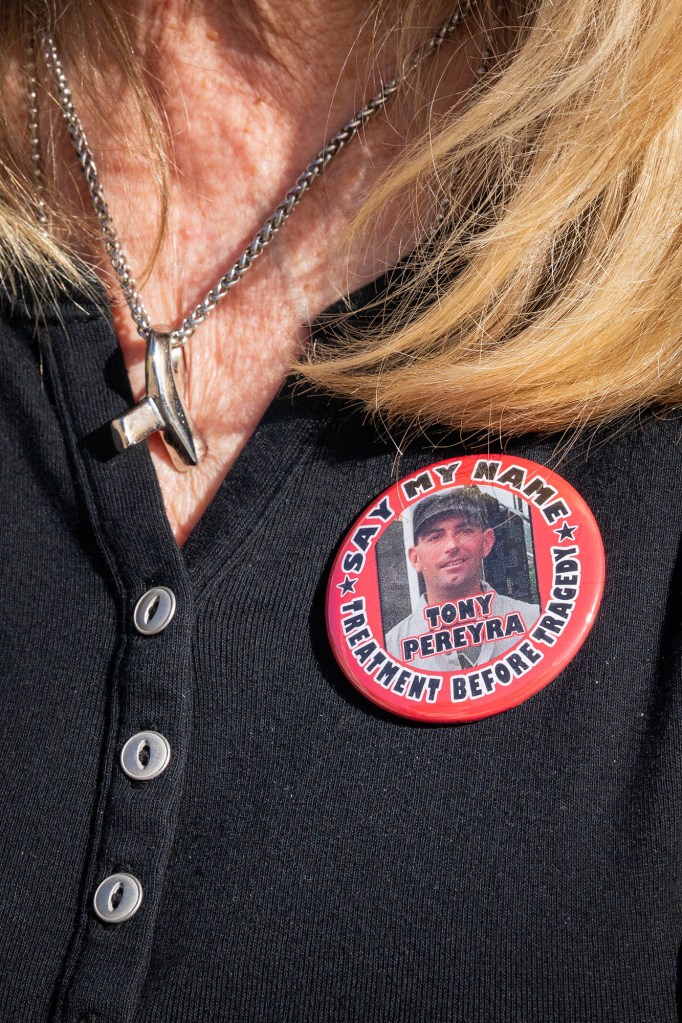
Someone led the group in a hymn, and then many of the participants filed inside to attend the board of supervisors’ meeting. During public comment, Annis Pereyra approached the microphone. She wore a button with Tony’s picture pinned to her lapel and clutched a double-spaced printout of her message to the board. She described to them the bullet tearing through her son’s chest and the cold asphalt where he died.
“Treatment before tragedy works,” she said.
Her two minutes were up before she could read the final line she had written on the paper: “Implement SB 43 to the fullest extent possible to save others.”
This article was originally published on CalMatters and was republished under the Creative Commons Attribution-NonCommercial-NoDerivatives license.