City must hit the streets to find homeless tent sites, judge says
"Give me a solution. How do we avert chaos?" U.S. District Judge Edward Chen told a city attorney on Thursday.
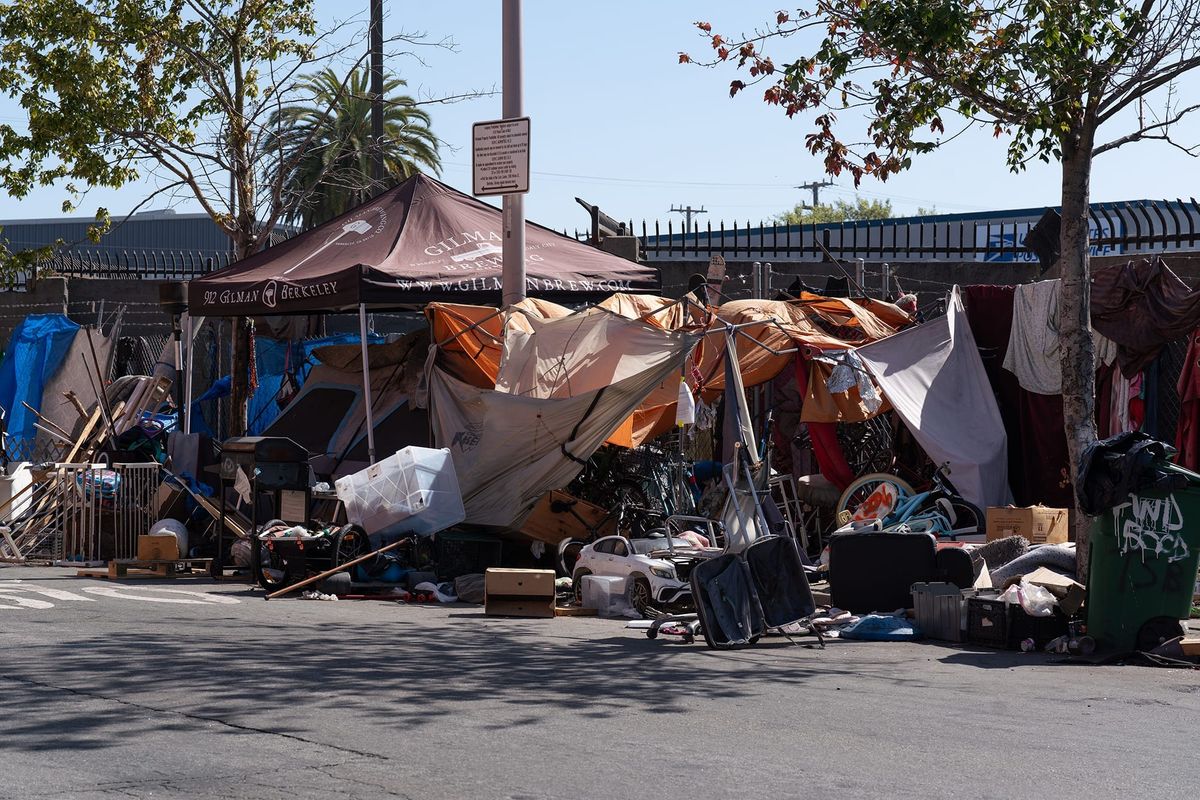
A federal judge has ordered the city and Berkeley Homeless Union to spend a day walking local streets together to find tent sites for up to 23 people before their encampment is cleared.
The ruling comes as Berkeley prepares yet again to clear the Harrison Street Corridor encampment, at Eighth and Harrison streets, after declaring it a fire hazard and public nuisance in recent weeks.
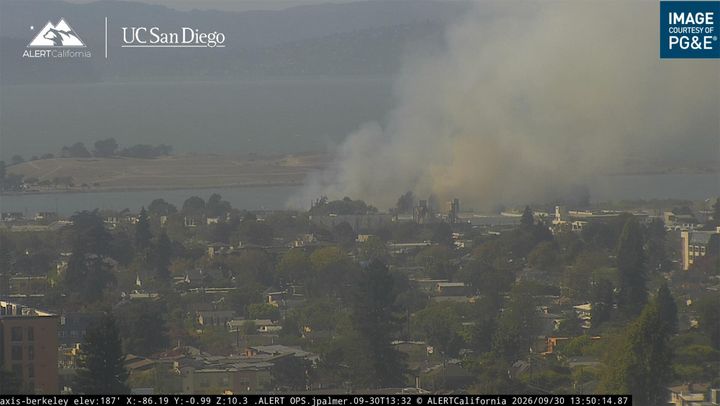
Last weekend, records show, authorities put out an arson fire at the encampment, the latest of dozens of blazes reported in the area this year.
A camp resident set the fire in anger when another camper stole his scooter, according to court papers. He's now facing arson and domestic violence charges, records show.
He's also part of the group represented by Berkeley Homeless Union (BHU), which sued the city last year to ensure it does enough to help disabled residents who are forced to leave the Harrison Street Corridor.
In response to that lawsuit, U.S. District Judge Edward Chen ordered the city in April to help disabled residents pack and move, help store their belongings, and provide survival gear, including tents and sleeping bags, that is lost during camp abatement.
 Emilie Raguso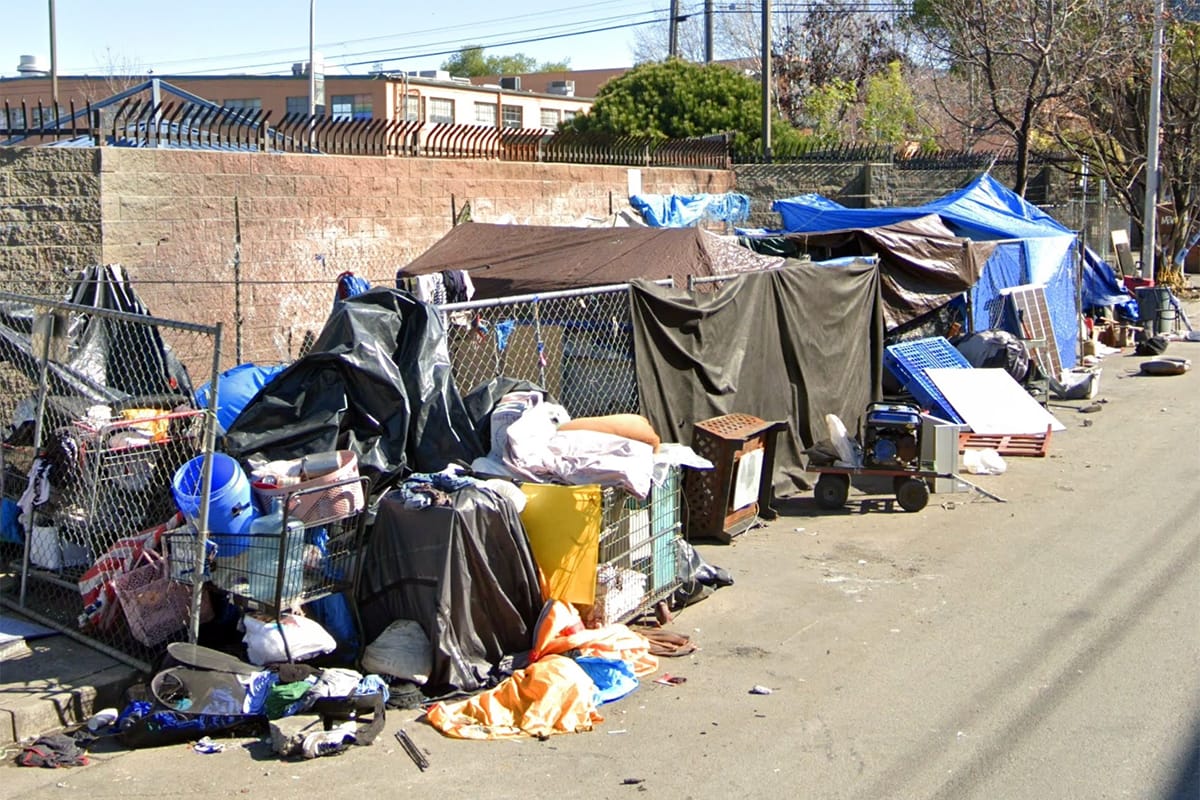
As the months have gone on, the city says, with the cleanup delayed in part by the April requirements, the encampment population has jumped from about 37 to more than 80 people.
Thursday afternoon, the city found itself in court again over its latest closure attempt, with Berkeley Homeless Union seeking a new injunction to block action pending further negotiations.
In Thursday's hearing, Chen denied that request. He said the city can keep working to close the camp — while also doing more to help disabled residents with relocation plans.
(The Scanner viewed the hearing remotely in real time.)
Chen ordered the city to spend a day or two with a BHU rep "in person on the Berkeley streets" to point out 20-25 sites that could be appropriate for its members based on a list of each disabled camper and their required tent size.
"I don't understand the problem," Chen said, in response to pushback from the city. " It seems like that's a small investment."
Berkeley: "We do not have a list of locations"
At times, Chen seemed to want the city to go out with a large group of disabled campers in addition to a BHU rep.
The city said that was "not possible."
Nubyaan Scott, a deputy attorney for the city, described how the BHU president had driven around for three hours trying to find a good site for one of her members — and come up empty-handed.
"The city is in no better position," Scott said. "We do not have a map. We do not have a list of locations."
Katrina Eiland, assistant city attorney, said the new requirement would be an "incredible burden" on staff.
"What I hear you saying is you would want us to drive around with the individuals and help them locate a spot," Eiland said. Chen did not dispute her characterization.
She said this would "create an entirely new program" for Berkeley, which is not required under the Americans with Disabilities Act (ADA). The act requires cities to make accommodations for disabled individuals to existing services, not create or add programs from scratch.
"It's not a service that the city provides and it would be a fundamental alteration," she said, adding that Berkeley "would strongly object" to any expansion of Chen's prior orders.
Judge: "How do we avert chaos?"
The judge became visibly upset at the city's resistance.
"You'd rather wait until D-Day comes, and everything explodes, and you got 79 people out there. That doesn't make any sense," Chen said. "It seems like you're just saying nothing. Give me a solution. How do we avert chaos?"
"I've given you one plan. You give me another plan," Chen continued. "If you don't like it, give me a plan right now."
The city said Harrison encampment residents are free to move to other sites at any point, and that they can request city review of their new sites after the fact.
"They will have the tents, they will have the replacement sleeping bags, they will have all the gear they're being offered, and they can go to any place of their choosing," said Eiland.
The judge said that was not good enough, and pushed the city to approve the campers' sites in advance. (RV dwellers are not required to move at this time.)
Harrison encampment residents aren't taking closure seriously, city says
Eiland said the city had undertaken "an extensive process" since April, and granted 23 BHU members ADA accommodations for tent sites larger than the 3-by-3 area allowed under city rules, but that none of them had followed up.
" We just haven't seen the interest in this, and the follow-up that you would expect, if people were taking this seriously," she told the court.
(The city did approve a site for one BHU member, while two others were determined to be on private property, both sides agreed. It wasn't immediately clear if they were among the 23-person list repeatedly mentioned in court.)
Chen said his proposed "joint venture" — for BHU to give the city a list of the 23 members and their tent sizes, along with a general area they'd like to move, and for the city and BHU to walk through dozens of possible sites together — was just a clarification of his prior orders, and what he had expected all along.
He said the walk-through fell under his April ruling for an "individualized assessment" for each person " to ensure they have reasonable space to establish their abode," and was not the "material alteration" described by the city.
If Berkeley took issue, the city could challenge the ruling, he added.
" You've already filed, like, 9,000 appeals. You can add to your list," Chen said. "I'm gonna order it."
(Earlier this year, the city appealed the matter before the Ninth Circuit, where it remains pending.)
On Thursday, Chen explicitly said the site approvals would not amount to any kind of "sanctioned encampment" in Berkeley.
"I understand those magic words," he said, with obvious irritation. "I'm not using those words."
Judge: "I'm here to order you to do something"
The city said, functionally, it could not do the assessments without knowing the tent sizes, and said almost no one had identified new sites — despite "door to door" outreach at the encampment for weeks and attempts to get the details from BHU.
"A reasonable conclusion that we could draw is that these folks are not actually requesting this accommodation," Eiland said.
" I'm not here to reach a conclusion. I'm here to order you to do something," Chen told her.
"If they don't show up … then they got a problem. If you don't show up, you got a problem," he continued. "If you both show up, then I hope something productive can come from that."
Chen said his goal was to head off site disputes in advance, since he will be charged with reviewing those as they happen — and didn't want a bunch of people showing up in his courtroom with complaints when Berkeley closes the encampment.
"We're gonna have 60 trials?" he asked.
Harrison relocation site visits: Aug. 27 deadline
Chen said his "bellwether" or "sampling" plan was "just a simple way of implementing" the April order and prior rulings.
"I think it's squarely within my prior orders," he told the city. "Let's see how it goes."
Although it wasn't always clear during the hearing, Chen ultimately seemed to indicate that he expects designees from the city and BHU to make the site determinations together — without accompaniment from disabled residents themselves.
He also ordered both sides to engage respectfully going forward after the city complained that hadn't always been the case.
Chen granted the city's request to set clear deadlines for next steps, telling BHU to give its list to the city by Thursday, Aug. 20, and for the in-person site review to happen before Aug. 27.
"The Court reiterates that it expects the Harrison Encampment will, in short order, be abated," he wrote in his new order, which was filed Thursday evening.
Judge: "There's going to be an end date"
BHU didn't get to say much Thursday, but did dispute the city's characterizations of its behavior and the information it had, or had not, provided to date.
During the hearing, Eiland described a litany of public health concerns at and near the Harrison encampment — including rats that scream at night and scamper over people in tents, and a man who died after catching leptospirosis — and said Berkeley must be "allowed to address a mounting public health crisis that involved a huge fire just over the weekend."
"There's going to be an end date," Chen promised both sides. "There may be some problems on the edges, but I think we've got 70% of this solved."
" It's just this last piece, which may be the most important," he added.
Turning to BHU attorney Anthony Prince, he said the encampment residents "need to get it together, with your help."
Even with the new deadlines, the "last piece" Chen identified may prove to be the hardest, the scarcity of viable sites for larger tents underscoring the question many unsheltered Berkeley residents have asked for years: "Where do we go?"
"There are no spots in the city," Eiland told the court during Thursday's hearing. "As Mr. White previously testified on summary judgment, most of the city sidewalks are not wide enough to accommodate a large tent."
Read complete coverage about the Harrison encampment on The Berkeley Scanner.