Why did a judge halt Harrison encampment closure?
The city says dangerous conditions demand action. Berkeley Homeless Union says officials haven't met the court's requirements.
A federal judge has hit pause on Berkeley's latest Harrison encampment closure plan, citing three questions that still need answers.
The city has been embroiled in a legal dispute with Berkeley Homeless Union since last year over the fate of the Harrison Street corridor.
Last week, the city announced new plans to clear the camp, ordering tent residents to move by Monday, Aug. 3. (Vehicle dwellers were excluded from the order.)
Berkeley Homeless Union immediately asked a judge to prohibit this week's sweep via a temporary restraining order.
Without letting the city respond, U.S. District Judge Edward Chen granted the request.
In his latest order, Chen says he wants to know if Berkeley has done enough to help campers before making them move.
In April, Chen said the city could close the encampment as long as it followed certain rules. Since then, conditions have continued to devolve, according to many accounts.
The parties are set to argue next steps before Chen next week, Aug. 13.
Berkeley's Harrison corridor is now a "no-lodging area"
In its recent closure notice, Berkeley cited the ongoing presence of leptospirosis in the neighborhood, and said it has now declared the zone — from the railroad tracks to San Pablo Avenue, and from Gilman Street up to Codornices Creek — a "fire hazard and public nuisance."
The entire corridor, which covers about 14 blocks, has also been designated a "no-lodging area."
"Everyone living in this area must either vacate the area or remain inside their vehicles during the City’s abatement work. Failure to comply with this notice may result in citation or arrest," the city advised.
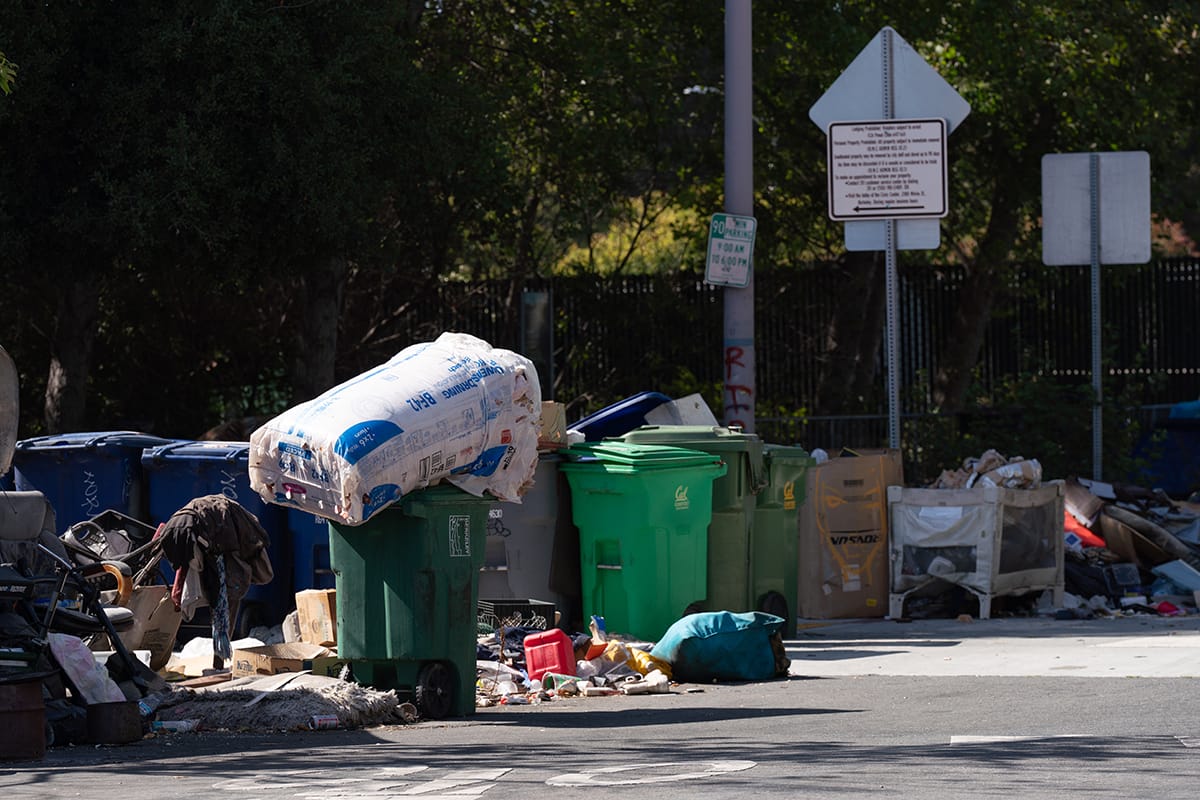
A recent fire marshal inspection found encampments blocking the right-of-way, including "unsafe structures, unsafe storage of propane containers, accumulation of combustible materials, and accumulations" close to property lines, the city said.
The fire marshal also noted "tampering with fire hydrants" and said existing conditions block fire department access.
Berkeley Homeless Union: Why rush?
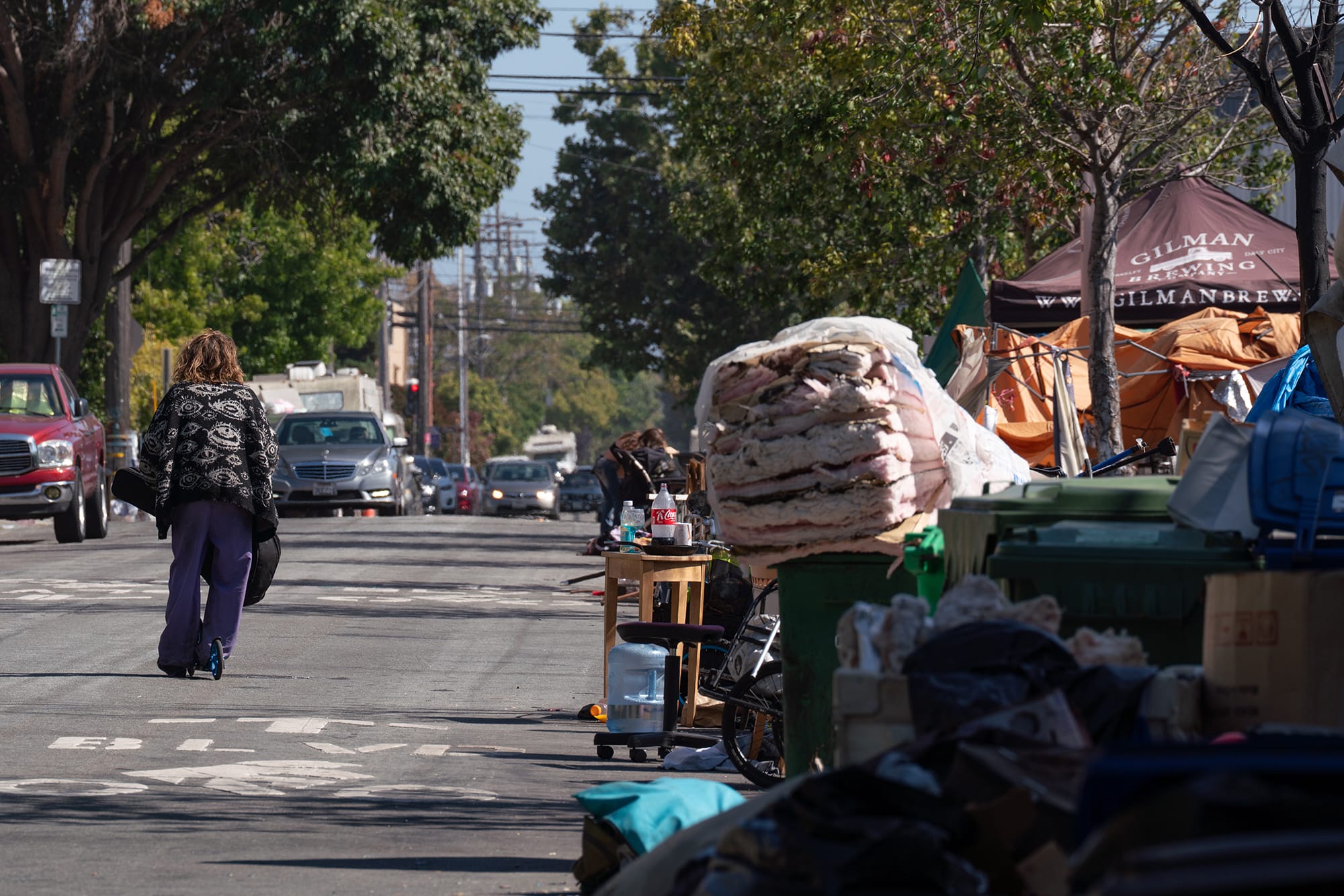
In response, Berkeley Homeless Union immediately decried the city's closure plan as "unnecessarily rushed" and argued that several disabled people protected by prior Chen decisions had not found places to move.
BHU attorney Anthony Prince also argued that the city had created a "broad 'no-lodging zone' that was never authorized."
Prince wrote that Berkeley had not followed Chen's prior orders for protected individuals, including:
- individualized assessments for tent accommodations
- packing and moving help
- 90-day storage
- replacement of "essential survival property"
He also said the city had offered $100 gift cards "instead of actual replacements."
"There is no reason for this rush to close the camp," he wrote.
In his motion, Prince said the city had overstated the leptospirosis risk and called it a "now-discredited justification."
Prince also observed that that the city had removed 40 tons of garbage from the encampment since February without closing the camp, a sign that other solutions were possible.
"There is no genuine emergency requiring immediate closure of the encampment," he wrote. "The City cannot manufacture urgency where none exists."
 Emilie Raguso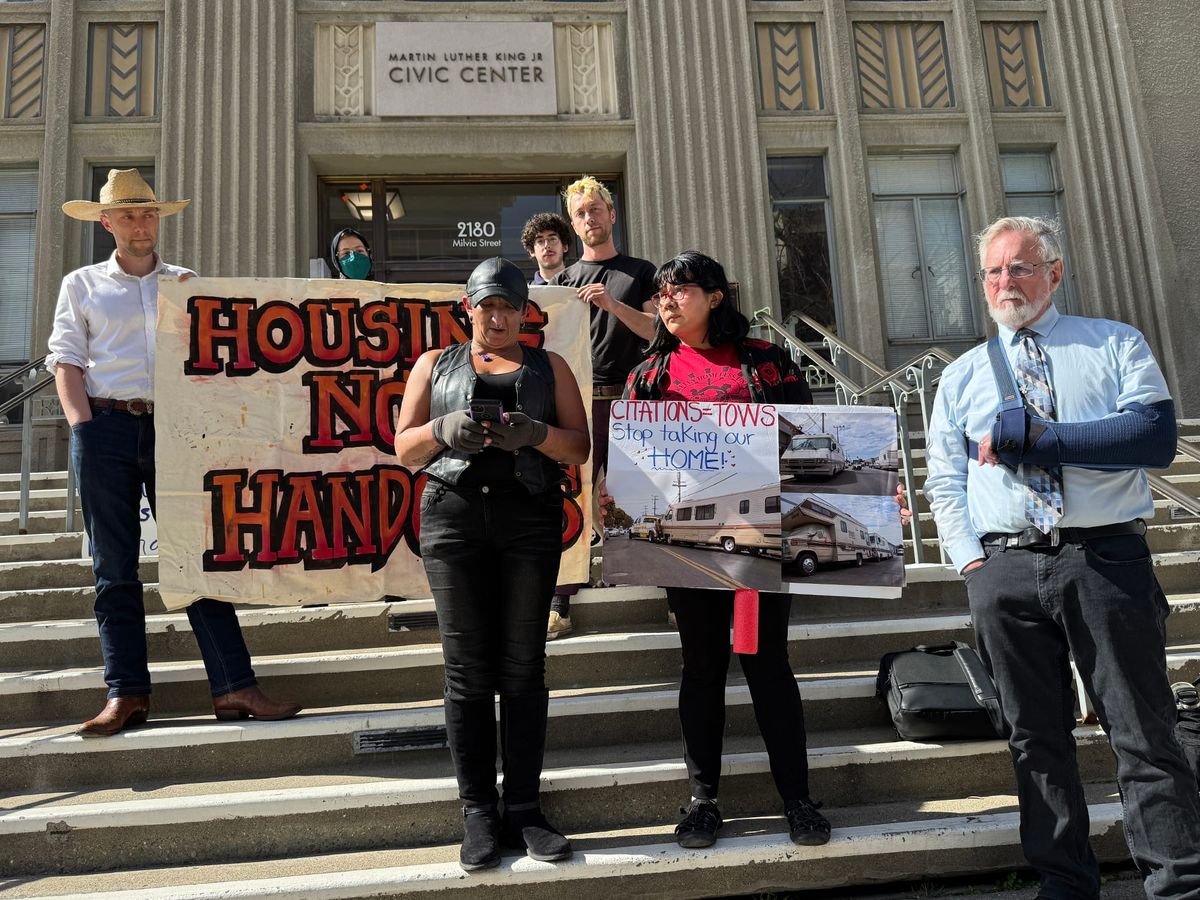
Prince said the city had not given some campers large enough tents, and criticized its tent site relocation process, saying it "created a procedural impasse" for disabled campers.
Part of the issue, he argues, is that Berkeley has not outlined where people will be allowed to move — so they don't know where they will be free of enforcement.
The city has said it has no broad ban on camping as long as sidewalks are not blocked, and that they are not required to identify locations for people to go.
Prince also asked Chen to consider "sanctions" against the city because it had failed to share its June leptospirosis update with the court.
(The city says there was no requirement to do so.)
Prince is now seeking a preliminary injunction — the same legal mechanism that held off camp closure from January 2025 until April 2026 — to stop the Harrison encampment closure.
"BHU members with physical and mental disabilities without accommodations face catastrophic harm from displacement," he wrote.
Berkeley Harrison Street court hearing set for Aug. 13
In his three-page order, Judge Chen said he had not been convinced by Prince's claim that Berkeley had backtracked on its leptospirosis concerns.
He also reiterated his position that Berkeley could, in fact, "proceed with abatement without first securing relocation for every affected member."
But he said Berkeley Homeless Union had "raised serious questions" about three narrow issues.
Chen indicated that $100 gift cards alone might not fulfill his requirement that the city replace sleeping bags and clothing destroyed during abatement.
Chen said he also wasn't sure whether the city's position about what items it would store was broad enough, calling out "loose or scattered papers" and "bike carcasses and parts."
And he said he wanted to hear more about the tent relocation process.
Chen said he would hear arguments about a new preliminary injunction next week Thursday at 1:30 p.m.
"Rats screaming at night"
Attorneys for the city addressed all three points directly in a new filing Wednesday and said Berkeley must be allowed to tackle the "serious public health hazards" in the Harrison Street corridor.
First, they said Berkeley initially considered giving out gift cards — but had since decided to provide gear (prior to last week's BHU motion).
As to storage, the city said it prefers not to collect "loose or scattered papers" because they can be contaminated, but will "provide receptacles that can be packed and sealed so that these items can be stored."
As to bike parts, the city said it "intends to accept these" as long as they are "not caked with mud or soil."
On the subject of the tent footprint assessments, the city said it had offered to do them, but that only one person had asked for it.
Going forward, the attorneys also urged Chen to issue deadlines for subsequent discussions, citing "BHU’s failure to provide information" the city needed.
 Emilie Raguso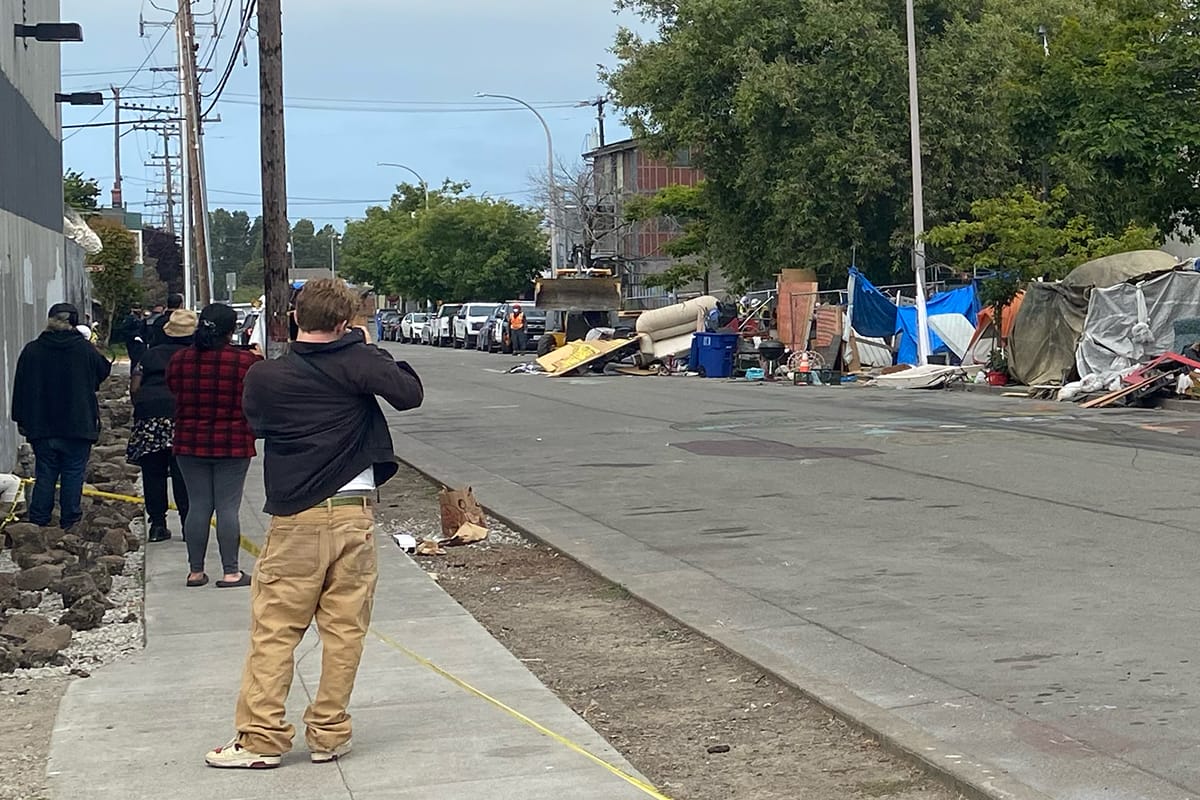
Calling Berkeley Homeless Union's claims "baseless," the attorneys observed that BHU's most recent filing was the fifth time it had asked Chen "to block the City from addressing the extremely hazardous conditions in the Harrison corridor that have continued to worsen" since January 2025.
They said Chen should "reject any further injunctive relief," arguing that his April ruling had largely settled the matter.
They argued that the city had complied with Chen's requirements, and said those that remain would be handled during the upcoming camp closure.
"BHU has provided no evidence to the contrary, nor can it," the city said. "The City has not failed to engage with or denied a single accommodation request required by the Court’s order," including handing out "replacement tents in residents’ preferred sizes to everyone, regardless of disability status or formal request."
The city also argued that BHU had made matters worse, not better, and should not be rewarded for bad behavior.
"It has deliberately interfered with the City’s efforts to communicate with residents," the attorneys wrote, "misled residents by posting flyers with incorrect information, and encouraged them not to engage with the City, informing them that they will not be subject to abatement if they do not provide the City with information required to accommodate their disabilities."
The misleading notices had advised campers they could not be removed as long as they weren't blocking the sidewalk, attorneys wrote: "The encampment has grown from approximately 37 people to more than 80 since these flyers were posted."
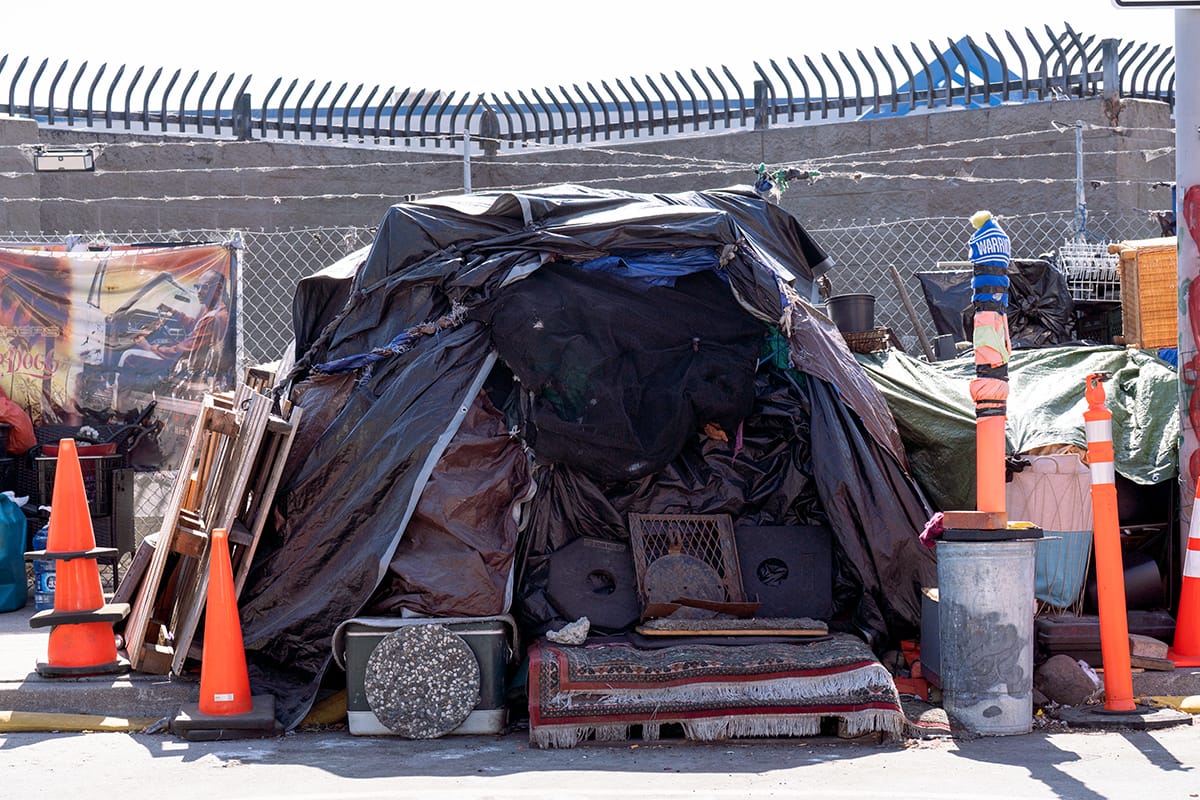
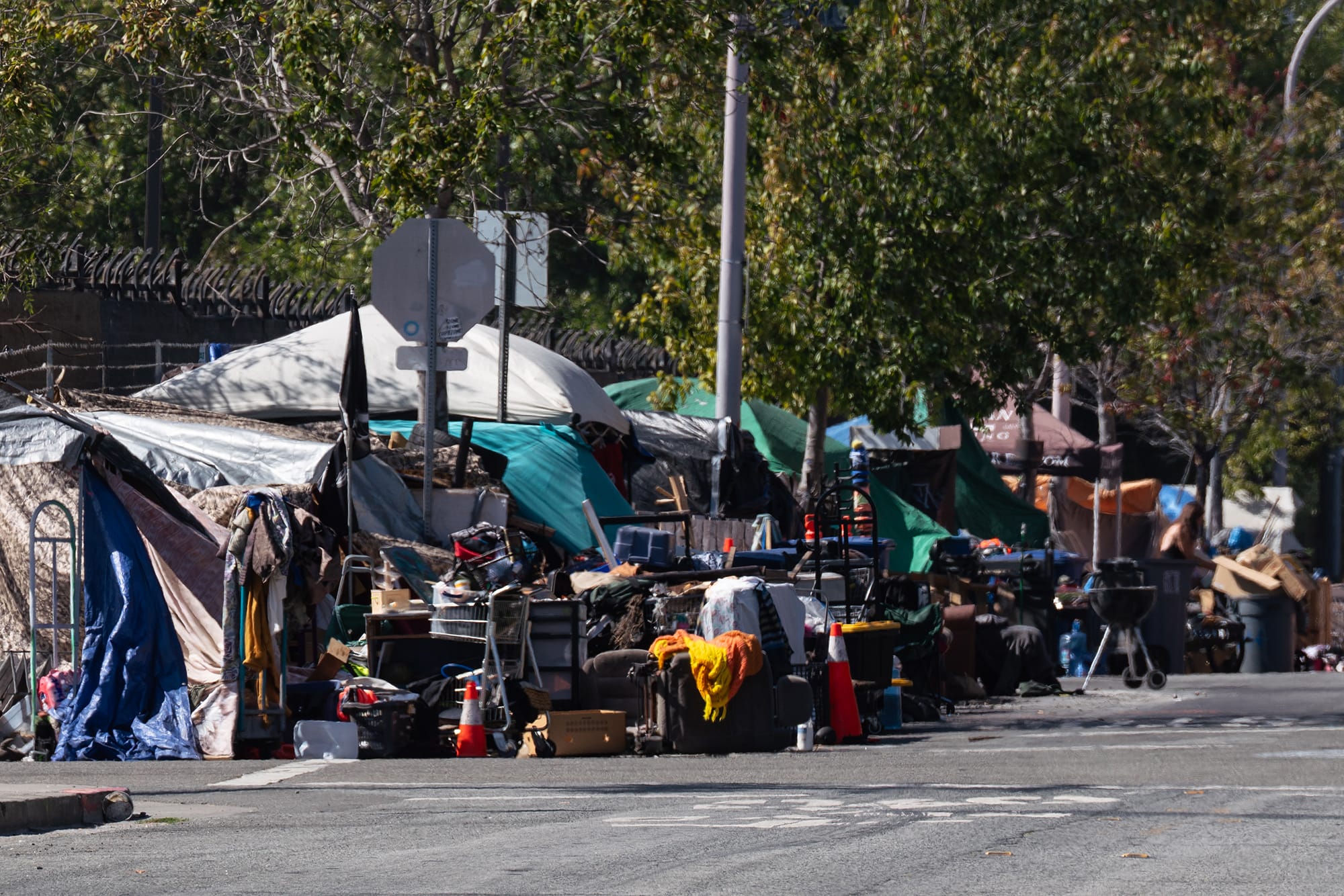
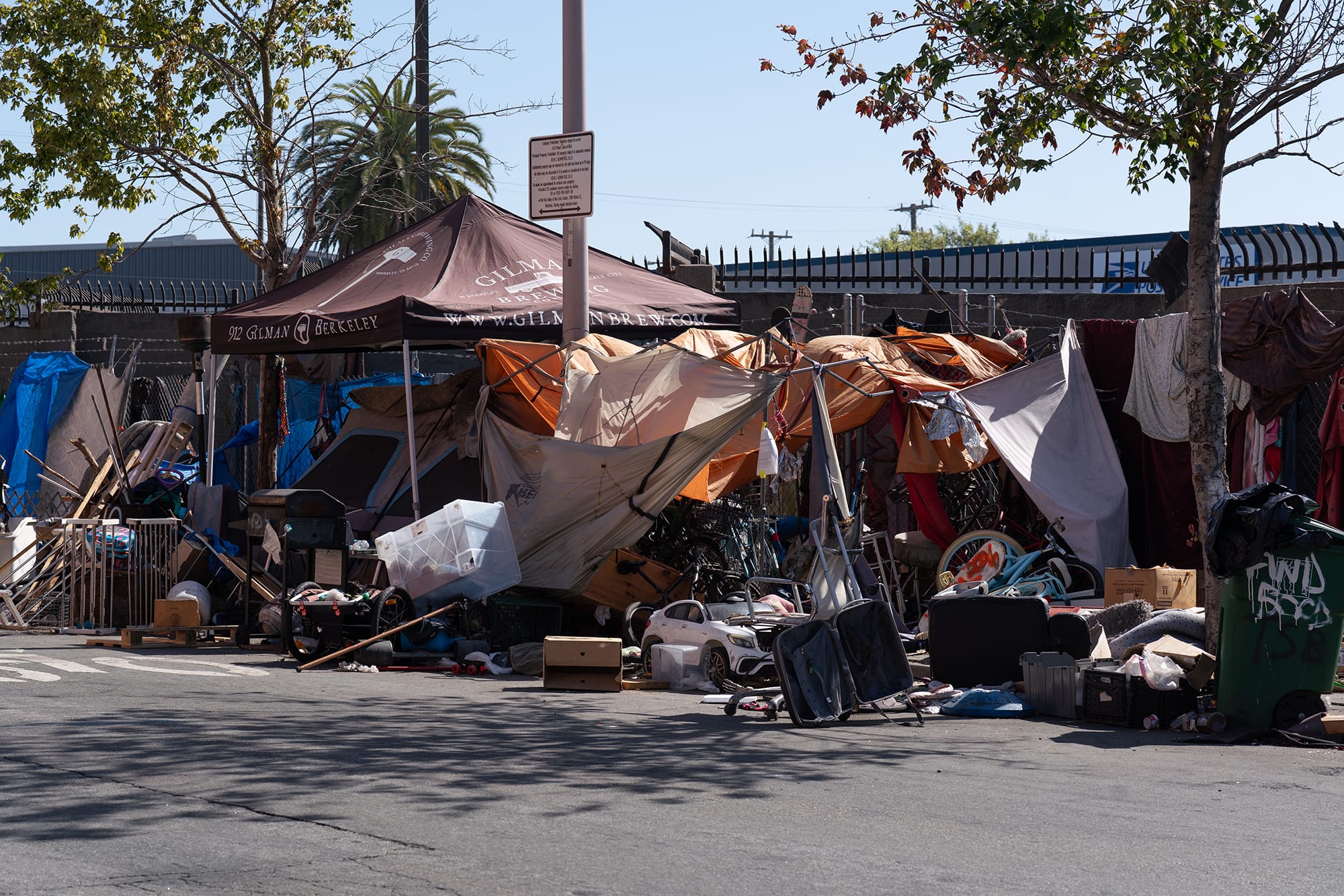
As to the current state of the Harrison corridor, a city worker described "dead rats all over the streets" along with "visible bodily fluids and feces," and sidewalks that "are entirely blocked" so that "cars have to swerve around campsites to drive down the road."
Encampment residents "hear rats screaming at night" and "have had rats run over them while they are sleeping," according to the filing.
The city says it must clear the area to "completely eradicate rodent harborage" and address the leptospirosis issue, with an ongoing "high prevalence" of the disease found in local rats.
Two humans also tested positive, including one who later died, the city said.
Officials also cited public safety calls as evidence of the need to act.
There have been 55 calls to the Berkeley Fire Department this year, including "multiple nearly catastrophic fires," the city said.
Municipal workers have been doing outreach at the encampment since June 26, visiting the site daily to share information about goods and services, as well as disability accommodations, according to the filing.
That's when workers initially posted notices about "upcoming abatement activities" — the planned camp closure, the city said.
Berkeley has also provided other services at the site, attorneys wrote, collecting garbage and maintaining a portable toilet.
Between now and the camp closure, workers will offer replacement tents, clothing and sleeping bags to all site residents; as well as two plastic tubs to be stored by the city for up to 90 days; and packing assistance, the city said.
If the city runs out of items to give away, workers will give out vouchers to get them later.
So far, the city has surveyed 82 people and gotten 40 tent requests, attorneys wrote. Storage bins have been given to 22 people and 24 people have asked for packing help.
"The City has granted all of these requests for packing assistance," according to the motion. "No one has followed up to schedule this assistance."
The city also argues that a new preliminary injunction would be improper, particularly with a Ninth Circuit appeal pending.
"The Court may not at this stage impose new obligations on the City or substantively adjudicate — or re-adjudicate — the rights of the parties with respect to the Harrison encampment," attorneys write.
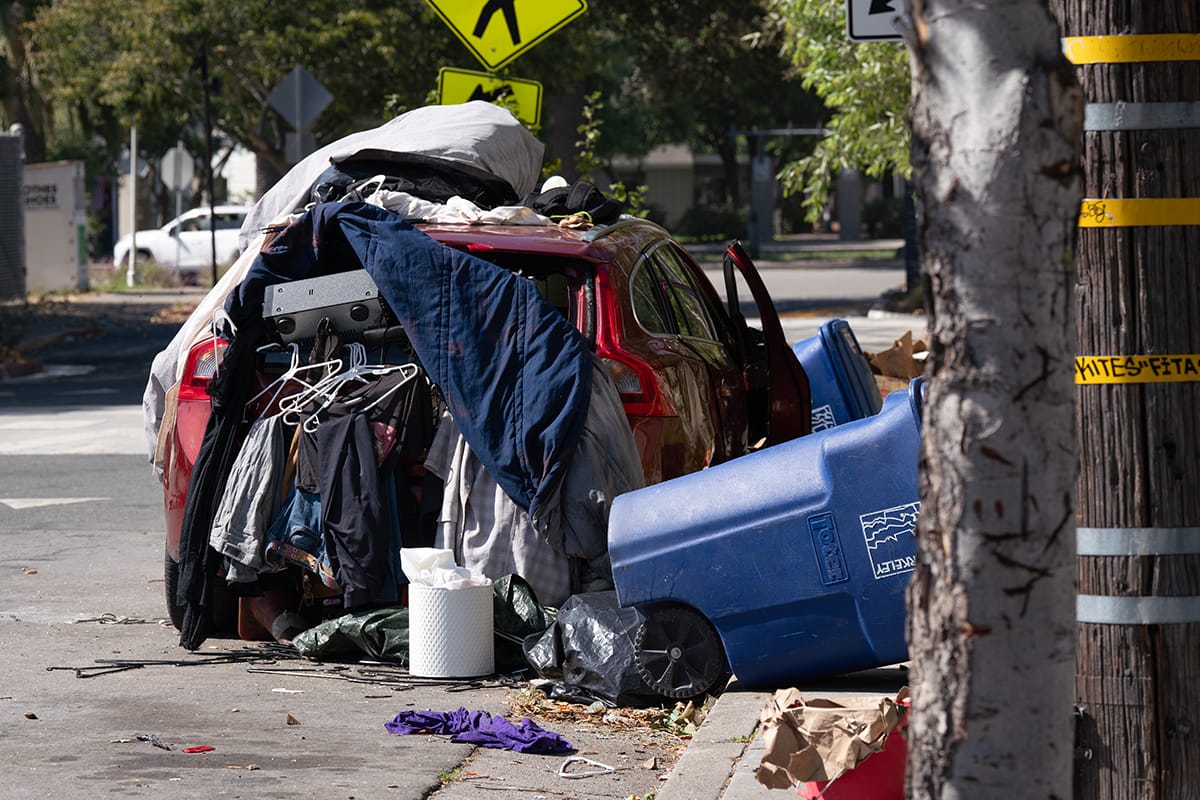
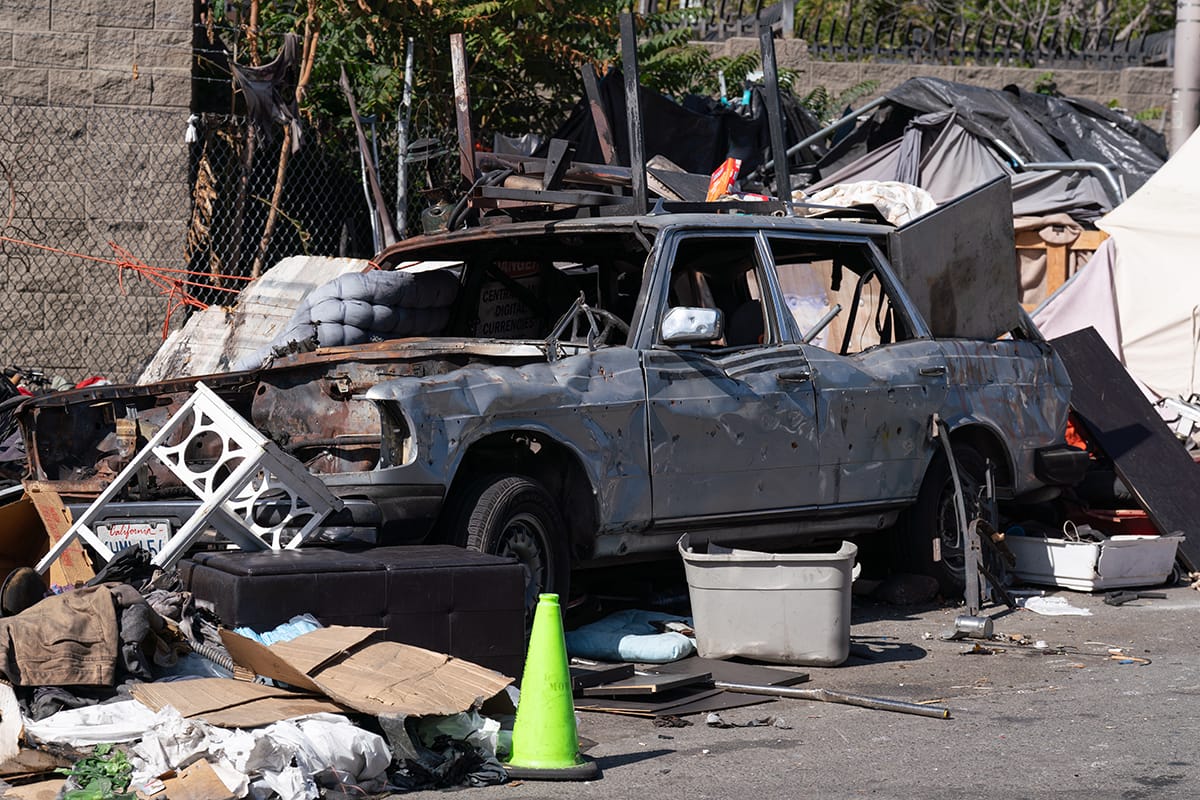
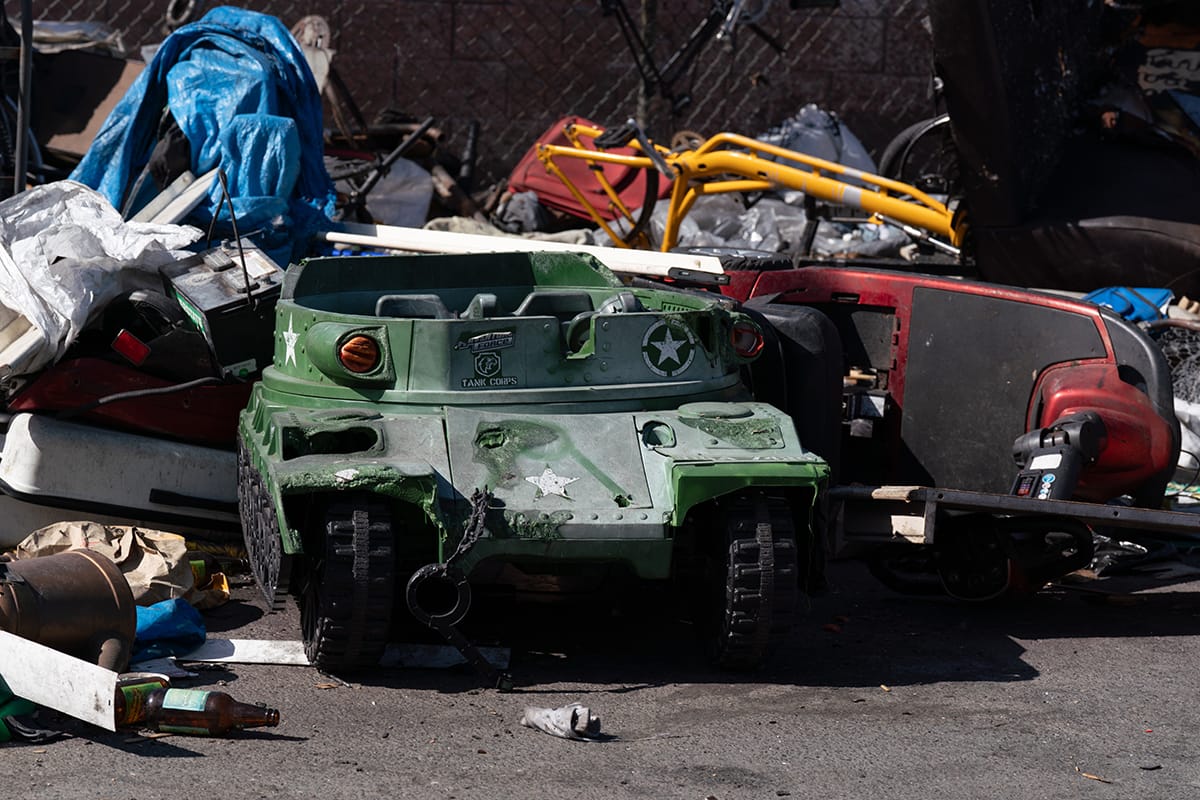
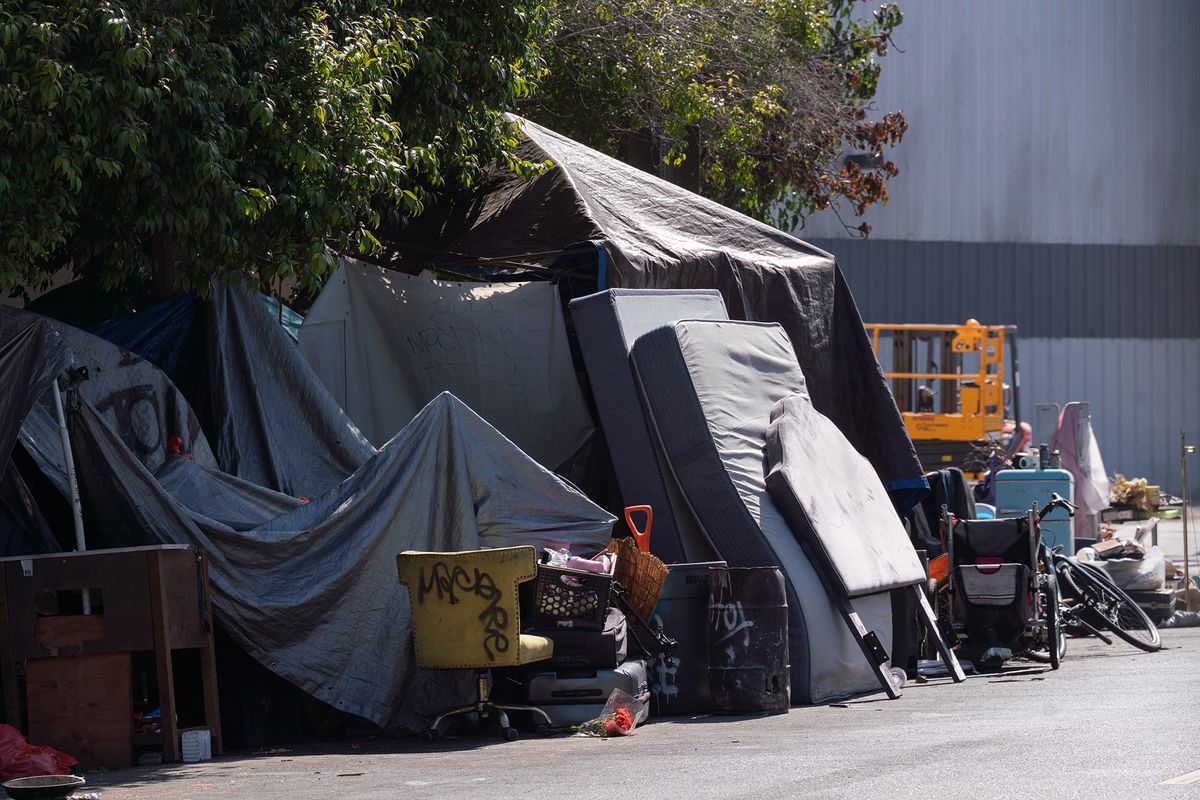
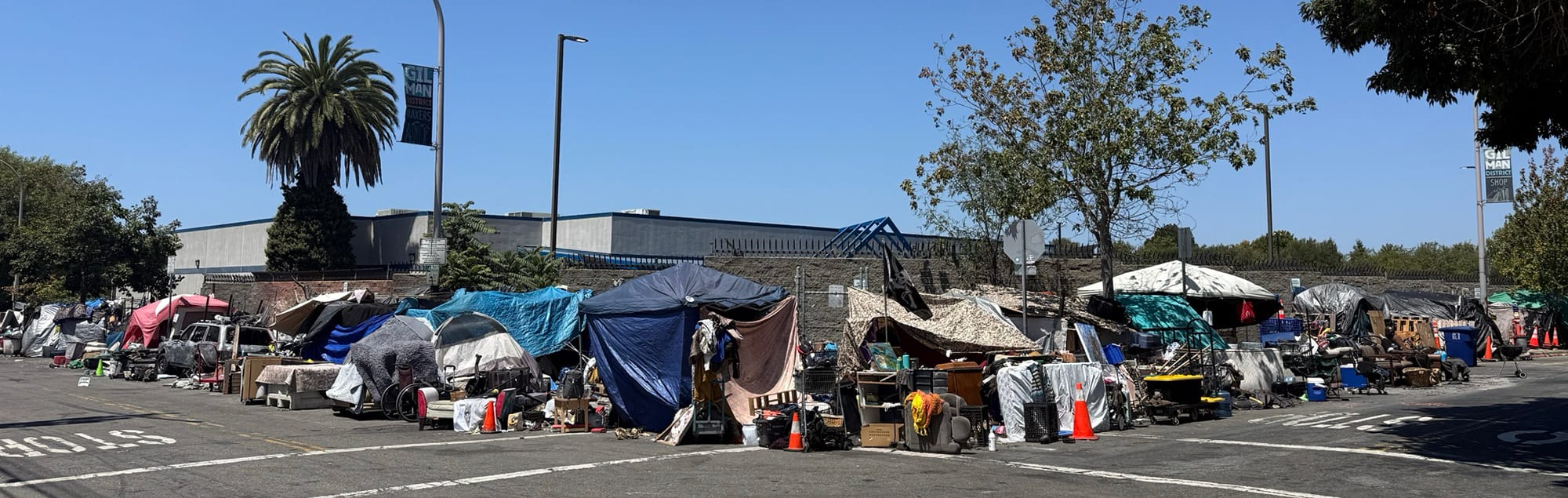
The Harrison Street corridor encampment in northwest Berkeley, Aug. 3, 2026. Ariel Nava Photo
Stay tuned for ongoing coverage of the Harrison Street corridor encampment on The Berkeley Scanner.