Camping bans cannot solve homelessness: Op-ed
"Where can they go instead?" asks longtime Berkeley resident and homeless advocate Amber Whitson in today's guest essay.
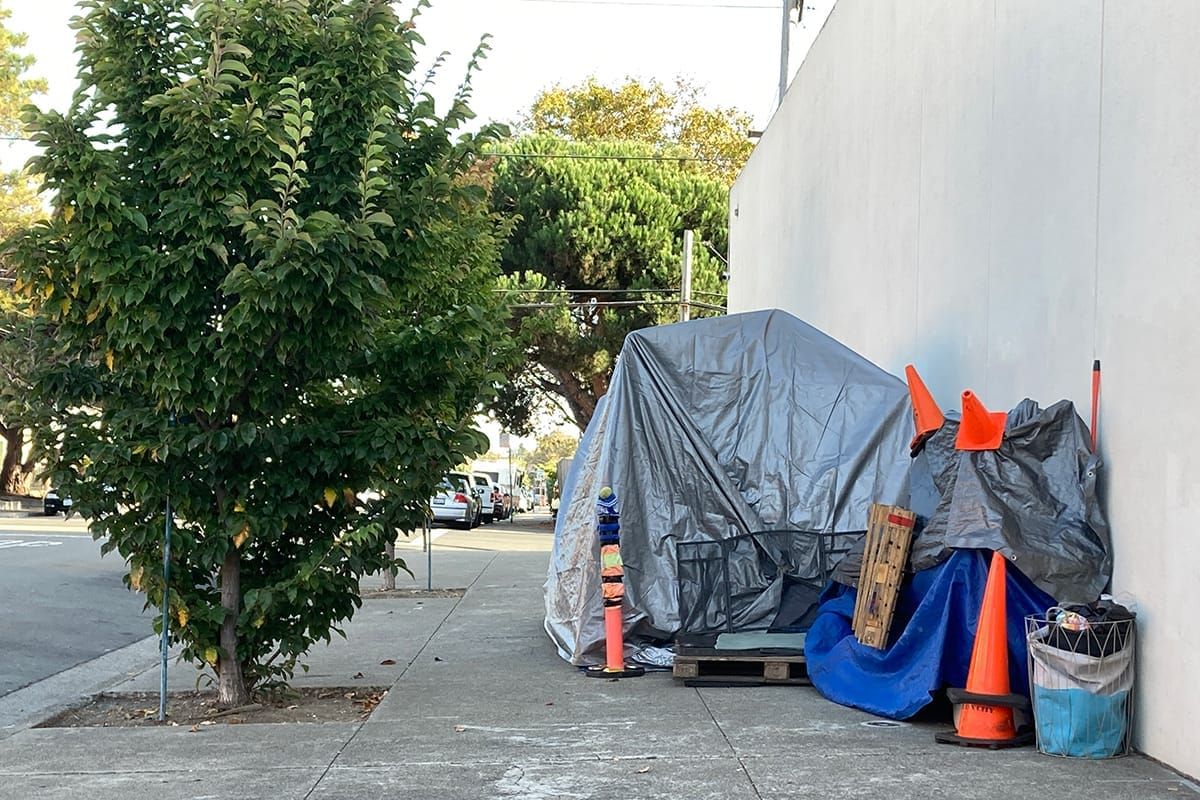
Editor's Note: TBS publishes guest essays from community members on issues of concern. Today's piece was written by Amber Whitson, an activist, advocate, dog mom and survivor who has lived in Berkeley and Albany for the past 29 years.
There are so many voices calling for Berkeley to pass a "camping ban." But those same voices say nothing about all of the effects such a ban would have, where those of us who would be most deeply affected by it are supposed to go, or about any of the proven solutions to homelessness.
There is no single reason why people become homeless. There is no single type of person who is homeless. And there is no single solution that is going to work for everyone.
There are several schools of thought about what should be done with those of us who live on the streets.
The institutionalizers
These are the people who believe that homelessness exists primarily because of addiction and/or mental illness. Their solution is to force homeless people into drug programs and psychiatric institutions, with the goal of "curing" their addictions or mental health problems so they can become "productive members of normal society."
There are many flaws and shortcomings with this approach.
Addiction and serious mental illness absolutely exist among unhoused people (just as they do among housed people), and both these conditions can contribute to someone becoming or remaining homeless. People who want treatment should be able to get it quickly, consistently and without having to jump through hoops to get there.
Plenty of people become homeless because of a disability, gender discrimination, domestic violence, poverty, job loss, family breakdown, eviction, medical problems, catastrophic financial events or simply because their income cannot keep pace with the cost of housing.
Sometimes addiction or mental illness develops or becomes substantially worse after someone becomes homeless.
Rehab is not housing. A psychiatric hospital is not housing. Jail is definitely not housing.
And there is still the question of what happens when treatment ends. Even if treatment was successful, they're still homeless when they're discharged.
The re-homers
These are the people who believe homeless people should simply be sent back to "wherever they came from," apparently believing that someone's lifelong well-being is the responsibility of whatever city or town that person happened to be born in.
I was born and raised in Santa Monica and moved to Berkeley when I was 16. Over the years since I started speaking up for unhoused people, I've had a number of people suggest that I should "go back" to Santa Monica.
I'm 45 years old. I have lived in this area for my entire adult life. My friends are here. My community is here. I have been appointed to various commissions here. Most of my history is here. The people I help and the people who have helped me are here.
At what point does a place become home?
It's hard to say exactly where the re-homing logic comes from, because we don't apply it to housed people. Nobody would tell a housed person who has lived in Berkeley for 25 years and who happens to fall on hard times that they should go back to the city and county that issued their birth certificate.
The leaf-blowers — AKA the NIMBYs
Members of this group don't particularly care where "the homeless" go, as long as they go somewhere else.
Just move.
Then move again.
Then move again.
This is known as "the leaf-blower effect" because it works exactly like someone blowing leaves off of their own sidewalk. The leaves haven't ceased to exist. They are simply somebody else's problem now.
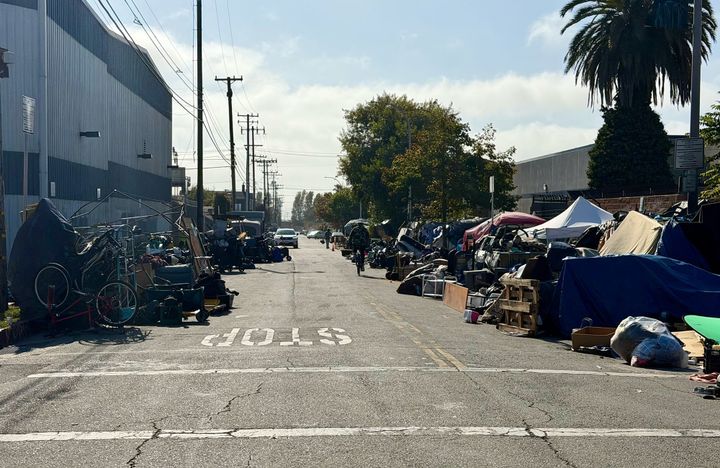
Moving someone from one block to another does not house them. Confiscating someone's tent does not house them, it just leaves them without shelter until they can get a new one. Towing someone's vehicle does not house them, it just leaves them without shelter until they can get a tent. Giving someone citations they cannot afford does not house them, it just puts them one step closer to jail (which is still not actual housing).
And research has shown that displacement isn't harmless. Studies of encampment sweeps have associated repeated involuntary displacement with loss of medications and possessions, disruption of medical care and social support, and worse mental and physical health outcomes among particularly vulnerable homeless populations.
That brings us to camping bans.
In 2024, the U.S. Supreme Court's decision in City of Grants Pass v. Johnson held that enforcement of generally applicable laws regulating camping on public property does not, by itself, constitute cruel and unusual punishment under the Eighth Amendment — even when adequate shelter is unavailable.
But cities and states seem to be treating the ruling as though the Supreme Court declared open season on homeless people.
It did not.
Grants Pass answered a particular question under the Eighth Amendment. It did not repeal the Americans with Disabilities Act. It did not erase due-process protections, property rights or every other federal and state law governing how cities interact with people living outside. Nor did the Court require cities to enact camping bans.
A substantial number of unhoused people live with physical, mental, psychiatric, developmental or other disabilities. For some people, repeatedly packing up everything they own and relocating may be inconvenient. For others, it can be physically impossible or medically dangerous.
A person with serious mobility limitations cannot necessarily pack up everything they own and carry it several blocks just because government employees tell them to move.
Someone dependent on electrical medical equipment cannot simply relocate to somewhere where electricity may not be available.
Someone whose disability requires immediate access to a bathroom cannot necessarily be moved somewhere where there are none or where the bathrooms are only open during certain hours.
Someone with cognitive, psychiatric or neurological disabilities may have needs that make a rigid, one-size-fits-all enforcement policy particularly harmful.
Title II of the Americans with Disabilities Act requires state and local governments to make reasonable modifications to their policies, practices and procedures when necessary to avoid disability discrimination, unless doing so would fundamentally alter the government program or activity.
In other words, a disability does not magically disappear because the city labels whatever it is doing "encampment enforcement."
And this illustrates the fundamental problem with blanket camping bans: they answer the question of where people may not exist without answering the much more important question of where they are supposed to go.
If every public place becomes somewhere that a person cannot sleep, while that person has no private place where they can sleep, we have not solved anything.
We have criminalized poverty based on geography.
There is another school of thought, though.
The problem-solvers
These are the people who begin with an uncomfortable reality: Homelessness is complicated because homeless people are people.
A serious and effective homelessness policy therefore requires more than one tool.
It means preventing people from becoming homeless when possible while creating permanent housing that extremely poor people can actually afford.
It means having psychiatric care and substance-use treatment available for the people who need and want those services.
It means providing shelter that people can realistically use. Not merely counting beds whether or not those beds are accessible to the people supposedly being offered them.
And as long as permanent housing remains unavailable to everyone who needs it, it means acknowledging reality.
Sanctioned encampments, safe-parking areas, bathrooms, garbage service, water, storage, hygiene facilities and consistent outreach are not declarations that homelessness is acceptable or permanent.
They are harm reduction. They make sense if we want the impacts of homelessness on everyone (housed and unhoused) to be minimized.
If someone is going to be homeless tonight regardless of what ordinance we pass, there is a huge difference between that person being homeless in a place with a toilet, drinking water, garbage collection and some basic stability versus being continuously chased from block to block and city to city.
But "something better" has to actually exist before we can send people there.
People ask, "How do we stop people from camping here?"
The first question should be:
Where can they go instead?
But without a realistic alternative, a camping ban is not a solution to homelessness.
If we genuinely want fewer people living on our sidewalks, in our parks, in tents and in vehicles, we have to create realistic alternatives that people can actually access and use.
Otherwise, we're not ending homelessness.
We're just forcing homeless people to keep moving, over and over again.
The Scanner will periodically publish guest essays from community members on issues of interest or concern. Submit your ideas to TBS.