Berkeley District 8 candidates clash over policing, housing
Two challengers have joined forces to unseat Mark Humbert, with sharp differences over policing and neighborhood development.
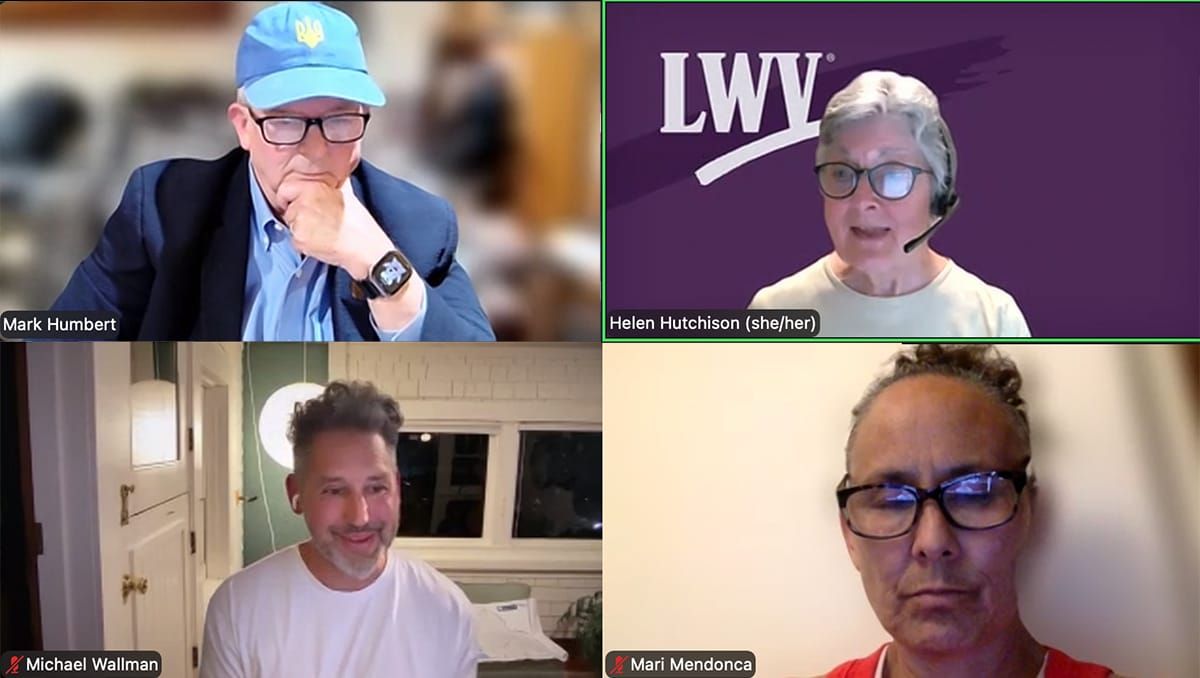
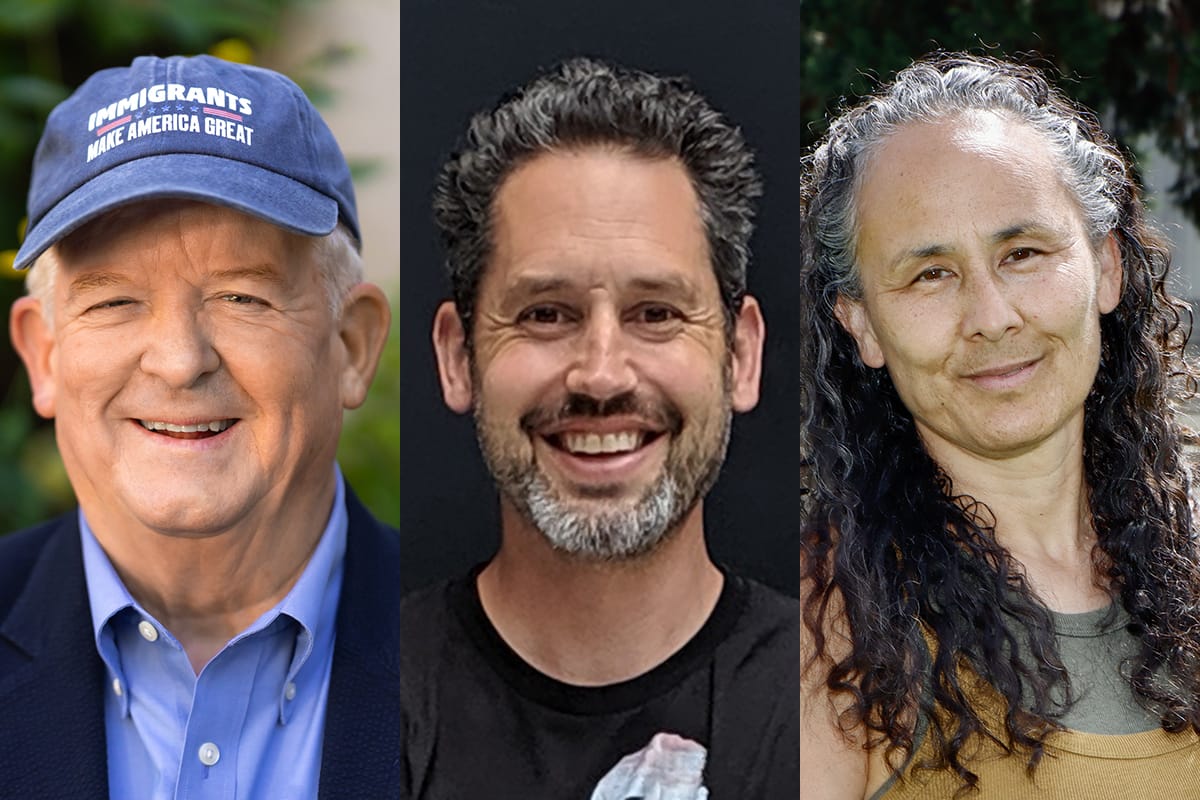
Three candidates vying for the Berkeley City Council District 8 seat offered sharply different views on policing, surveillance technology and neighborhood development at a fall election forum.
Incumbent Mark Humbert defended the city's use of automated license plate readers and called for increased police staffing, while challengers Mari Mendonca and Michael Wallman questioned the need for surveillance technology and some police equipment.
Wallman and Mendonca, part of a progressive coalition running to "Flip the Berkeley City Council," have joined forces in the race, encouraging voters to rank them first and second under Berkeley's ranked-choice voting system.
On his campaign website, Wallman asks supporters to rank him first and Mendonca second, leaving the remaining candidates unranked. The two have also endorsed each other, with Wallman praising Mendonca's "unrelenting commitment and dedication to Berkeley and its people."
Former candidate Fred Feller, who suspended his campaign but remains on the ballot, has endorsed Wallman and encouraged his supporters to rank Mendonca second.
Under ranked-choice voting, voters' second choices are counted if their first-choice candidate is eliminated. The arrangement could help either challenger consolidate support against Humbert if the other is eliminated.
During the Sept. 30 forum hosted by the League of Women Voters of Berkeley, Albany and Emeryville, the candidates clashed over plans to allow taller, denser housing developments along College Avenue and other commercial corridors, with Humbert defending his approach and both challengers raising concerns about the impact on neighborhood businesses.
District 8 candidates divided on Flock
One of the clearest differences emerged when candidates were asked whether they would support renewing Berkeley's contract for automated license plate readers, currently provided by Flock Safety.
Mendonca said the community had spoken "loud and clear" against renewing the contract and questioned whether the city could adequately protect data collected by the cameras.
She also raised concerns about data access through the Northern California Regional Intelligence Center and called for further scrutiny before any new agreement.
Wallman took an even stronger position against surveillance technology.
"Mass surveillance is very concerning to me, and honestly, I don't want to live in a country that has mass surveillance everywhere," he said.
He said there was "probably … some short-term gain in terms of petty crime, but there's a huge danger in AI technologies with mass surveillance" with systems like Flock.
He described a future in which cameras could be combined with facial recognition, microphones and other data to track people's movements and activities, and raised concerns about criminals gaining access to the data.
Humbert countered that the cameras had helped local police investigate serious crimes, including murders, rapes and assaults.
"They have actually improved safety in District 8 and in Berkeley generally," he said.
Humbert, who voted for the most recent Flock contract extension, acknowledged ongoing civil liberties concerns but said any future contract should allow Berkeley to terminate the agreement over improper data handling.
"The question's open," he said, noting that the city was awaiting proposals from potential vendors.
Different approaches to police staffing and equipment
The candidates also disagreed over police staffing and the use of drones, tear gas, police dogs and helicopters.
Humbert said he favored increasing police staffing and providing officers with the equipment they need, subject to oversight by the City Council and Berkeley's Police Accountability Board.
He praised the department's leadership as progressive and expressed confidence in its ability to use technology responsibly.
"I'm going to give them the tools that they need," Humbert said. "I want to give them the technology that they need to keep us safe."
Mendonca — who called previously for a 50% cut to the police budget — questioned whether Berkeley's crime problems justified such equipment.
"I don't think we currently have a crime situation where we need all of these tools," she said.
She described seeing a large police response to "one young man with a backpack" and said it raised questions about how police resources were being deployed.
Mendonca also criticized the treatment of Berkeley's former police oversight director, who was terminated by the city, and said the Police Accountability Board had been "hindered" in carrying out its work.
Wallman said he was "certainly against" the use of drones, tear gas, police dogs and helicopters in Berkeley.
"I walk around Berkeley all the time," he said. "I never have a sense of fear per se. And my kids wander the streets freely, and so I have confidence that this isn't a horrific, dangerous place."
(Under current policy, Berkeley police can use drones, dogs and helicopters from other agencies, but tear gas is banned.)
Wallman expressed concern about police vacancies and suggested reducing overtime spending to increase salaries and recruit more officers. Berkeley police, however, have long relied on overtime to maintain minimum patrol staffing amid persistent officer shortages.
Wallman also questioned the city's spending priorities, pointing to proposed spending on surveillance technology and bicycle infrastructure while services for people experiencing homelessness and mental health challenges face cuts.
Upzoning sparks disagreement
Housing development was another major point of contention, particularly the city's plans to allow additional density along College Avenue and other commercial corridors.
The city has pursued those plans in line with its Housing Element, which was unanimously approved by the City Council.
State law requires cities to plan for their housing needs and take steps to affirmatively further fair housing, including addressing historic patterns of segregation and expanding housing opportunities in higher-income neighborhoods.
Humbert's support for the plan has drawn criticism from many constituents, even though a vote against the Housing Element would not have changed the outcome given the support of the other eight council members.
During the forum, he explained that he had developed a more "tailored" zoning approach focused on specific parcels, rather than the blanket upzoning originally proposed by city staff.
He noted that the Planning Commission had accepted his proposal, which is expected to come to council for a vote before the end of the year.
Wallman flatly opposed the proposed upzoning in the Elmwood, North Shattuck and Solano Avenue districts, arguing that state density bonus laws already provide opportunities to build additional housing.
He questioned how the corridor upzoning proposal had been introduced and criticized the prospect of seven-story buildings in established commercial neighborhoods.
"I just don't feel it's appropriate to destroy some of our historic districts," he said.
Mendonca also criticized the city's approach, arguing that new market-rate housing does not necessarily address Berkeley's affordability needs.
"We have people who are cashing in on the fact that we have this need for housing, but the affordability thing is still the struggle that we're capturing, and it has to do with predatory capitalism," she said.
"We need to focus on affordable housing and stop the massive upzoning … everywhere in Berkeley," she said.
In their questionnaires for The Berkeley Scanner, the candidates offered additional context on their housing positions.
Humbert advocated continued housing construction to address affordability and strengthen city finances. Wallman proposed adding housing through accessory dwelling units, duplexes, triplexes and other smaller-scale developments. Mendonca called for challenging existing density bonus policies and protecting neighborhood businesses.
Candidates split on city taxes
The candidates also differed over measures U and V, which would provide funding for city infrastructure and services.
Measure U, which requires a two-thirds vote, would authorize $300 million in general obligation bonds to fund fire stations, emergency response facilities, parks and other public infrastructure, including climate resilience improvements.
Measure V would increase Berkeley's sales tax by half a percentage point, to 10.75%, generating an estimated $9 million to $10 million annually for the city's general fund. The money could support police, fire, 911 dispatch and other city services but would not be restricted to those purposes.
Humbert said he supported both measures, adding that the city needed additional revenue to maintain infrastructure and preserve police and firefighter staffing.
Mendonca and Wallman opposed both measures, arguing that Berkeley should more closely examine its spending priorities before asking residents to pay more.
"Although it has lofty visions, and it's saying it's for certain things, it's not actually earmarked," Mendonca said of Measure V. Of Measure U, she added: "It's a very big price tag for another kind of open-ended check."
Wallman particularly objected to warnings that the city could lose firefighters without additional tax revenue.
"When you dangle things like, 'Oh, if we don't raise taxes, you're gonna lose your fire department,' that's terribly upsetting to me, particularly when we're in this climate crisis," he said.
All three candidates are participating in Berkeley's public campaign financing program.
Election Day is Nov. 3. Read more election coverage on TBS.
Watch the full District 8 Berkeley City Council candidate forum
Learn more about the District 8 candidates
 Emilie Raguso