Berkeley extends Flock camera contract; drones postponed
Council put off giving drones and fixed cameras to police but said officers can use Flock license plate readers for another year.
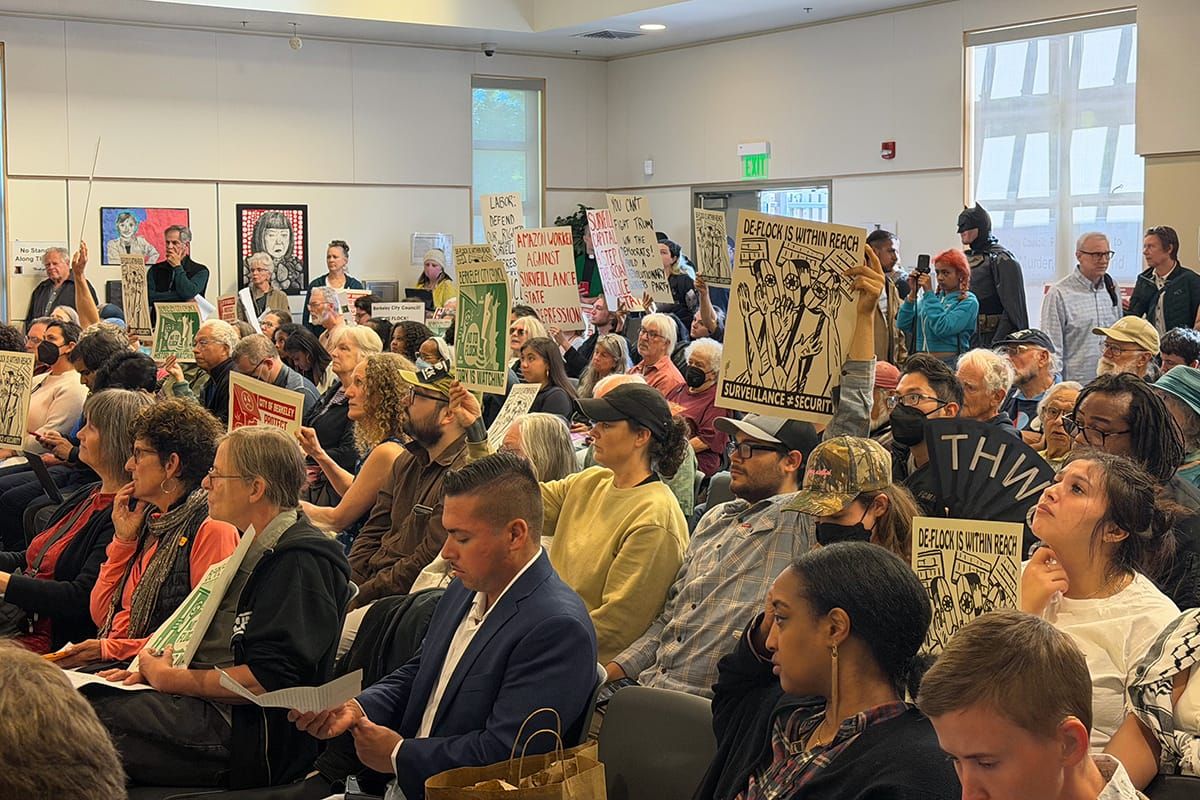
A months-long saga ended Thursday night with Berkeley voting to keep its contract with Flock Safety, but only for license plate cameras.
Berkeley police say Flock's automated license plate readers (ALPRs) have transformed their approach to crime fighting since they came online nearly two years ago.
Critics say ALPRs are part of a growing mass surveillance system that poses threats to civil liberties.
Berkeley police had hoped to add new tools to their Flock contract this year, not just continue the old one.
They began lobbying in January for an omnibus "public safety technology" package that would have added Flock drones and fixed surveillance cameras, along with a unified system for monitoring the data, into a new "master services agreement" including ALPRs.
In a series of public meetings, BPD said Flock was the only vendor that fit all of its criteria, including having the best technology and network; and that a unified system would ensure better data security, giving Berkeley more control than one cobbled together.
Meanwhile, community activists have been waging a strong campaign against the proposal, citing concerns about immigrant communities, protest activities and federal overreach.
Beyond the broader ethical questions, Flock Safety as a vendor has faced significant criticism in the press for data-sharing missteps.
On Thursday, Flock rep Trevor Chandler told officials the company had fixed those problems last year, mostly in August, and has had no new breaches.
"We could have and should have done many things better," he said. "We have since shifted … our entire business model to start to mandate compliance. Now, it is not possible for a single California agency to share outside the state. In addition, to make sure that is not allowed, we've also put in place immigration search filters, we've put in place reproductive health search filters, and we've removed all and any sharing with any federal [agency]… whether it's a national park, whether it's the post office."
Chandler emphasized that Flock is the only major ALPR provider "without a contract with ICE."
"That distinguishes us from Axon, Motorola, everyone else," he said. "I think that's very important to note."
Still, amid this year's outcry over Flock's prior data breaches, several Bay Area cities revisited their contracts. Oakland and Richmond kept theirs. El Cerrito, Mountain View and Santa Cruz called theirs off.
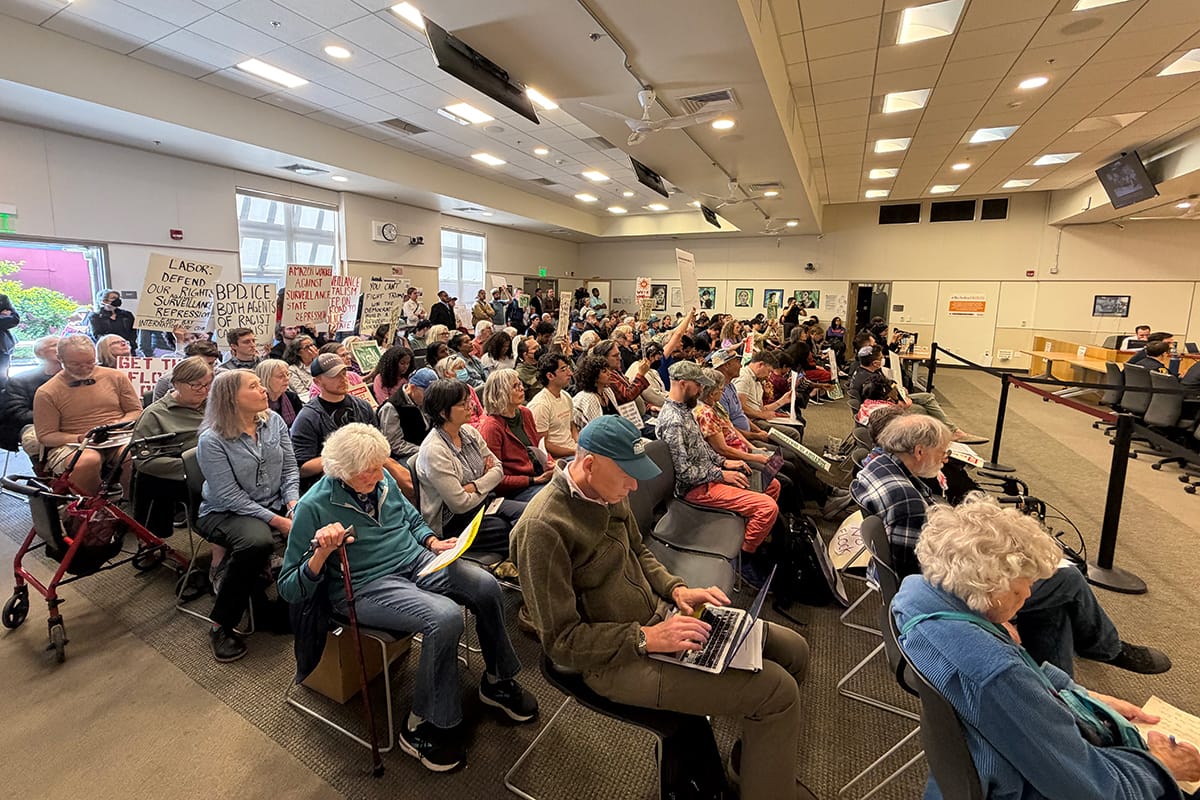
On Thursday night, after an extended Q&A with police and Flock, followed by three hours of public comment, the Berkeley City Council found a middle way.
The motion, from Councilman Brent Blackaby, extended Flock's ALPR contract for up to 12 months (from July); but sent the other technologies — drones, municipal and private surveillance cameras — to the city manager for a formal bidding process, in consultation with the Police Accountability Board, "for each of the components and for their integration."
In the end, officials said they needed more time to make the broader decision and police needed more time to make their case.
Exactly how long that might take is anyone's guess.
 Emilie Raguso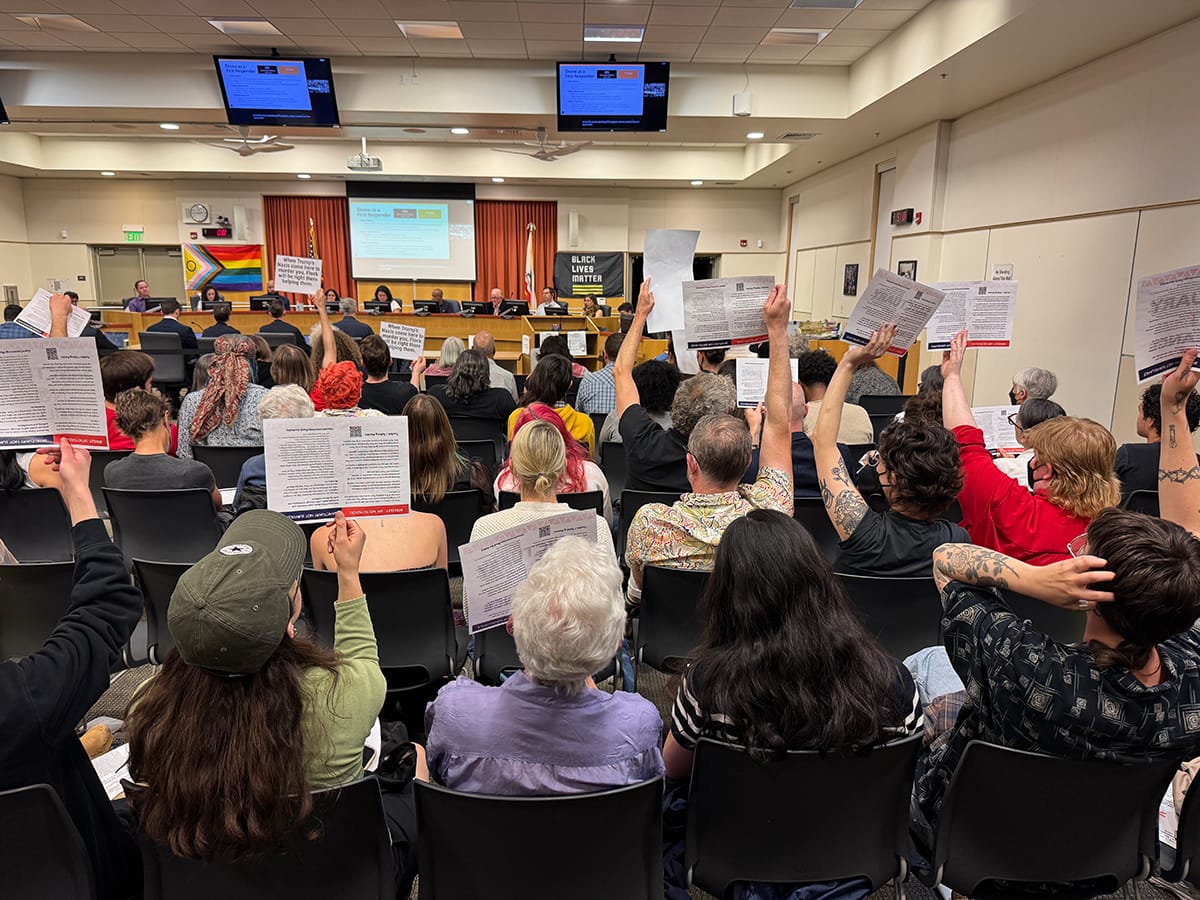
Council was originally set to vote on Flock in March.
At the time, it appeared the omnibus package likely had the five votes it needed to pass: Blackaby had authored a stronger version of the full Flock agreement; council members Mark Humbert, Shoshana O’Keefe, Terry Taplin and Rashi Kesarwani had done the same with a version of their own.
On the other side, Berkeley Mayor Adena Ishii put forward an item rejecting Flock altogether, with support from council members Cecilia Lunaparra and Igor Tregub, and a probable fourth vote from Ben Bartlett.
The March vote never happened, after public comment ran out the clock.
Ultimately, with the full Flock agreement off the table, Thursday saw the same alliances for the ALPR-only extension: Blackaby, Humbert, O’Keefe, Taplin and Kesarwani voted in favor, prevailing; Ishii, Lunaparra, Tregub and Bartlett voted no.
Blackaby's motion came in two parts, with near-unanimous support for the non-Flock portion, to include the new competitive bidding process in consultation with the PAB, the underlying "use policies" that guide how the technologies can be used, the incorporation of various prior amendments and several other changes. (Only Bartlett voted no.)
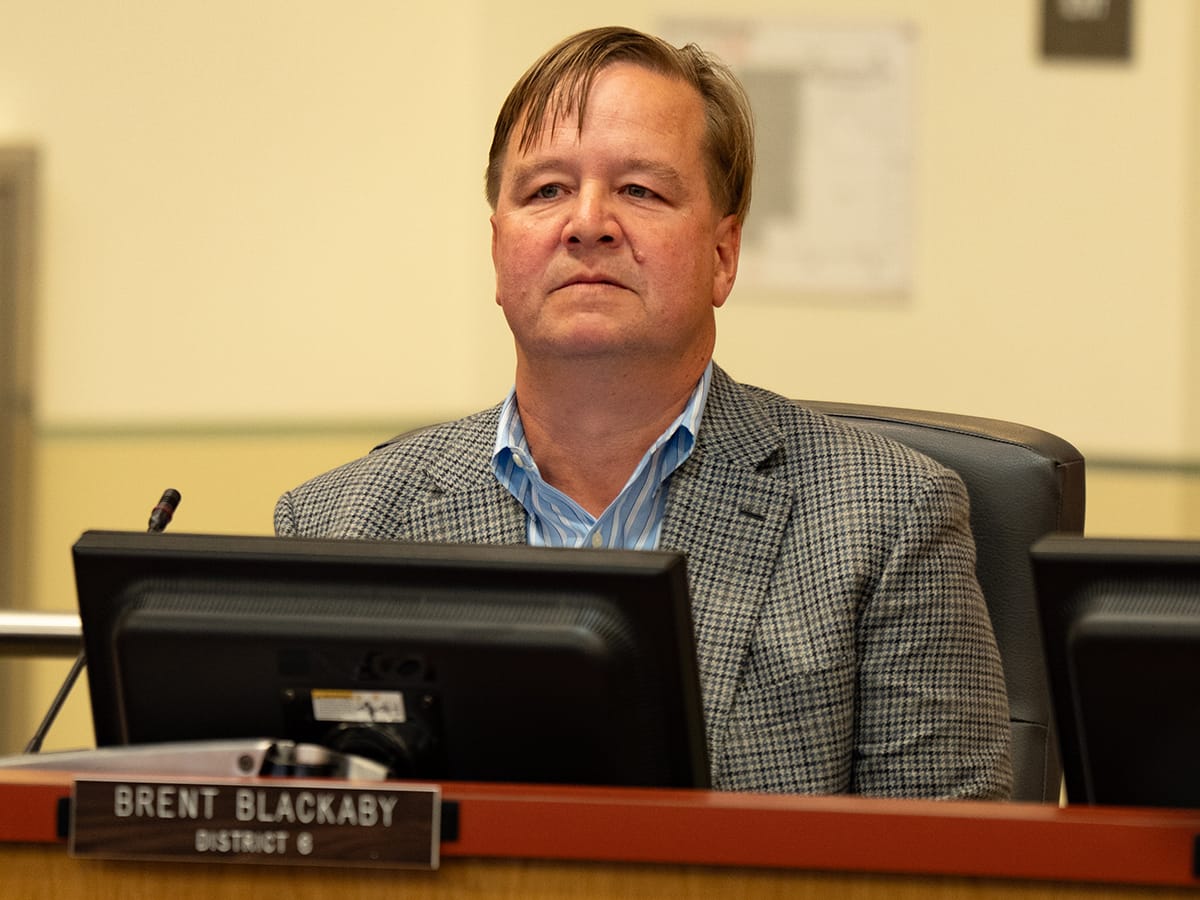
On the dais Thursday, Blackaby explained that he wanted more time to "build the public trust" in council's final decision about new police technologies, and had been moved after hearing concerns and "real skepticism" about Flock for weeks.
"They warrant careful consideration," he said. "Tonight, it's more important to get it right than to get it fast."
Blackaby said he did see value in Flock ALPRs for police and crime victims, noting that they had helped BPD "in more than 161 cases, contributing to 83 arrests involving serious crimes."
Speaking next, Tregub said trust was his top concern after hearing from so many of his constituents.
More than 150 of his constituents had contacted his office, he said, and "nearly 95%" had "expressed grave concerns about Flock."
"The vendor lacks accountability, and therefore cannot be relied on as a trusted partner," said Tregub.
Bartlett said he, too, was voting in line with his district, and that his constituents had made their feelings clear.
"Every single person admonished me to not approve this deal," he said.
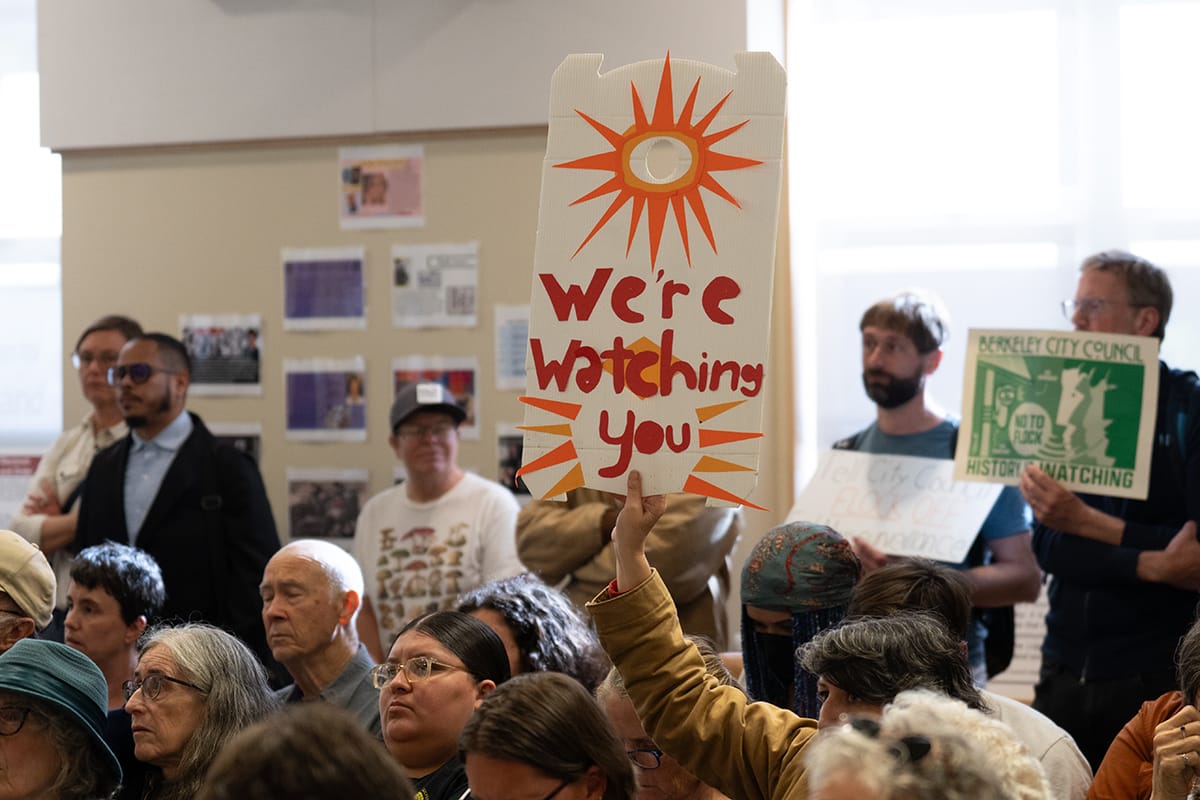
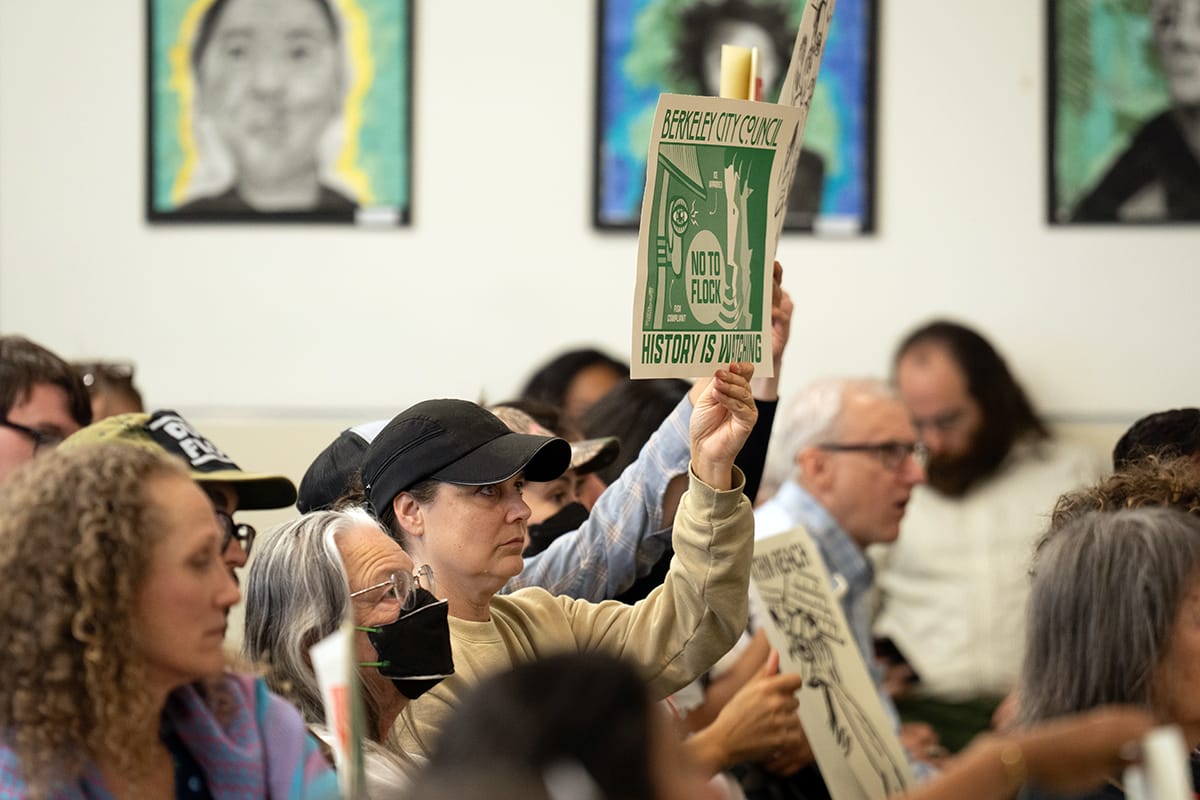
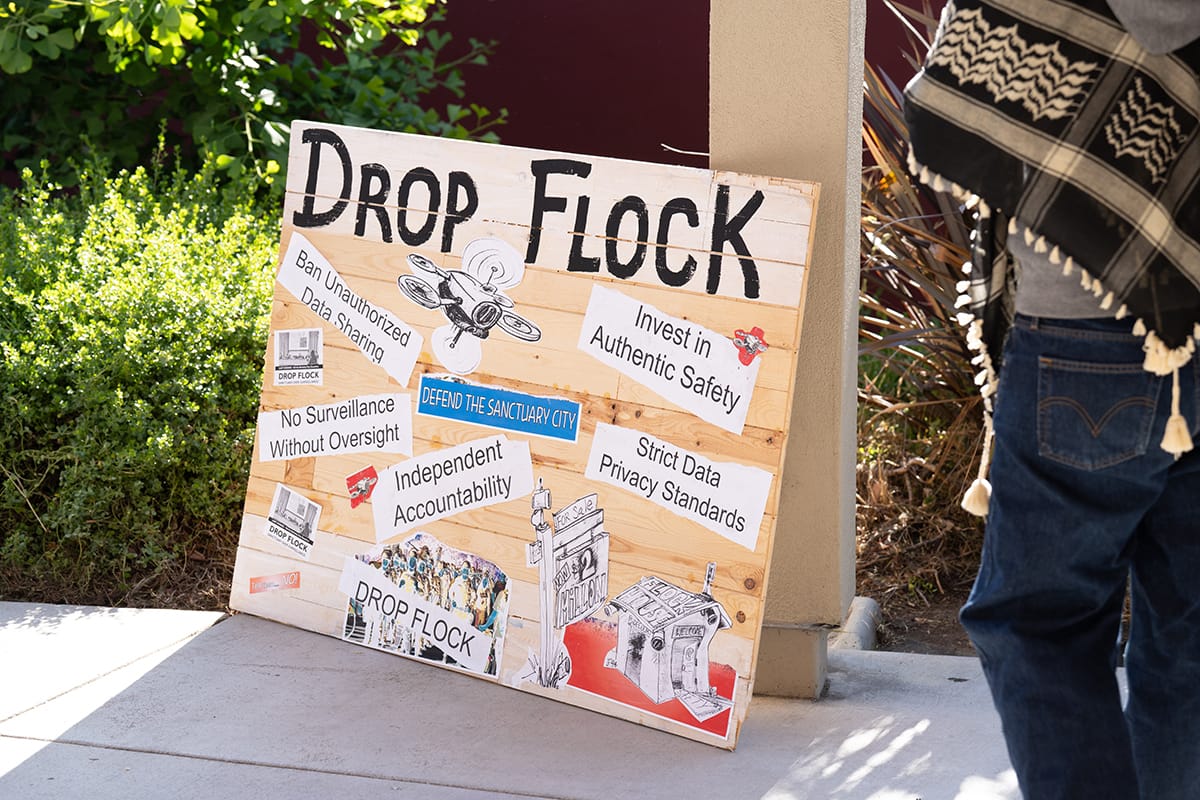
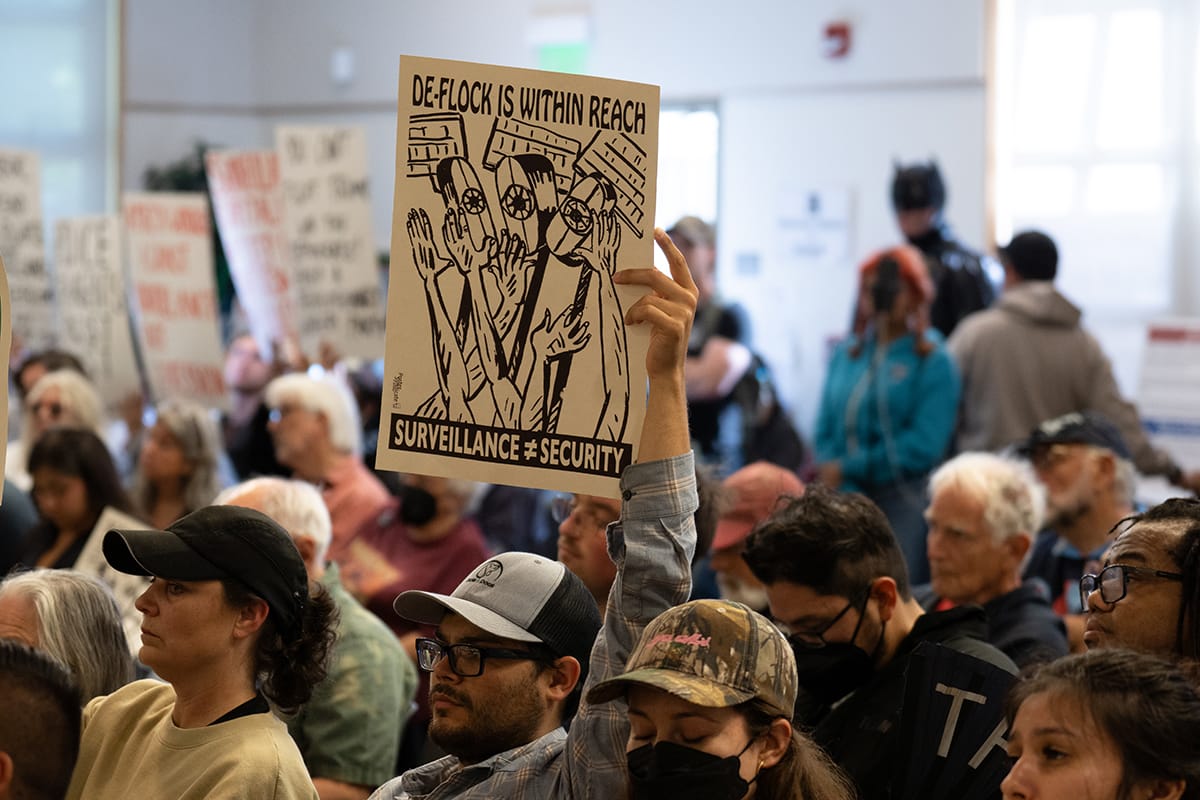

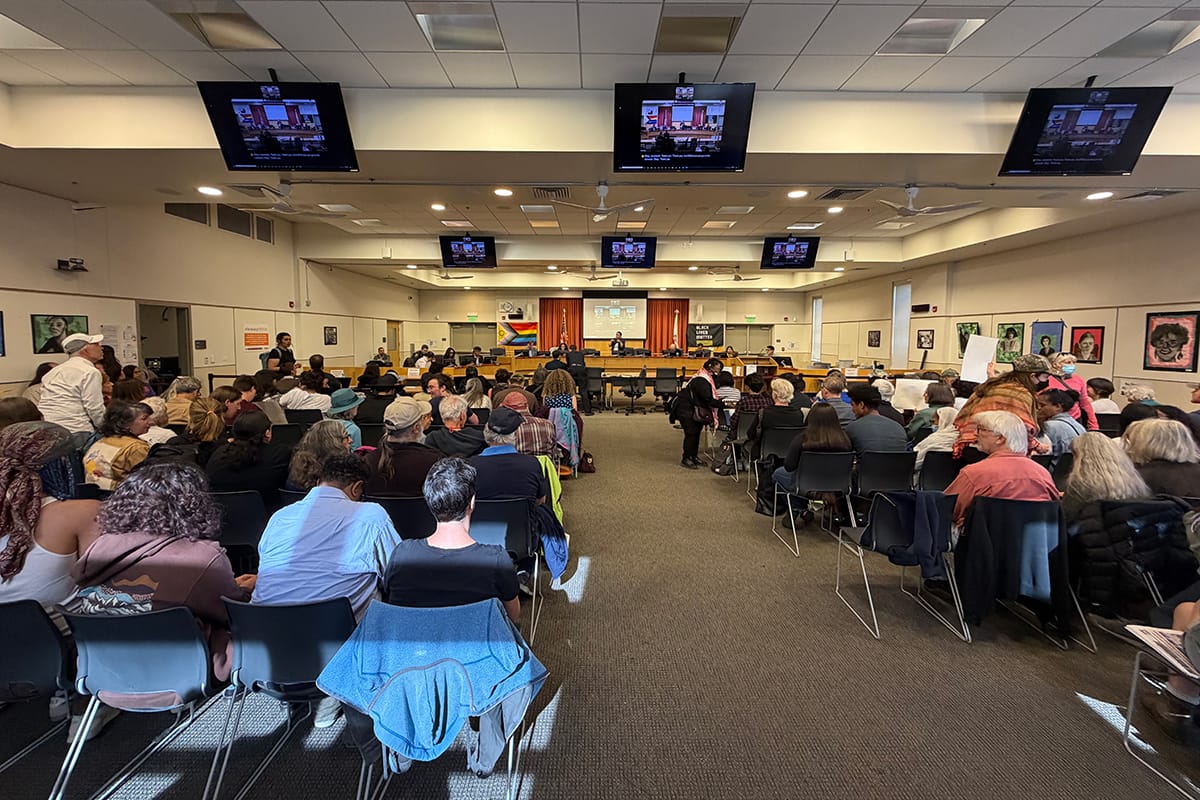
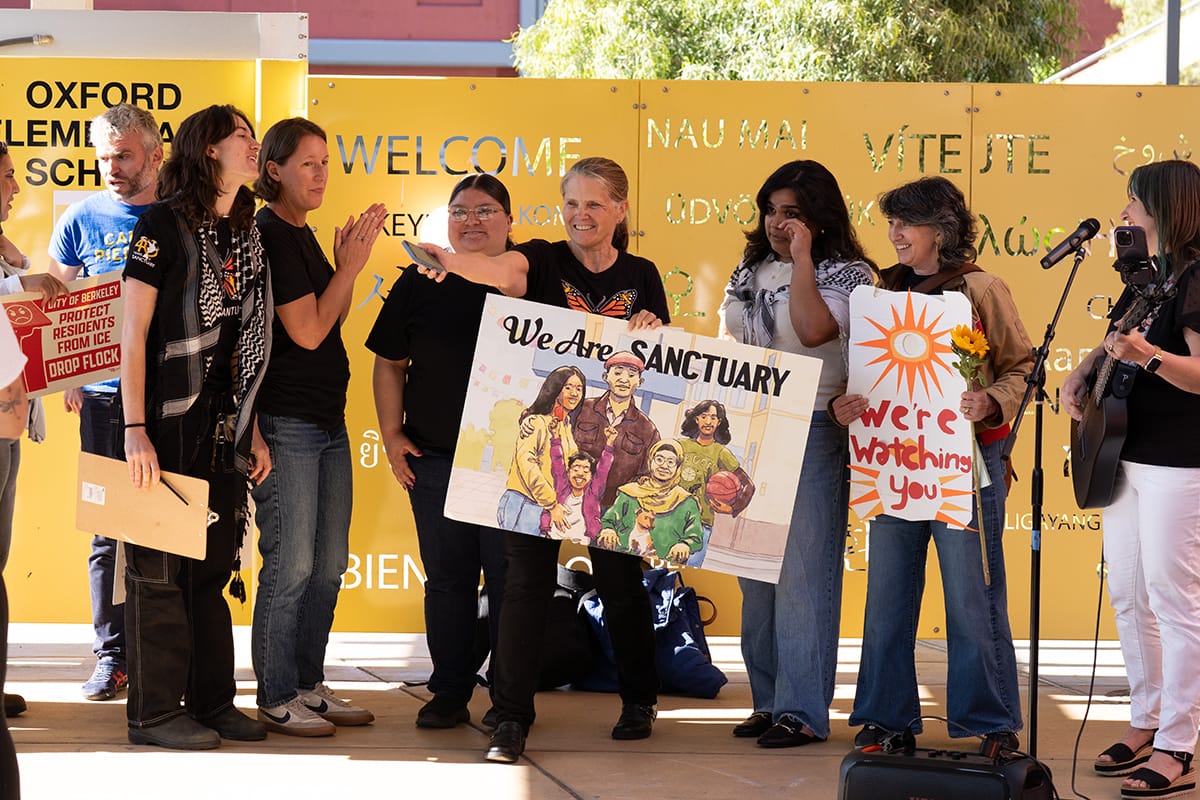
Scenes from Thursday's Berkeley City Council meeting on Flock. Ariel Nava Photo
Tregub said Blackaby's motion would result in a "full evaluation of alternatives," which had not been available to date, and an assessment of the "surveillance system as a whole, not just individual components like license plate readers or cameras, but the combined network, including drones and real-time monitoring, and its cumulative impact on cost, data use and civil liberties."
Tregub said he wanted to see a competitive bidding process and more vendor diversification. He called the decision a matter of "good governance."
"This is not about rejecting technology outright. It is about making sure we get it right," he said.
Lunaparra took a different position, saying she had not seen any proof that Flock technology deterred crime.
And she said she was frustrated that Berkeley groups who had been fighting on behalf of immigrants had also had to spend time arguing with the city about Flock, particularly after Berkeley reaffirmed its status as a sanctuary city last year.
"It is easy to say that we are willing to stand up to fascism and do everything we can to protect them, and it is much, much harder to actually do it, especially when it gets hard," she said. "Passing this contract would be a slap in the face to those who did trust us."
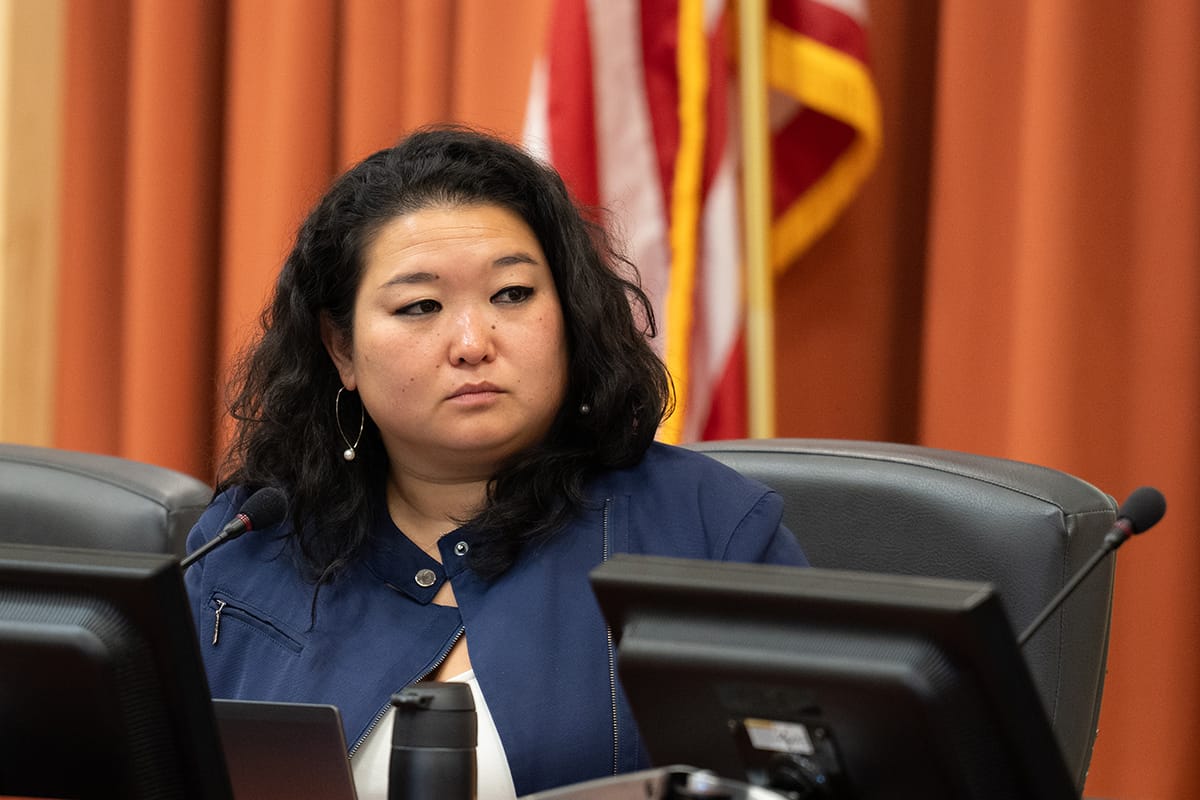
Mayor Ishii, too, said the issue hinged on trust.
"At the end of the day, I just don't trust Flock," she said. "And I don't trust our current federal administration."
"People deserve to live without fear of deportation or detention, to speak out in a protest without feeling intimidated, and to trust our city will protect its residents," she continued. "Legal safeguards are not enough to ensure that federal authorities will respect local laws and protections."
Ishii said people's "legitimate fears" of being targeted for speaking out or being part of immigrant communities made it "difficult to justify" using Flock products — even though she understood why police found them valuable.
Others said they found the calculation more complex.
Kesarwani said extending the contract was the prudent thing to do, while details get hashed out.
For now, she said, she had been reassured by Flock's explanation about changes it had made to shore up data security since last year. But she said she understood not everyone had been convinced.
"I know that we will never have what some are seeking, which is this 100% guarantee that it won't occur in the future," she said.
Kesarwani said her deliberations hadn't ended there, however: She also wanted police to have the tools they needed to solve serious, violent crimes. Some, she added, had affected her constituents.
Kesarwani said she'd had to consider the possibility that violent criminals might be more likely to escape without Flock technology in place.
"That also weighs on my conscience with equal weight as the possibility of a data breach," she said. "That is why we have been elected, to make these hard decisions to weigh difficult competing trade-offs."
Humbert said he, too, had found himself weighing "concrete, everyday safety threats" against "more marginal impacts of things like data leaks."
And he said he looked forward to continuing to work through the issues.
"I believe we can get to a place where we have sufficient protections for our data, and the ability to get out of this agreement, such that the benefits outweigh the risks," he said.
Taplin, who attended the meeting remotely, kept his remarks brief, thanking Blackaby and the mayor "for calling for additional restrictions and guardrails."
"I completely understand the trepidation and reaction to Washington," he said. "The city also needs to be able to function and provide basic tools for critical public safety services. In my view, it would be illogical and impractical … for the system to come down this July."
O'Keefe agreed. She said she had been ready to vote Thursday on the full contract — having already put her position on the record with Humbert, Kesarwani and Taplin — but was "happy to support" Blackaby's motion after campaigning on a promise to support "better and more effective" technology for police.
"My bright-line rule is retaining the ALPRs as they exist right now," she said. "Taking away the ALPRs at this point would make our citizens less safe."
O'Keefe also raised the issue of public trust, but framed it differently.
She said she wanted to believe that more time and more process might serve that purpose. But she had doubts.
"I wonder," she said, "whether or not people came here in good faith, willing to consider that public trust is possible."
"You are already being surveilled to a level of intensity that pales in comparison to what's being proposed," O'Keefe went on, as members of the crowd repeatedly interrupted her.
"I want to implore those here tonight to really think about the logical basis for your outrage," she said. "And when we come back here in a year, I hope we have a more reality-based conversation about what's really at stake."
Editor's note: Due to a scheduling conflict, TBS reviewed a video recording of the meeting after the fact to report this story. In addition, The Scanner added comments from council members Ben Bartlett and Terry Taplin after publication.