Berkeley officials make the case for Flock, as vote nears: Op-ed
Council members Shoshana O’Keefe, Mark Humbert, Rashi Kesarwani and Terry Taplin explain their stance on Flock. The vote comes Thursday.
Editor's Note: TBS publishes guest essays from community members on issues of concern. Today's piece was written by Berkeley City Council members Shoshana O’Keefe (District 5), Mark Humbert (District 8), Rashi Kesarwani (District 1) and Terry Taplin (District 2).
People who live, work and study in Berkeley deserve a city that prioritizes their safety. To make good on that promise, we must continue to leverage new technologies that help solve and deter crime.
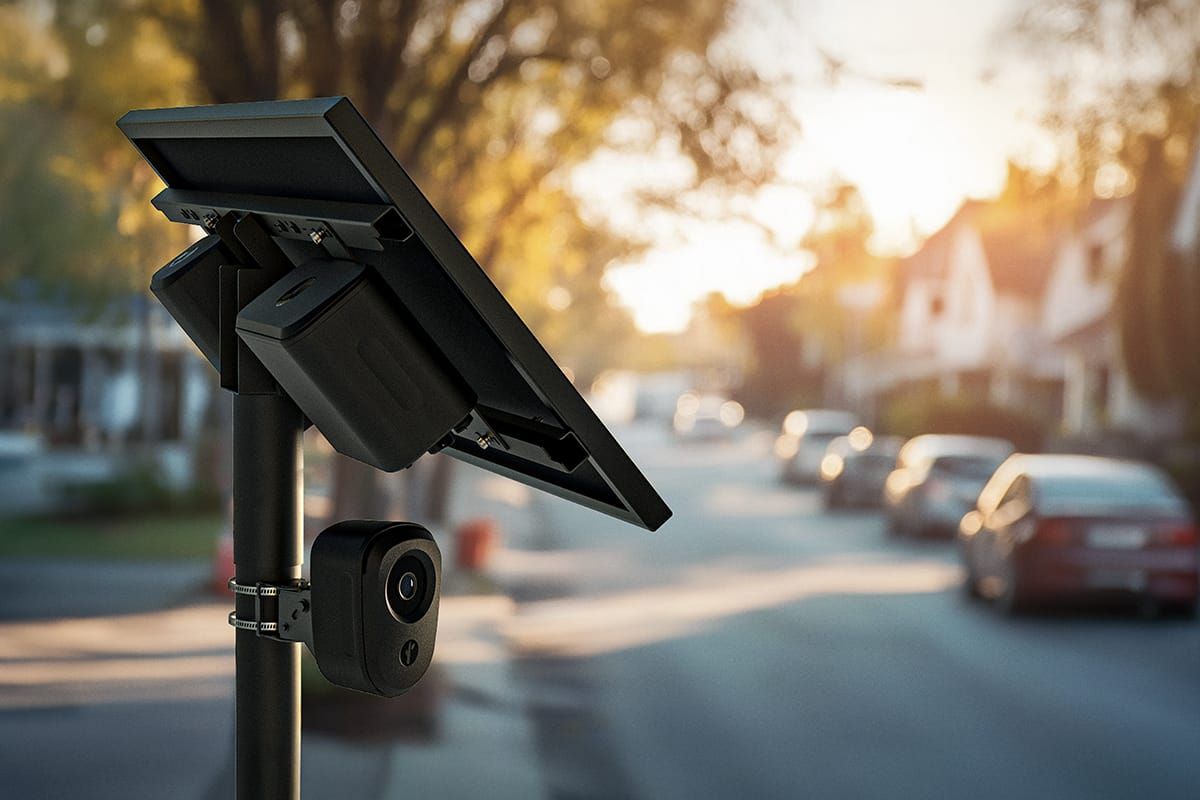
Public safety has always demanded balancing crime prevention and respect for our cherished civil liberties. The debate over renewing our contract with Flock Safety – including the continued use of Automated License Plate Readers (ALPRs) and adding security cameras and other technologies — is the latest test of that balance.
We think Berkeley can pass that test. But only if we are honest about the realities of the risks and benefits of this type of surveillance technology.
We support renewing and expanding our contract with Flock because it conveys well-documented benefits to our city.
"Technology that multiplies the effectiveness of our police officers is critical."
In 2025, Berkeley police made at least 52 arrests for burglaries, robberies, sexual assault and homicide directly from ALPR data, and used the network to assist in 29 other cases.
This past March, a Flock hit led to the arrest of a woman wanted in a home invasion involving gunfire. Last month, a felony hit-and-run suspect was identified and arrested because of ALPRs.
These are all real crimes with real victims and every crime solved has the potential to prevent new ones.
Technology that multiplies the effectiveness of our police officers is critical. This is especially so now, as our city faces a $30 million budget deficit that necessitates doing more with less.
Yet we also know that some members of our community have serious concerns about renewing this contract, and we want to address them directly.
Some believe that the surveillance data will be co-opted by ICE and used to harass or deport members of our community.
It is absolutely true that federal immigration enforcement has become purposely unpredictable and aggressive, without respect for due process or the rule of law.
People who have built their lives in Berkeley have every reason to be scared. That fear is not paranoia.
It's a rational response to what is happening in this country right now. We take these fears seriously and do not dismiss them.
But while the fear is valid, the conclusion that we should reject the contract with Flock does not, in our view, follow from it.
Doing so would deprive our city of a valuable and proven tool to enhance public safety while doing little to protect our community from federal harassment.
"But while the fear is valid, the conclusion that we should reject the contract with Flock does not, in our view, follow from it."
When one examines the details of what has happened with Flock data and immigration enforcement, the picture is not as simple as, "Flock is a pipeline to ICE."
Flock does not give local data directly to ICE or any federal agency. The data-sharing settings are under the control of the customer, which is our own Berkeley Police Department.
Data sharing between law enforcement agencies is an important aspect of the success of the system because criminals rarely confine themselves to a single jurisdiction.
The incidents that have been cited of ALPR data being shared with non-sanctuary jurisdictions are largely a consequence of issues with the sharing settings, not with Flock violating them.
While there have been allegations of Flock altering these settings without permission, our proposed contract language explicitly prohibits any data-sharing changes without council’s written authorization — and gives us the right to cancel the contract immediately if that happens.
After an incident in 2024 where our own in-house audit revealed that a CHP officer (a member of an agency we chose to share our data with) used immigration-related language in their stated search reason, we cut off that agency’s access and narrowed our data sharing to a few agencies we have clear agreements with and who we know share our values.
Is there zero risk that an officer from one of these agencies might use our data to aid in an immigration-related search? Of course not.
But all searches are well documented and search reasons are now limited to a dropdown menu of choices, none of which includes assisting with immigration enforcement.
If an officer searched our records with the intent to share information with ICE, they would have to falsify records on a platform with a high level of accountability and frequent audits.
They would risk being caught, if not by their own superiors, then by one of BPD’s routine audits. They would be risking their careers.
Some have also raised the possibility that Flock could be served a judicial warrant or a FISA warrant for the data.
This is a theoretical possibility, but remember that whatever vulnerability our Flock data has to government intrusion exists equally with the surveillance infrastructure that already surrounds us.
If the government issued a warrant to demand ALPR data from Flock, what is stopping it from using the same tools to extract data from any one of the countless private surveillance devices already in place around the city, as well as in our own pockets?
If Amazon were served a warrant to produce records from Ring cameras in Berkeley, would we even know? Would we have a chance to challenge it in court?
If the government issued a FISA warrant to Apple for location data on a specific individual, what recourse would we have? And wouldn’t that location data be far more useful in tracking someone down than a list of point-in-time license plate sightings?
If the federal government wants to surveil Berkeley, the tools to do it exist right now, regardless of what we decide about Flock.
A determined federal agency would already be able to obtain footage from Ring cameras and other private surveillance without our oversight or knowledge.
The question is not whether surveillance will exist in Berkeley. It already does.
The question is whether any of it operates under democratic oversight, a high degree of transparency and, most importantly, the ability to shut it off if necessary.
As elected leaders, protecting public safety is one of our core obligations. We support cautiously renewing and expanding the contract with Flock because we believe this technology provides an immediate and proven benefit to the people of Berkeley.
We are not willing to sacrifice the safety of our community to fight a symbolic battle in a war on surveillance. Rejecting this contract changes virtually nothing about the surveillance landscape except our ability to use it to prevent and solve crime.
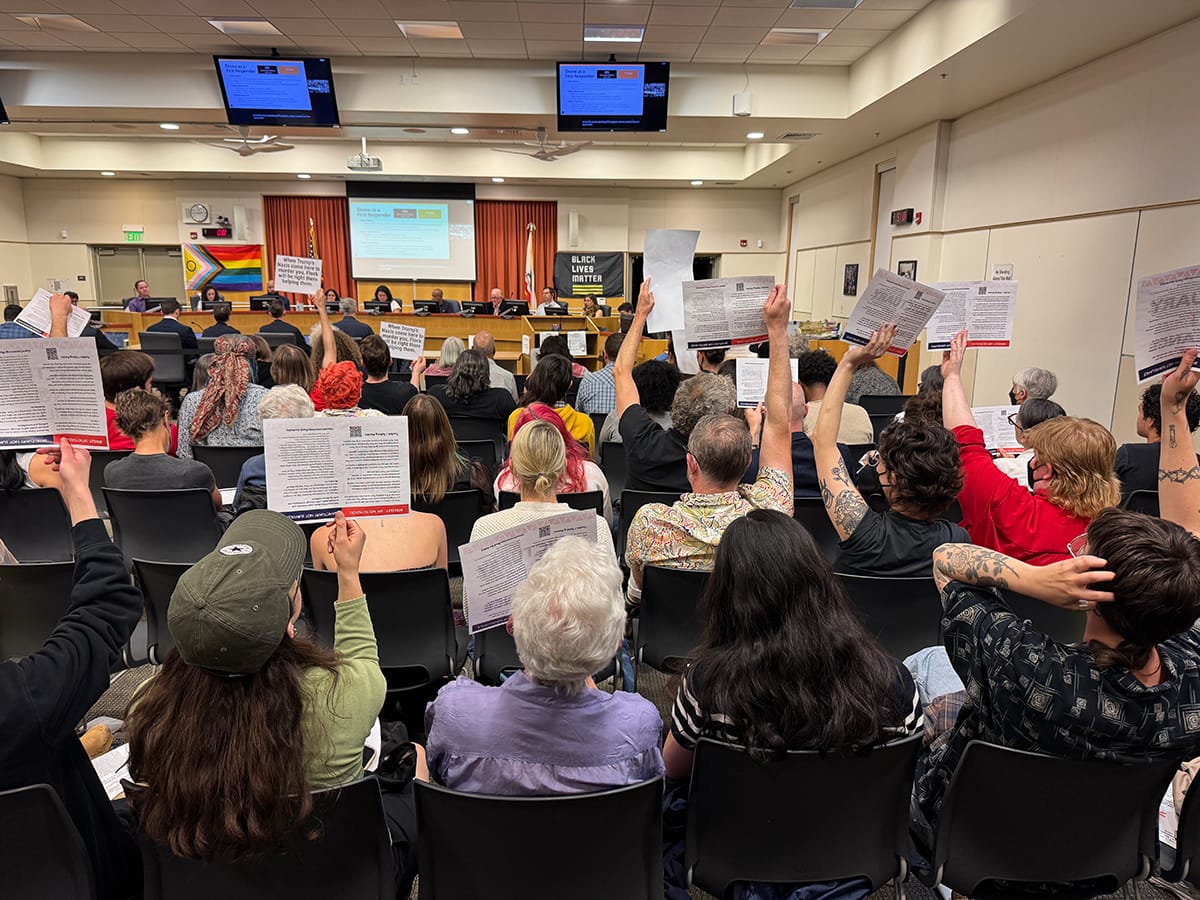
The Berkeley City Council meeting on Flock cameras takes place Thursday, May 7, at 5 p.m. See full meeting details on the city website.
The Scanner will periodically publish guest essays from community members on issues of interest or concern. Authors who are not already TBS members will receive a complimentary membership in return. Submit your ideas to TBS.
Recent related coverage
 Emilie Raguso
 Emilie Raguso
 Emilie Raguso