Op-ed: Berkeley sent its police a message. They’re getting it.
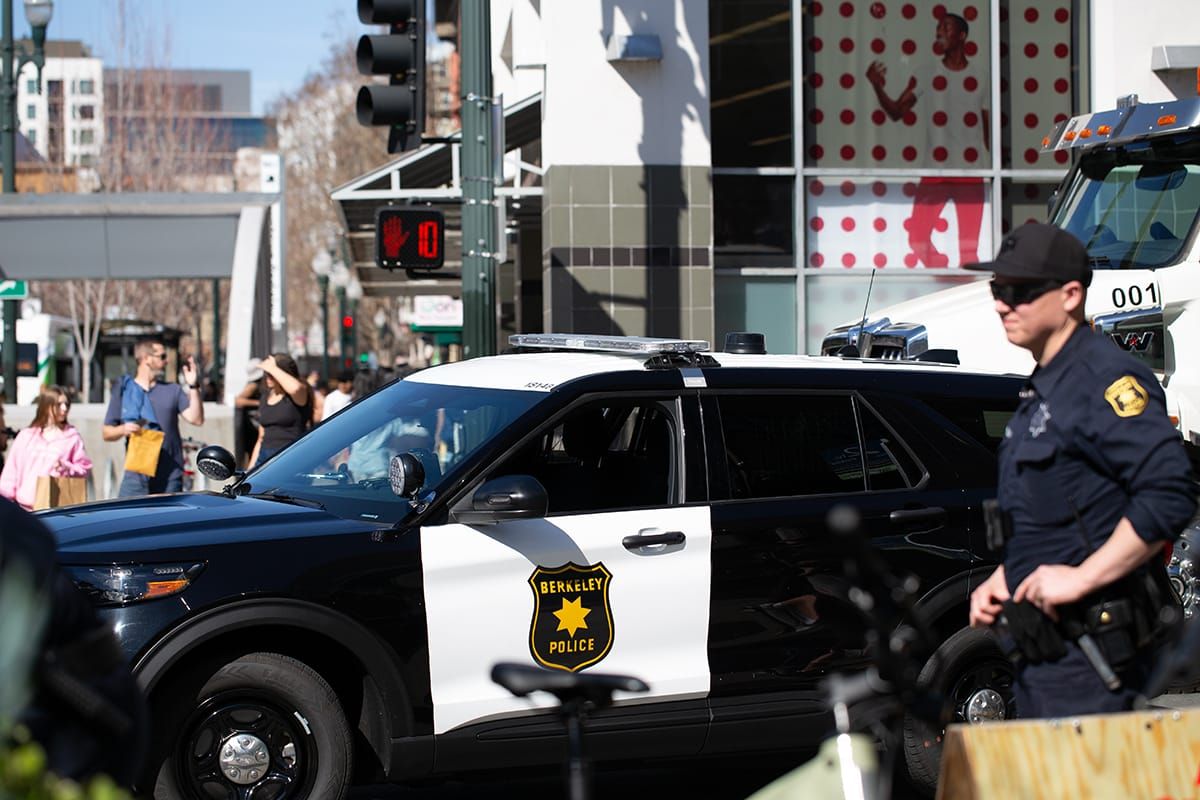
Authorized Berkeley police staffing has been reduced from 181 to 164 officers, with mandatory overtime straining morale, the police union says.
Editor's Note: TBS publishes guest essays from community members on issues of concern. Today's piece was written by Neil Egbert, president of the Berkeley Police Association.
On June 23, the Berkeley City Council made its priorities clear, unanimously.
With the adoption of the FY 2027–28 biennial budget, this city found the will and the funding to preserve nine fire department positions at a cost of $3.6 million, while leaving 17 police positions without equivalent support.
Let me be clear about what just happened, not just in terms of dollars and decimals, but in terms of the message sent to every officer who puts on a Berkeley badge.
And for those wondering whether council members recognized the disparity: Mayor Ishii acknowledged it herself, saying “I recognize that we’ve had conversations with some of the other unions and folks who will be upset by this decision, and I really want to say that I’m sorry.”
An apology was offered. A solution was not.
The department was previously authorized for 181 sworn officers (seven sworn positions were frozen as part of the FY 2025–26 budget). With the adoption of the new budget, the police department permanently lost the seven frozen positions along with an additional 10 sworn positions, bringing our authorized strength down to 164 sworn officers.
The Berkeley Police Association currently has 139 sworn officers. At any given time, there can be five to 15 officers unavailable due to injury or other matters, straining our department further.
The authorization of 164 sworn officers in the FY 2027–28 budget assumes that the November sales tax increase proposed by the city will pass. If it does not, 15 more sworn officers will be eliminated, bringing our authorized staffing to 149 sworn officers.
These 15 positions are currently being held together with one-time money, a budgetary Band-Aid on a deep structural wound. Deputy City Manager David White acknowledged that "the impacts to the department would be quite devastating" if not for those one-time solutions.
Police staffing continues to hover at its lowest point in the past 10 years.
Patrol is currently at approximately 54 officers, compared to 73 officers five years ago. Officers have recently been working approximately 90-100 mandatory overtime shifts per month, just to maintain minimum patrol staffing.
Despite all these challenges, BPD continues to have faster response times to calls for service compared to many of its peers.
Many people are quick to point out that crime is down in Berkeley. While many factors contribute to declining crime, one that I see consistently being overlooked is that the Berkeley Police Department has done an exceptional job preventing and solving crime over the past few years.
BPD’s case closure rate is above the California average in several key crime categories. There has been a 100% closure rate on homicides since 2021. In 2025, 49% of robberies and 63% of felony assaults were closed.
One reason crime in Berkeley has decreased is that our officers send a clear message to those who wish to do our community harm: We will find you and hold you accountable.
These stats paint a clear picture: BPD continues to do excellent, measurable work at solving and reducing crime with fewer resources and tools, and less technology than our peers in neighboring cities.
However, if more positions are cut, the state of the department today would be the best-case scenario in terms of staffing in the future. This would mean a constant requirement of mandatory overtime and regularly open beats on patrol. This is not sustainable.
Crime trends can vary, as we saw in 2022 and 2023 when many crime categories were hitting 10-year highs in Berkeley.
Crime statistics show that, even with recent year-over-year decreases, Berkeley’s crime rate is still well above the national average, with estimates showing crime in Berkeley higher than approximately 95% of other major cities.
Now is not the time to reduce police staffing, but to strengthen a department that is barely afloat. Waiting for crime to rise before acting is a recipe for disaster.
Our members don’t begrudge our firefighters. They are professionals who serve this city with distinction, and they deserve every resource. But equity matters. And the officers of the Berkeley Police Department, who are being asked to do more than ever before, deserve to know that this city values what they do.
In recent months, officers have cited numerous reasons morale has hit rock bottom: the lack of modern tools, limited advancement opportunities, scarce special assignments, mixed political support, and a deteriorating work-life balance due to forced overtime.
Seven Berkeley police officers have left for other agencies, with most going to the San Francisco Police Department.
San Francisco has taken the opposite approach to Berkeley. It also faces severe budgetary constraints. Yet, it recognizes that public safety is paramount to the overall health of the city and has publicly committed to staffing and supporting its police department.
More than 25 Berkeley police officers are eligible to retire this year. That is not a staffing problem. That is a staffing emergency.
There was a time when hundreds of people would apply for a handful of openings with our department. That’s not the case anymore. With multiple agencies competing for the best candidates, the hiring pool has grown thinner.
Every time this city signals that police positions are expendable and police investment is optional, it sends a message to our officers and prospective officers: Is Berkeley where you want to build a career?
This budget does something else that deserves attention. With the city’s Mobile Crisis Team also being eliminated, responsibility for wellness checks and psychiatric emergencies will shift solely to police.
The city expects us to absorb more work, respond to more calls and fill more gaps in the fraying social safety net, all while eliminating the very positions we would need to do so responsibly.
That is not a sustainable public safety model. That is an unfunded mandate handed to a department already running on fumes.
What impact does this have on our community?
On any given overnight shift, there are now only six to eight officers working in the entire city. Smaller patrol teams mean officers will respond to approximately 30% more calls than they did five years ago. This means less time for traffic enforcement and proactive policing, less time for community engagement, less time to follow up with victims and less time for follow-up investigations.
All of this leads to a lower quality of service than our citizens deserve and have come to expect. The impact extends beyond patrol. Our Flex Team (problem-oriented policing), investigations division and bike unit are all following the same path.
Berkeley's Vision Zero program was adopted in 2020 with a goal to eliminate traffic deaths and severe injuries by 2028. The city expects that goal to be met by a department that currently has just two motor officers and a traffic analyst.
The residents of Berkeley will feel these consequences. Not the council. Not City Hall. The people of this city.
The Berkeley Police Association has never asked for special treatment. We have asked for fairness. We have asked for investment. We have asked this city to look our police officers in the eye and say: We need you, we support you, your service matters, your work matters and your future here is secure.
This budget did not say that.
We will keep showing up. We will keep serving. We will continue to be the elite police department that we are. That is what our members do, regardless of the politics.
But make no mistake: Every officer is watching. They are drawing their own conclusions about what Berkeley thinks of them, and some of them are already walking out the door.
The question for this City Council is simple: how many more Berkeley police officers can you afford to lose?
The Scanner will periodically publish guest essays from community members on issues of interest or concern. Authors who are not already TBS members will receive a complimentary membership in return. Submit your ideas to TBS.