After years of debate, Berkeley approves Hopkins bike lanes
The plan, which includes paving and pedestrian safety improvements, is estimated to cost up to $20 million.
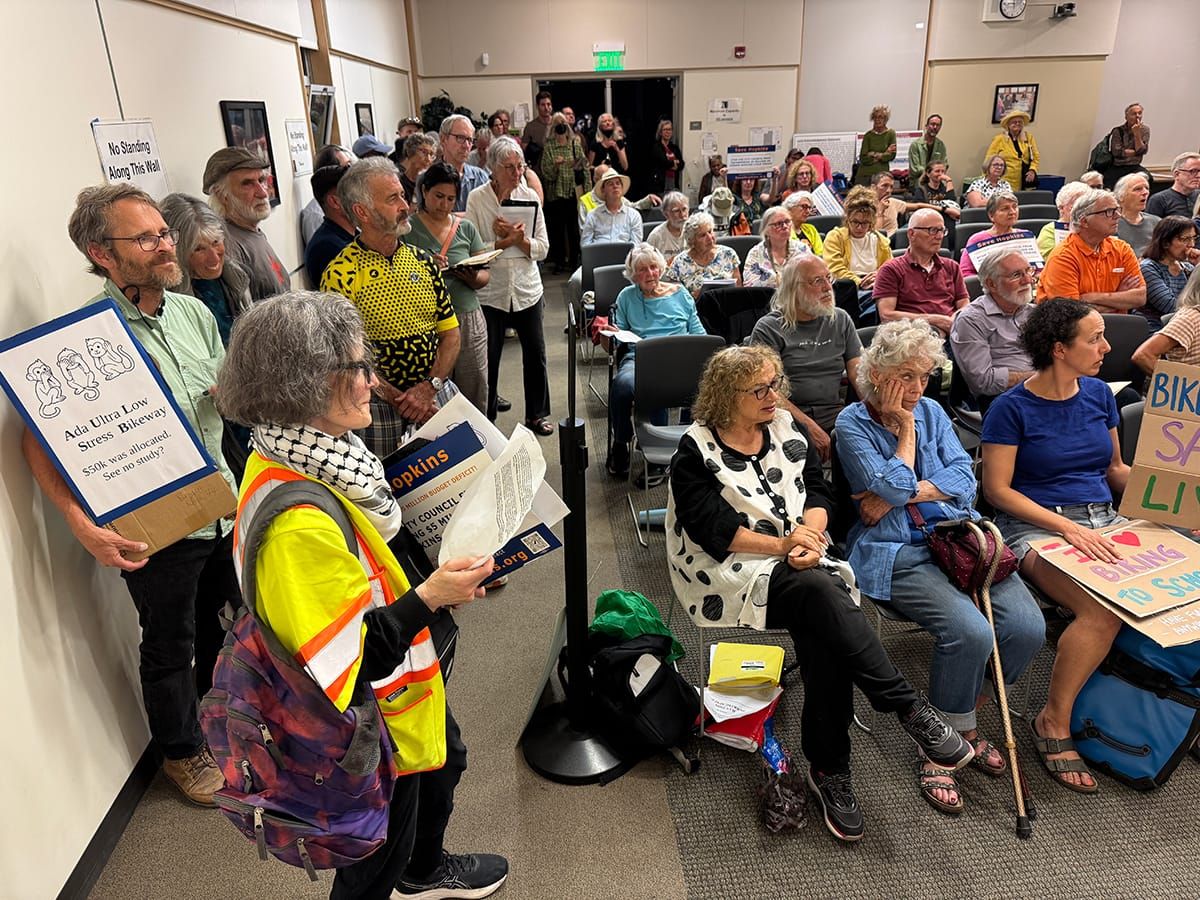
Despite a sharply divided public and opposition from the council member representing the district, Berkeley has approved protected bike lanes on Hopkins Street.
The separated bike lanes are set to run from The Alameda west to the Ohlone Greenway (at Peralta Avenue) when Hopkins Street is repaved in 2027-28.
A preliminary estimate for total project costs — which include pedestrian safety improvements and painted bike lanes from Sutter Street to The Alameda, among other features — is around $20 million, with up to $6 million of that related to the protected bike lanes. Staff cautioned Tuesday night that more detailed financial assessments won't be done until later.
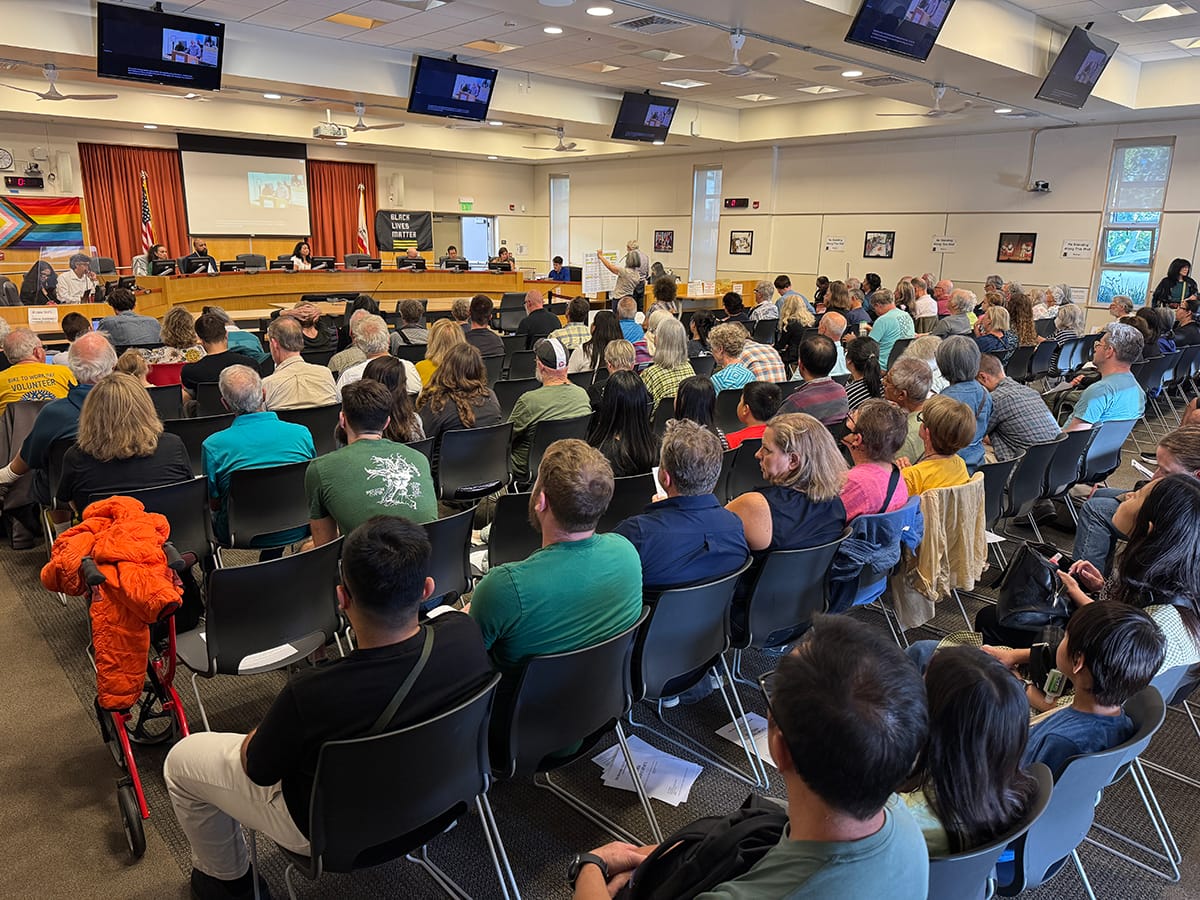
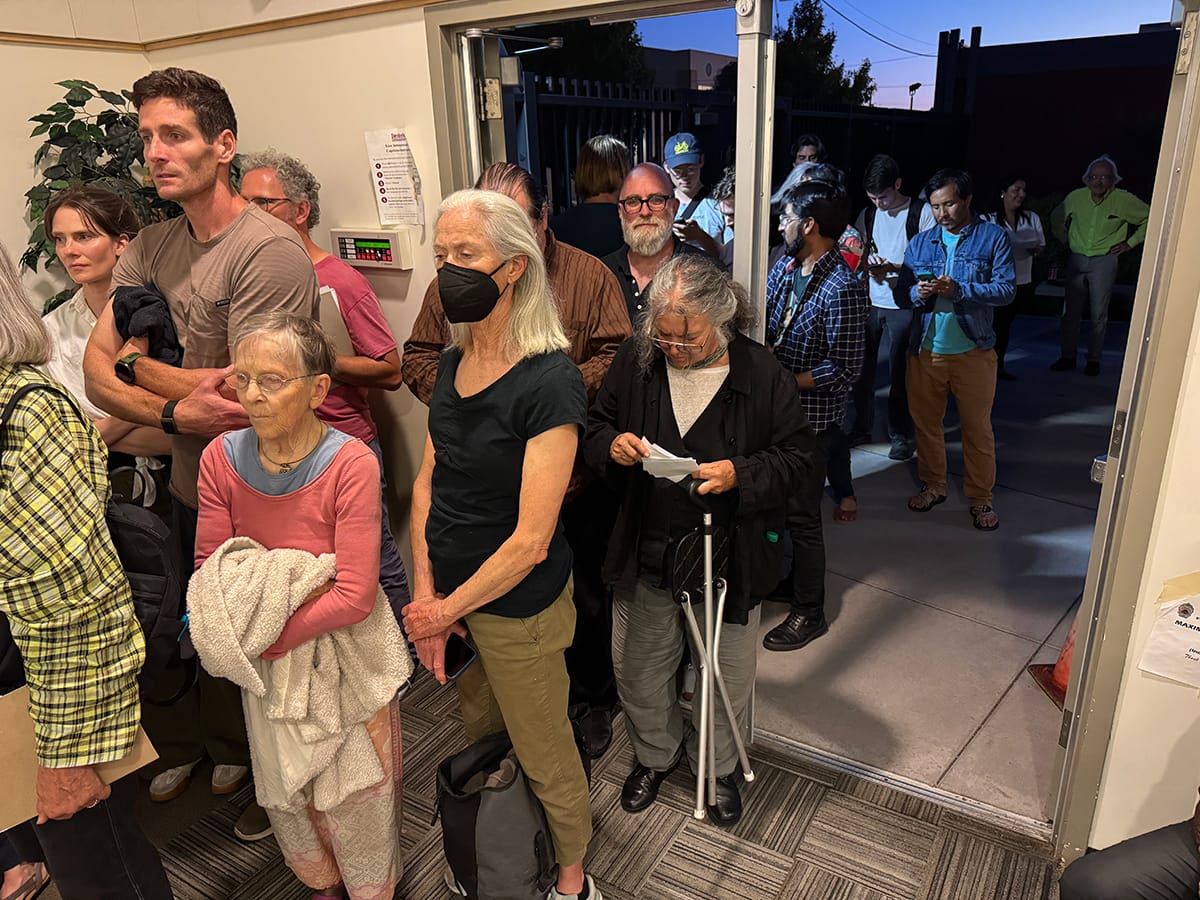
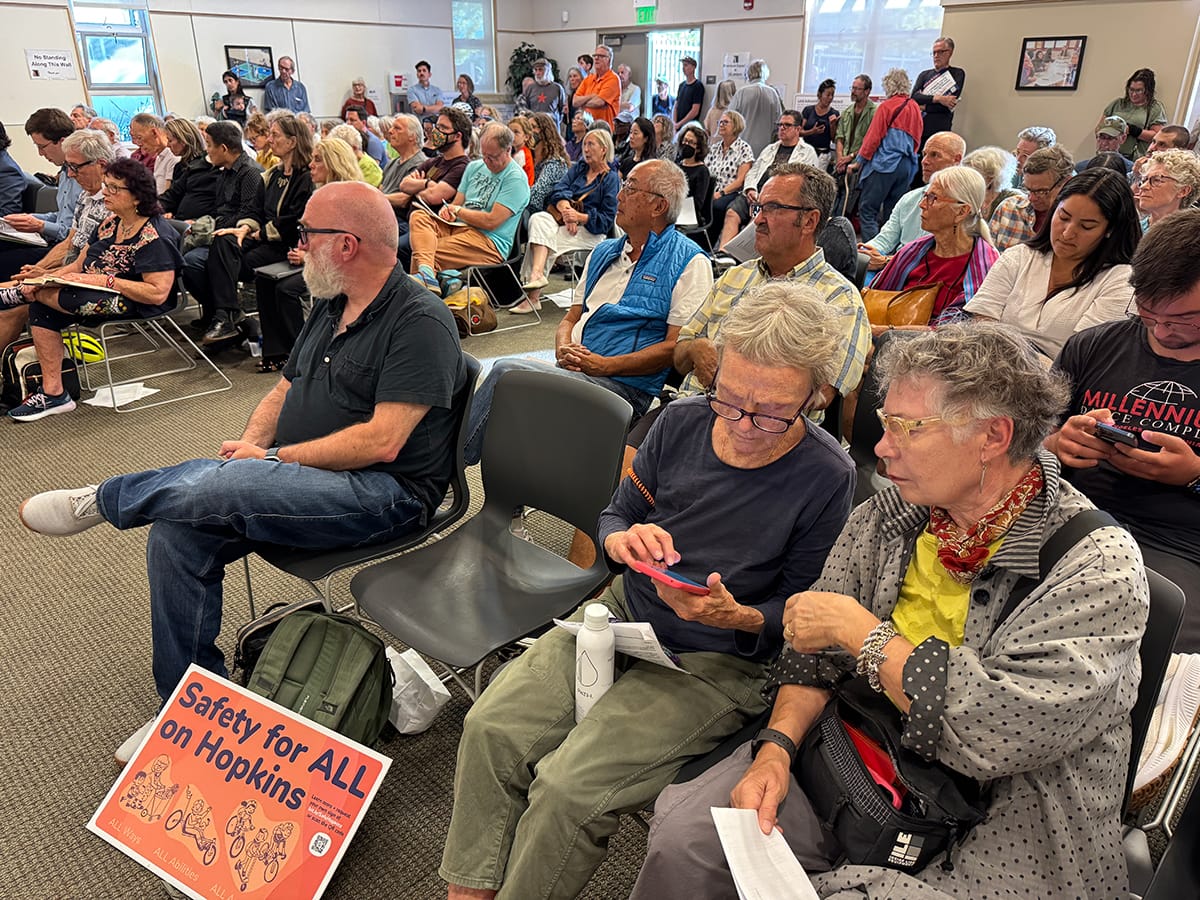
More than 120 people turned out to comment in person or called in via Zoom to make their voices heard.
The two public camps were evenly split between those pulling for protected bike lanes — citing safety and climate concerns — and those staunchly opposed, worried about impacts to their bustling neighborhood shopping district.
Mayor Adena Ishii limited public comment to three hours to allow adequate time for council debate and action. The meeting did not end until nearly 1 a.m.
When it came time to vote, council members Brent Blackaby, Ben Bartlett and Shoshana O'Keefe (who represents the North Berkeley district where most of the project is located) put forward alternatives to the main plan from Rashi Kesarwani — but they ended up one vote shy of a majority despite support from Igor Tregub.
" This is absolutely madness," O'Keefe said, emotion in her voice, shortly before the vote. "Please do not force this expensive, disruptive, unwanted plan on District 5. We do not want it, and there are other alternatives."
When the alternatives failed, O'Keefe and Blackaby (Berkeley Hills) were the only two to vote against the main motion, citing the lack of support in their districts.
In addition to cost, they also raised questions about parking, with the removal of an estimated 145 parking spaces out of 274 spots along Hopkins Street.
"We've never removed all the parking before along a busy commercial corridor," O'Keefe said. "We don't know what would happen."
Proponents of the plan, the council majority and community members alike, including Walk Bike Berkeley, said Berkeley cannot afford to waiver.
"This is about more than just a bike lane on one street," said Councilman Mark Humbert (Claremont-Elmwood), who co-sponsored the Kesarwani plan with Mayor Ishii. "It's about what kind of a city we want to be and what we're willing to do to live up to our professed priorities and principles."
Humbert stressed that the protected Hopkins bike lanes are consistent with the city's Bicycle Plan, Climate Action Plan, Vision Zero Action Plan and Declaration of a Climate Emergency.
" If we are to fight back against the people who say that climate change is a hoax, we here in Berkeley cannot act like climate change is a hoax by refusing to take action in our community and in our lives," he said.
Councilman Terry Taplin (West Berkeley) echoed those concerns.
" These are things that we continuously adopt and declare as priorities," he said. "Far too often, the choice comes to us and, perhaps previously at times, council has not stepped forward in the way that it should have. And I think tonight we can correct that."
Plan supporters repeatedly emphasized that protected bike lanes, also called "cycle tracks," have been found to be safer for all road users and are associated with either improved or neutral economic conditions — not economic doom.
Mayor Ishii said she had gotten more than 1,000 emails about Hopkins Street in the past week alone, and said the concept of protected bike lanes in the neighborhood had been "a source of controversy" for at least 10 years.
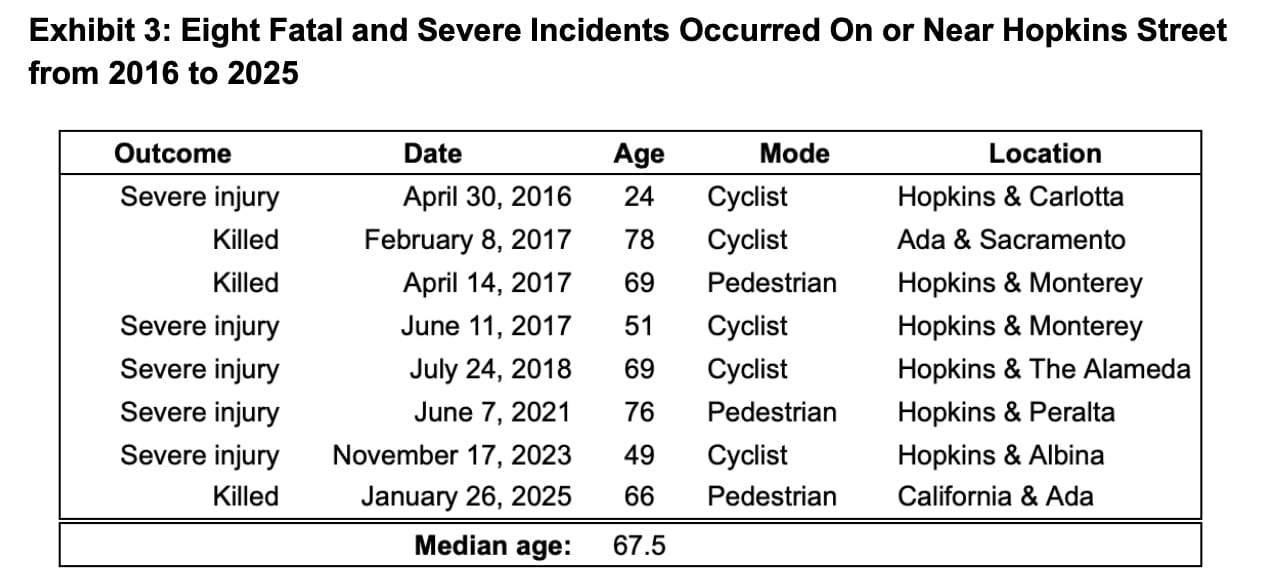
Ishii reminded the crowd that the city had designated Hopkins as a high-injury corridor due to its three fatalities and 46 pedestrian and bicycle crashes (including five with suspected serious injuries) from 2011 to 2026.
" I am deeply invested in ensuring that our streets are safe for all users, pedestrians, cyclists and drivers. And that is why I support bike lanes on Hopkins Street," she said. "Cyclist infrastructure improves safety for everyone."
She urged patience, saying the time to answer the open questions would come after the vote.
And there are certainly questions, including impacts to local merchants and a longtime neighborhood church; pool and sports field access, included ADA spots and loading zones; how limited driveway visibility might impact road users; and emergency access.
The city has also discussed installing meters to help manage parking turnover.
Kesarwani (who represents Hopkins west of Sacramento Street) said the Berkeley Fire Department had signed off on the cycle track concept as far as "workable emergency access."
Tuesday night, Berkeley Fire Chief Dave Sprague said his department would do a closer analysis of emergency vehicle turning movements, impacts on evacuation times, and emergency access on and near Hopkins once Public Works comes up with a full design set.
O'Keefe asked Interim Public Works Director Wahid Amiri about what kind of coordination there had been with Zero Waste staff to determine how garbage trucks and local buses would fit in the roadway should they meet.
"They would have to maneuver in a calculated manner," Amiri said, which could pose challenges, he added, "depending on the driver skillsets."
"We know there are going to be challenges," he told her. "The specific challenges haven't been identified. All we know is there are going to be challenges."
O'Keefe and Blackaby both urged their colleagues to keep in mind the trade-offs for the city and the neighborhood when the new bike lanes go in.
Blackaby said, by his rough calculations, Hopkins Street could lose 10,000 people a week who currently come by car and don't plan to start biking.
"Many of them are my constituents or Councilmember O'Keefe's constituents. They're going to have to figure out other things to do. And that's a shift, and that's something that we should just be honest about," he said. " It's not just about parking spots. It's about who's going to use this neighborhood."
O'Keefe's alternative would have paved Hopkins and added painted bike lanes, while directing the city to develop Rose Street into a robust bike boulevard (which is part of the city's bike plan).
Blackaby, Bartlett and Tregub voted with her on that proposal, but it died for lack of a fifth.
Blackaby then put forward his substitute plan (co-sponsored by Bartlett), which asked staff to come up with a viable alternative to the Hopkins cycle track — to connect North and West Berkeley in the Hopkins/Ada/Rose corridor — and then compare them side by side.
His plan would not have delayed Hopkins Street repaving or bike lanes, he said, since that's not set to happen until 2027-28.
But his proposal met the same end as O'Keefe's.
Kesarwani said she felt her Hopkins Street proposal was " the right one for now" — describing the changes as "necessary and overdue."
She said her plan would help protect seniors as well as the many children who walk and bike to school in the corridor every day.
"All of us deserve a safer street," she said.
The Berkeley City Council is now on recess until Sept. 15.
Map: Serious and fatal crashes on and near Hopkins Street in Berkeley since 2016
Note: Click the small box in the left corner below for a list of incidents.