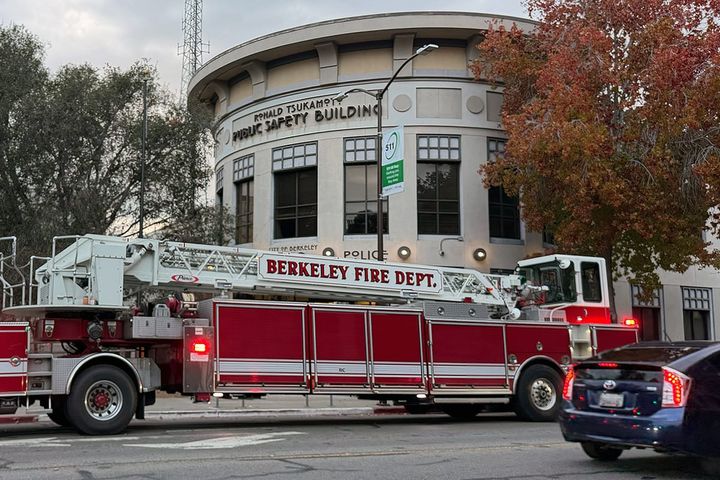
Berkeley pushes 911 revamp to improve emergency response
The Communications Center has a 70% to 80% attrition rate for new dispatchers. The city hopes Priority Dispatch will help change that.

Berkeley's 911 center delivers inconsistent responses and sometimes misses chances to provide life-saving instructions, the city says.
The fix? A nine-year, $1.7 million contract for a new system, called "Priority Dispatch," to help 911 workers choose the right level of response faster, and give callers and first responders "consistent support."
The Berkeley City Council is set to approve the new contract at its next meeting, June 9.
The idea of Priority Dispatch has been around for years, initially arising amid the "reimagining" policing process following George Floyd's death in 2020.
A 2023 analysis commissioned by the city surfaced Berkeley Communications Center challenges, including chronic short staffing, a "workplace culture that is suffering" and outdated dispatch practices.
Berkeley's Communications Center, the "comm center" for short, handles about 180,000 police and fire calls each year, the city says.
Even more than police, the comm center has struggled with hiring, and has a 70% to 80% attrition rate for new dispatchers. The city hopes Priority Dispatch will help change that by improving workplace training and support.
The new contract is part of the city's "broader dispatch modernization effort," according to the staff report for the June 9 council meeting, from Berkeley Fire Chief Dave Sprague.
"Manual call handling can lead to differences in how calls are screened and prioritized, especially during stressful incidents or high-volume periods," he writes.
The new system de-emphasizes "individual judgment and experience," taking dispatchers "through a consistent sequence of questions and response steps so they can gather the most important scene details, identify the right response level, and relay accurate information to first responders in real time."
Put another way, Priority Dispatch "reduces improvisation under pressure, strengthens the quality of the first response, and reduces liability for the individual dispatcher and the city," Sprague writes.
The new system will be funded through a combination of Measure FF (2020) and the police and fire budgets in the General Fund.
The contract covers training, dispatcher quality checks and software updates.
See the full Berkeley City Council agenda for June 9 on the city website.
Read next
 Guest Contributor
 Emilie Raguso