When construction shuts down sidewalks, we all lose: Op-ed
"When sidewalks and bike lanes disappear, everyone who is not in a car is forced into unsafe situations," says Erik Knaresboro in today's guest essay.
Editor's Note: TBS publishes guest essays from community members on issues of concern. Today's piece was written by Erik Knaresboro, founder of Streets of Equality, a Berkeley-based disability rights advocacy project focused on street and sidewalk safety.
My name is Erik Knaresboro and I have lived in Berkeley for six years.
In January 2025, I started an advocacy project called Streets of Equality to work with the city on street safety policies that help the community. Being disabled myself (legally blind) and traveling with a guide dog, I know how dangerous getting around Berkeley can be.
Recently, I was walking from Durant Avenue, via Shattuck Avenue, to the East Bay Center for the Blind on Adeline Street. When I crossed toward the east side of Adeline and started walking south, I was confronted with a wall of construction.
The sidewalk was blocked, and there was no clear way for a blind pedestrian to know how to get around it safely.
I had to ask a construction worker to help me cross the street.
"What should have been a straightforward trip turned into a confusing zigzag through live traffic."
As I walked a bit farther, I ran into yet another construction zone with no accessible route. I crossed back again, only to hit a third blockage.
This happened several times before I finally reached Ashby Avenue, where I had to cross again — only reaching my destination by heading back north for the last leg.
What should have been a straightforward trip turned into a confusing zigzag through live traffic.
For a blind person using a guide dog, this is more than inconvenient.
There was no warning that construction was ahead: no audible beacons, and no roped‑off areas to signal that the path was about to disappear.
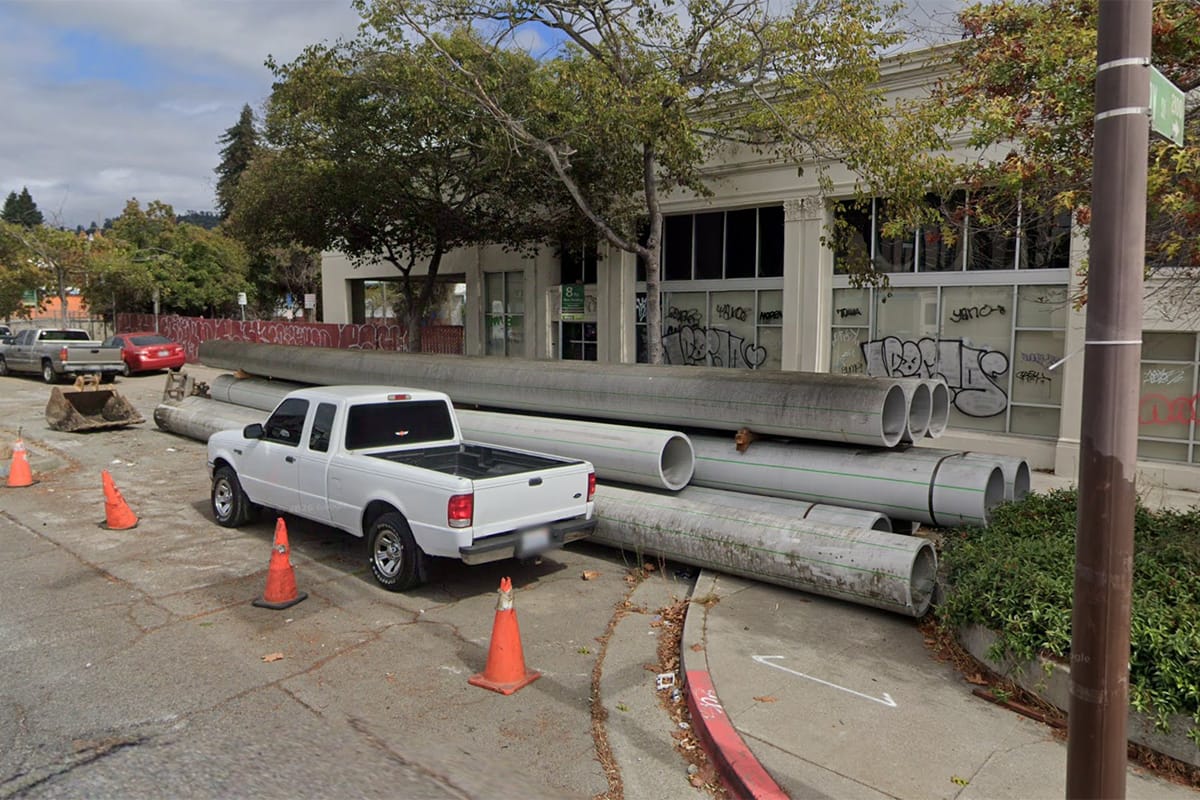
Simply putting a cone or an A‑frame sign in the middle of the sidewalk does not work. A well‑trained guide dog will find a way around that obstacle, because that is what they are supposed to do.
If the city wants to keep us safe, it has to require construction sites to close off the entire sidewalk with a barrier, rope or even caution tape so guide dogs know it's time to seek a safe alternative.
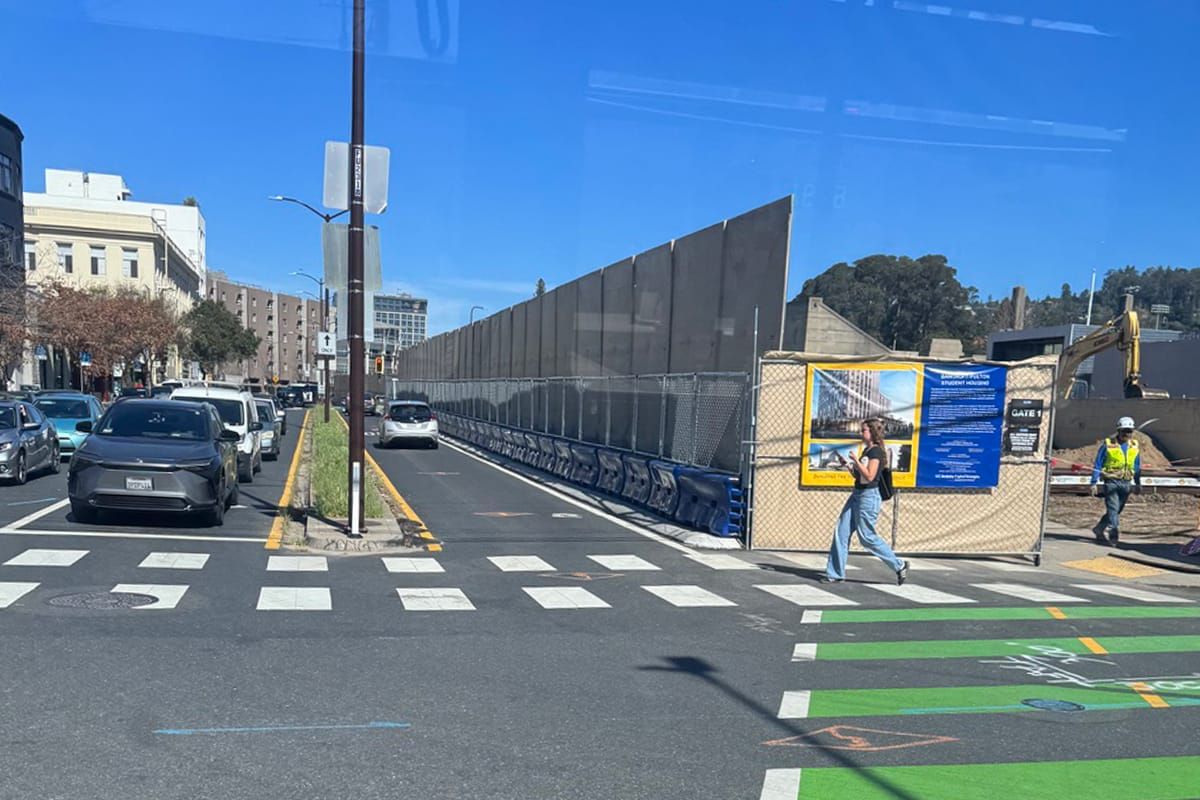
We are seeing the same problem right now at Durant and Fulton Street, part of the new Southside Complete Streets Project.
The city just celebrated a two‑way protected cycle track and safer crossings on and around Fulton, calling it an example of how Southside is now safer for people walking, biking and taking transit.
Few feelings better than breaking in the bike + bus lanes you planned and funded. The Southside Complete Streets Project is nearing completion 🥳
— Rigel Robinson (@RigelRobinson) July 19, 2024
Thank you to the advocates and Public Works heroes who made it possible! 🚲🚌🚸 pic.twitter.com/OxoeOU98nB
But a construction site at Durant and Fulton now blocks not only the pedestrian sidewalk but also the new bike lanes between Durant and Bancroft Way.
If you are walking or biking north along Fulton, there is no way to know the sidewalk and bike track are closed ahead until you have crossed the street.
For disabled people, especially those of us who are visually impaired or blind, that is dangerous.
Unfortunately, these are just two examples of a much broader problem. Since moving into my apartment six years ago, my daily reality involves finding new ways around yet another construction site.
Either something is being built or something is being torn down, and the city cannot keep up.
Construction agencies often ignore Public Right of Way Accessibility Guidelines (PROWAG), closing bike lanes the city has spent millions to install.
PROWAG — the federal accessibility standard for streets and sidewalks — requires cities to maintain an accessible path of travel for disabled pedestrians even when there is construction.
Many construction sites in Berkeley are not being properly regulated due to limited city staffing and funding.
This is not just an inconvenience for disabled and elderly residents; it is also a serious safety issue for others who walk and bike.
When sidewalks and bike lanes disappear, everyone who is not in a car is forced into unsafe situations.
Last year, a coalition called Berkeleyans for Accessible Rights-of-Way (BAROW), which includes Streets of Equality, sent a letter to the Berkeley City Council describing ways we could use Measure FF to fix this.
One key suggestion was to create a position in the city's ADA compliance office dedicated to keeping construction projects in line with accessibility standards.
With so many construction zones across the city, the existing overextended team cannot effectively monitor them.
"When sidewalks and bike lanes disappear, everyone who is not in a car is forced into unsafe situations."
We need someone whose job it is to ensure that people who bike and walk, including disabled and elderly people, can move safely through our city while construction happens.
Other cities, including Oakland, already have stronger rules that require safe, accessible detours for people walking, rolling and biking when sidewalks and bike lanes are closed.
Given our values, Berkeley should at least meet that standard — if not try to lead.
Groups like Streets of Equality and BAROW are ready to help the city do this work.
We bring lived experience, knowledge about accessibility, and on‑the‑ground observations about where people are getting pushed into the street.
Instead of treating our feedback as an afterthought, Berkeley should partner with us when major construction projects start to make sure sidewalks and bike lanes stay open and safe for everyone.
For me and many others, safe sidewalks and bike lanes are not a luxury.
They are the difference between independent travel and being forced to choose between staying home or stepping into danger.
We can either make excuses, or we can make solutions.
Learn more about Streets of Equality, including how to get involved, at streetsofequality.org.
The Scanner will periodically publish guest essays from community members on issues of interest or concern. Authors who are not already TBS members will receive a complimentary membership in return. Submit your ideas to TBS.