Volunteers brave the rain for Berkeley wildfire cleanup
Hundreds of local residents, including many Cal students, dug, hacked, snipped, bagged, shoveled and raked Saturday — most of the time in rain.
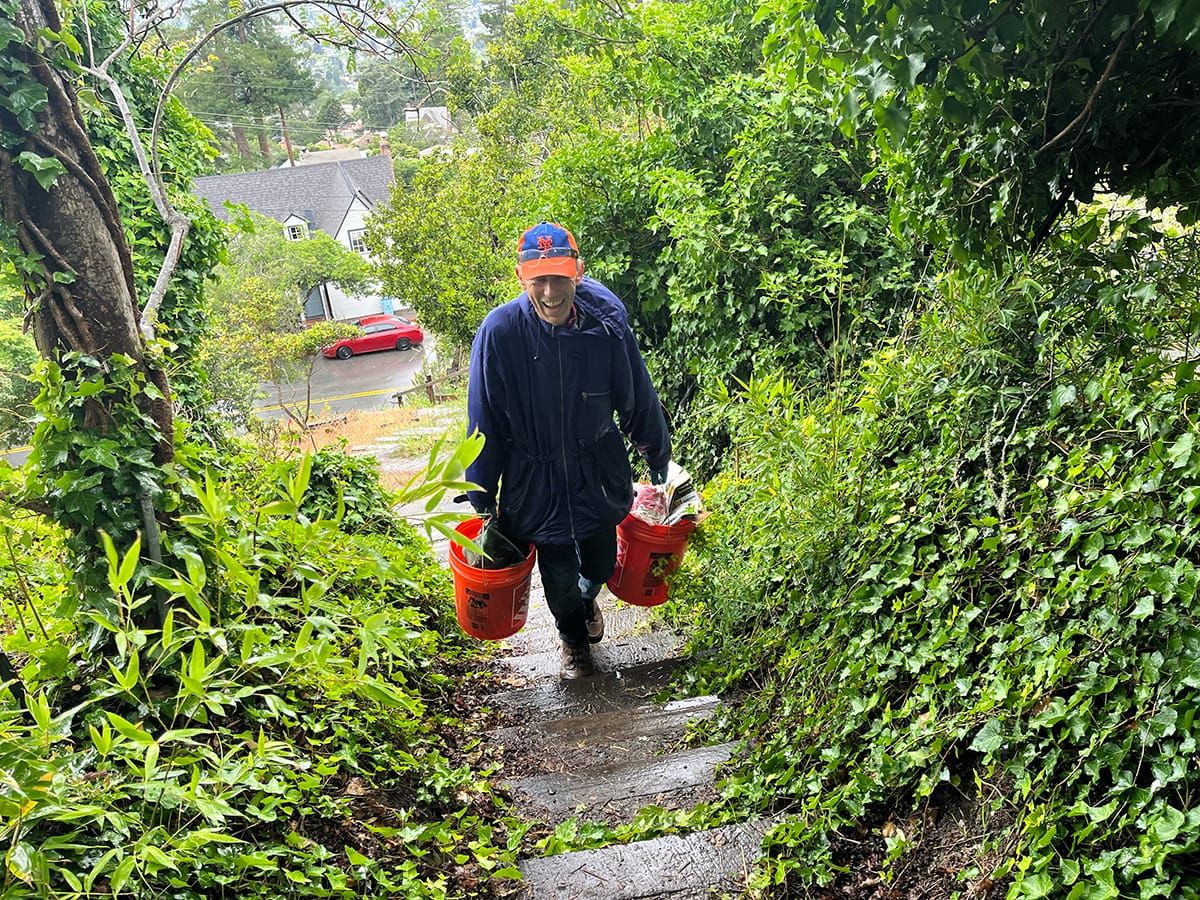
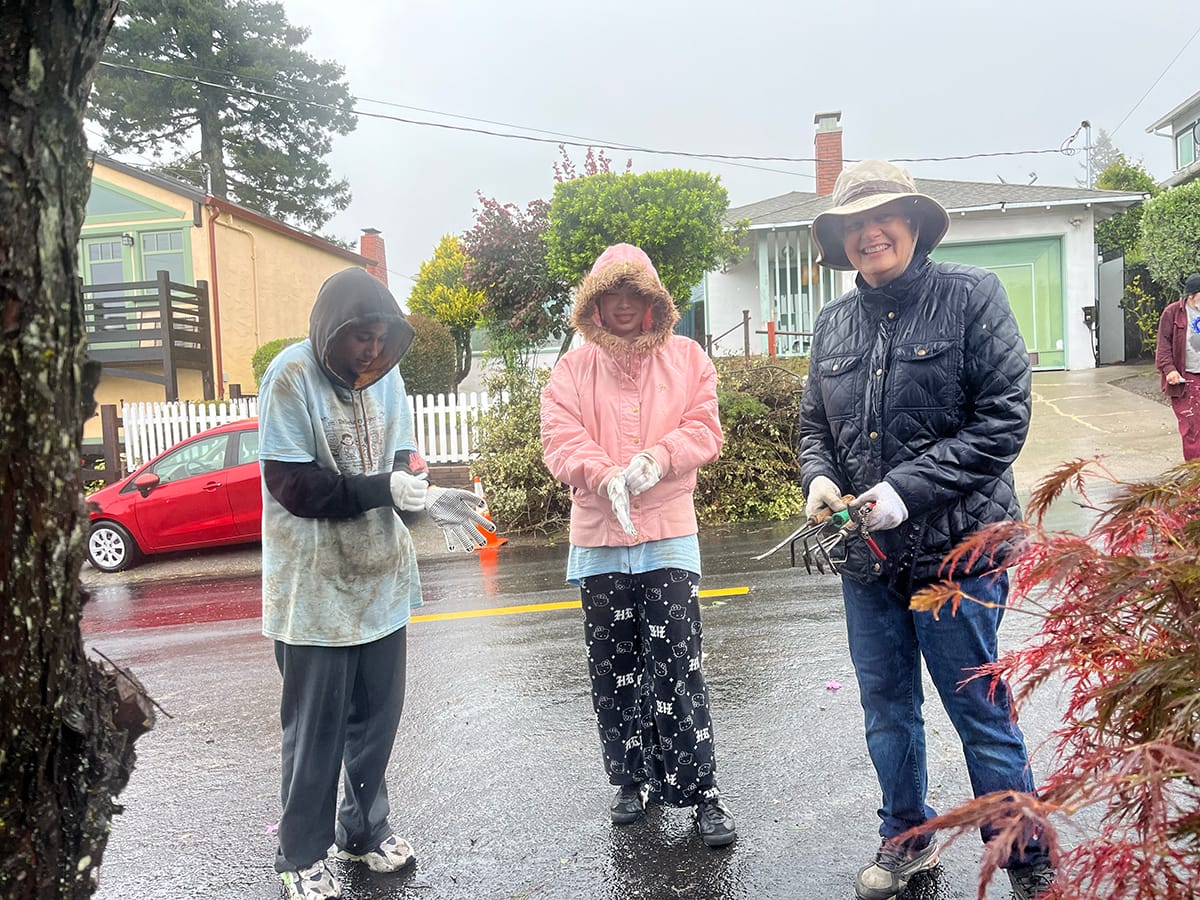
Pelting rain, cold, mud and drippy-wet brush didn't stop them. Drenched jackets and gloves didn't slow them down, at least not much.
"I think it's a beautiful day," said Avery Ryan, 18, a Berkeley High graduate now living in San Francisco. "If I'm going to be sweating and working hard, it might as well be in the rain."
Ryan was among around 300 volunteers who showed up Saturday in the Berkeley Hills to help make the area less susceptible to raging wildfire by cutting back, trimming and removing vegetation; or, in fire management lingo, improving defensible space — a buffer zone around structures that can slow embers and flames.
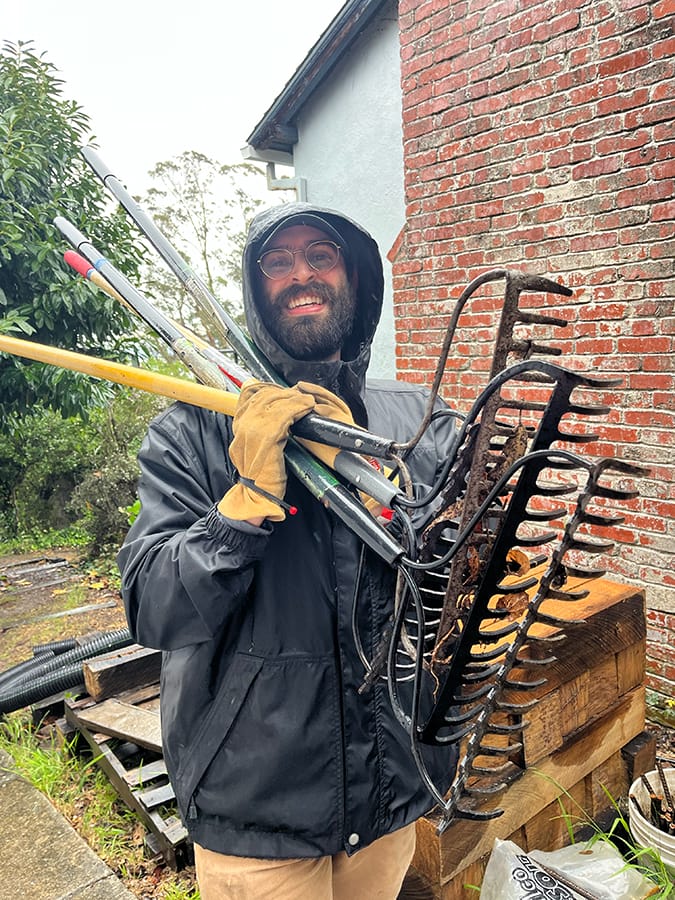
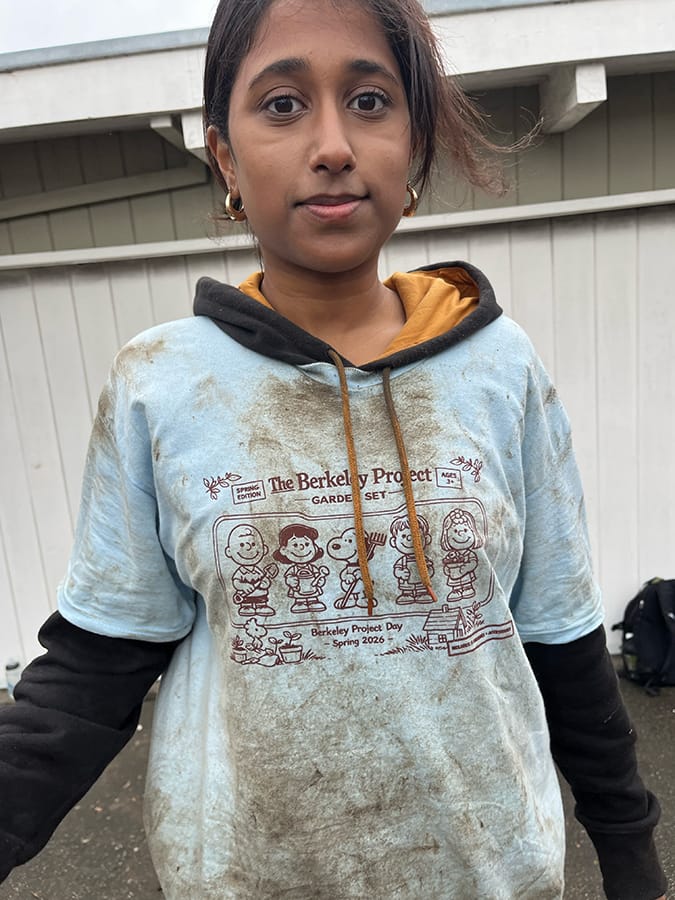
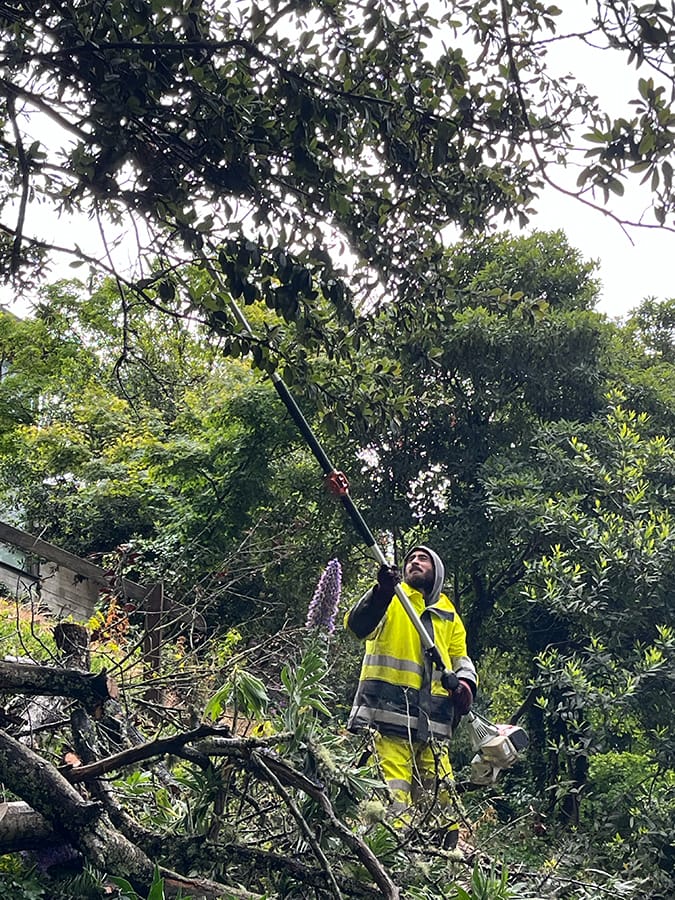
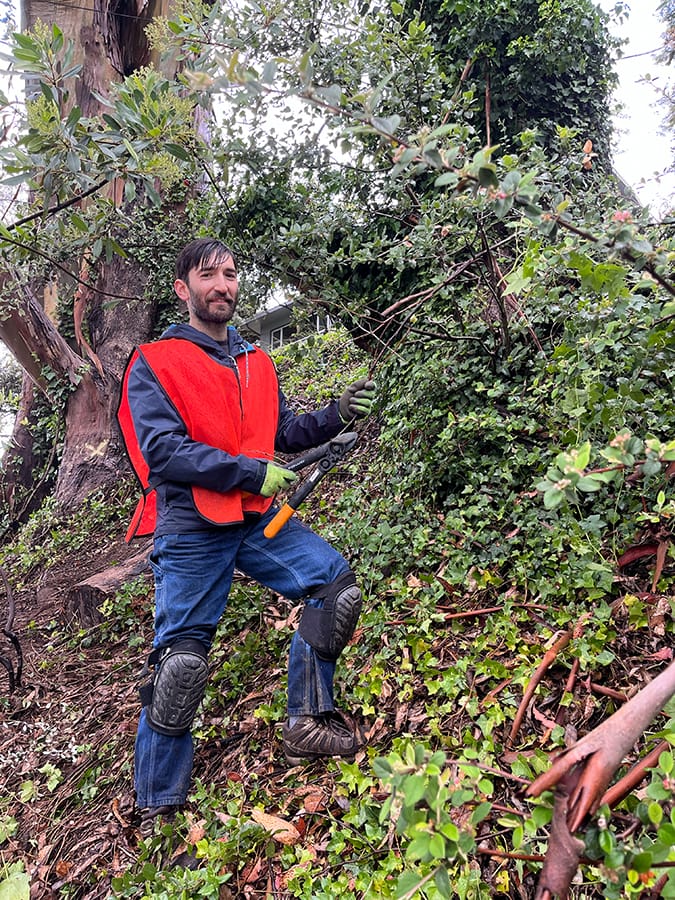
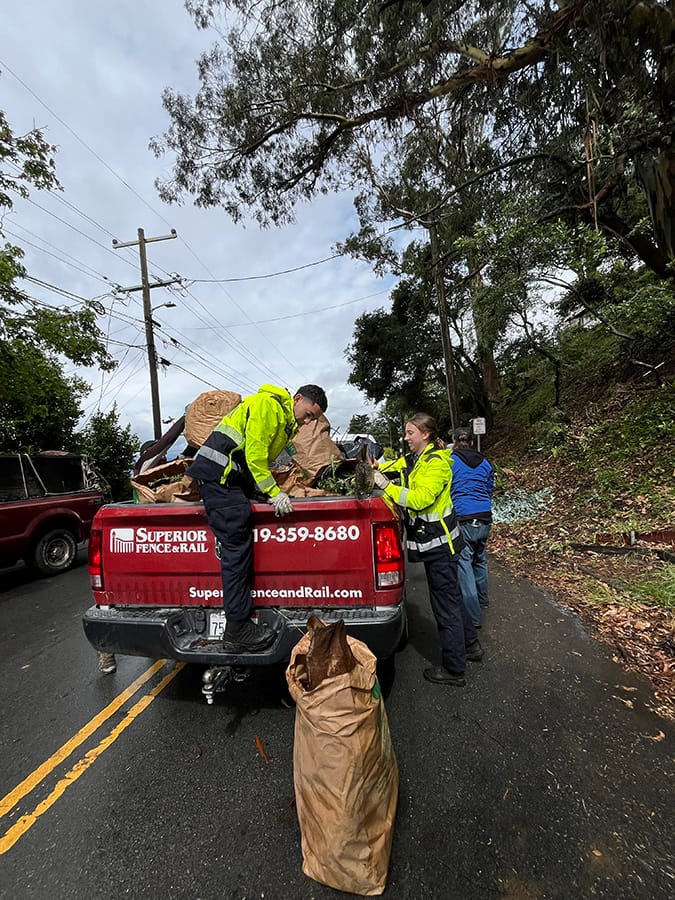
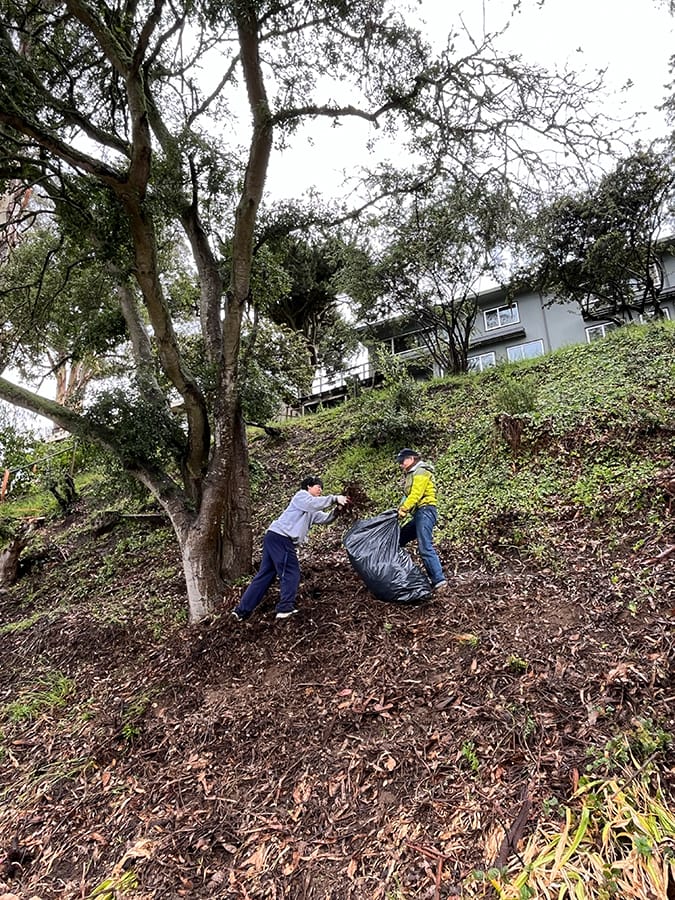
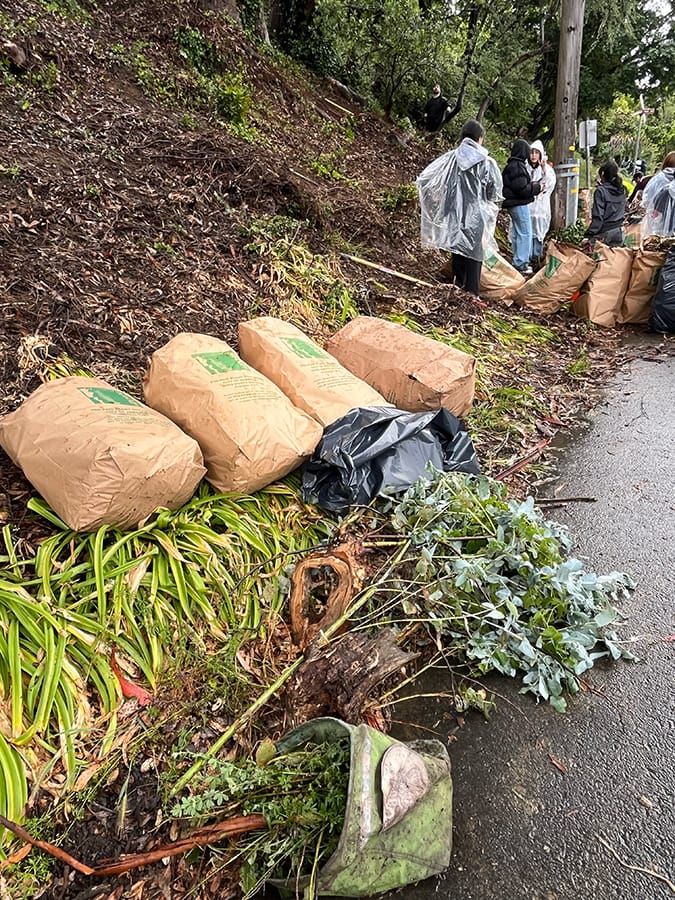
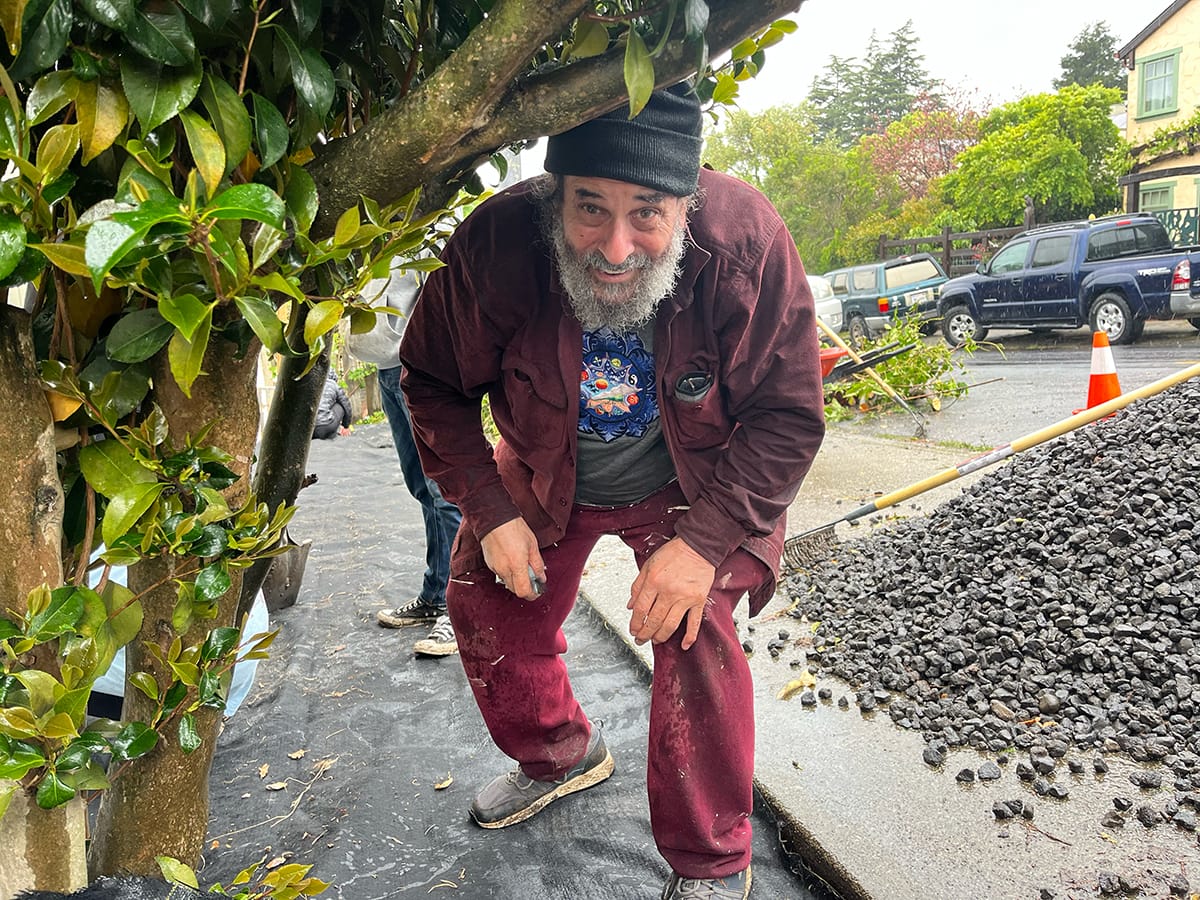
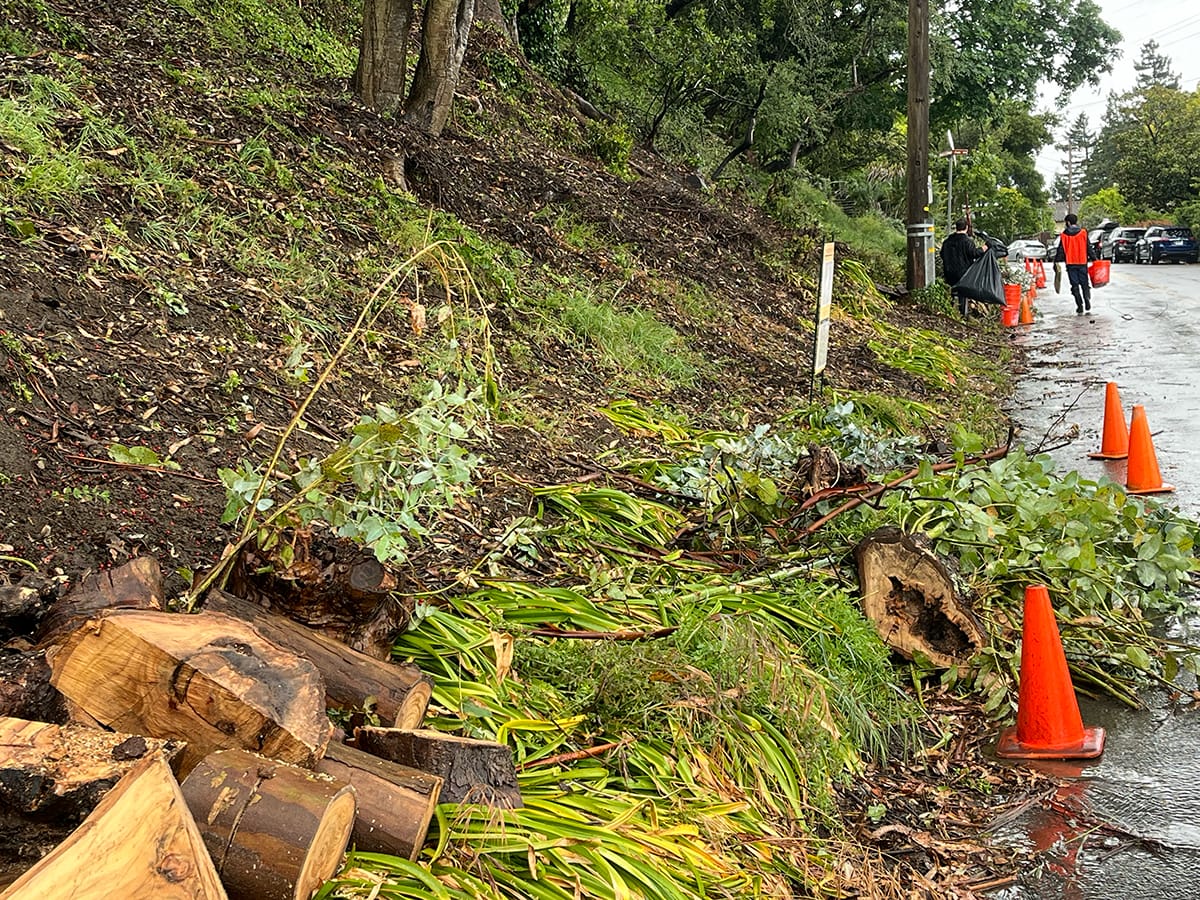
Scenes from Saturday's wildfire cleanup in Berkeley. Kate Darby Rauch
They dug, hacked, snipped, bagged, shoveled and raked — most of the time in rain.
"This is my jam. I love helping people," said Ryan, who hopes to work in emergency response someday. "I love volunteering, and I also love repetitive physical labor."
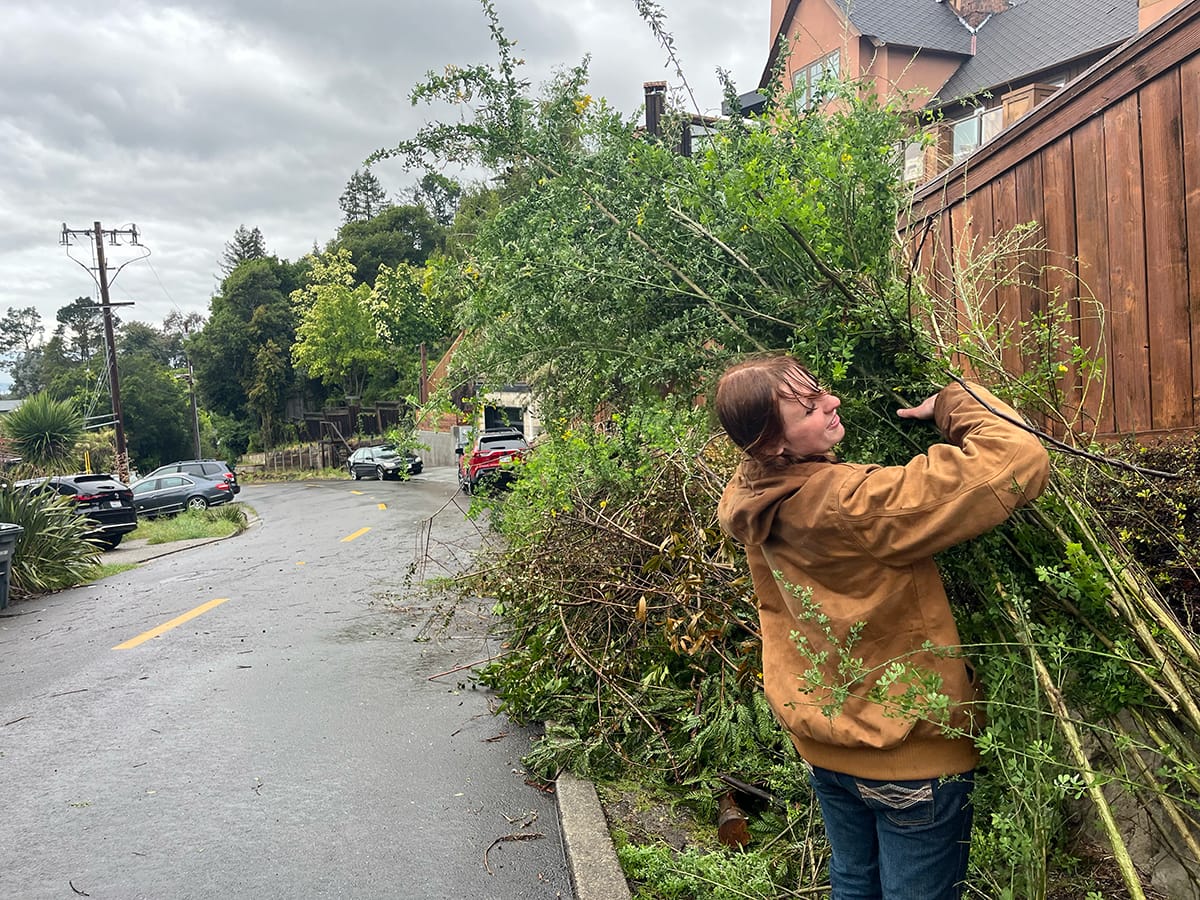
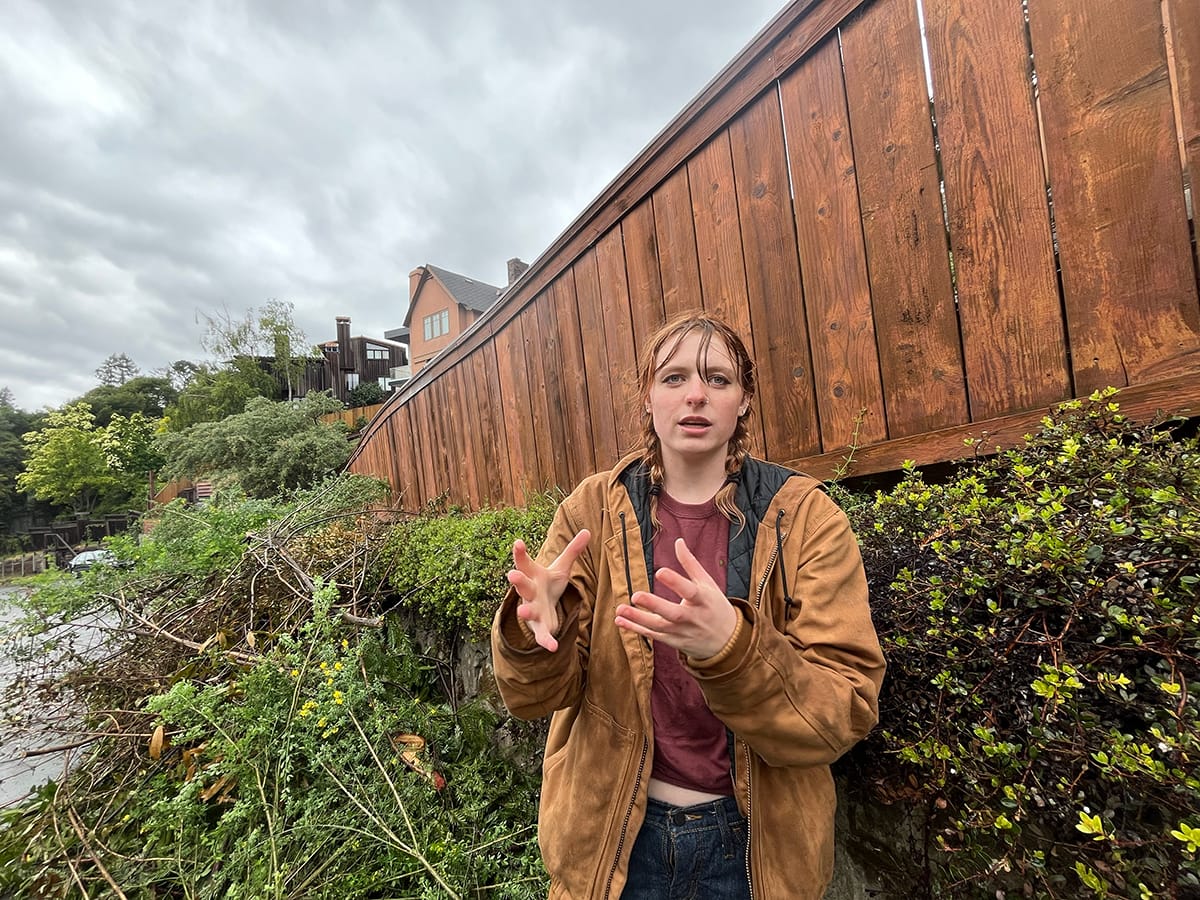
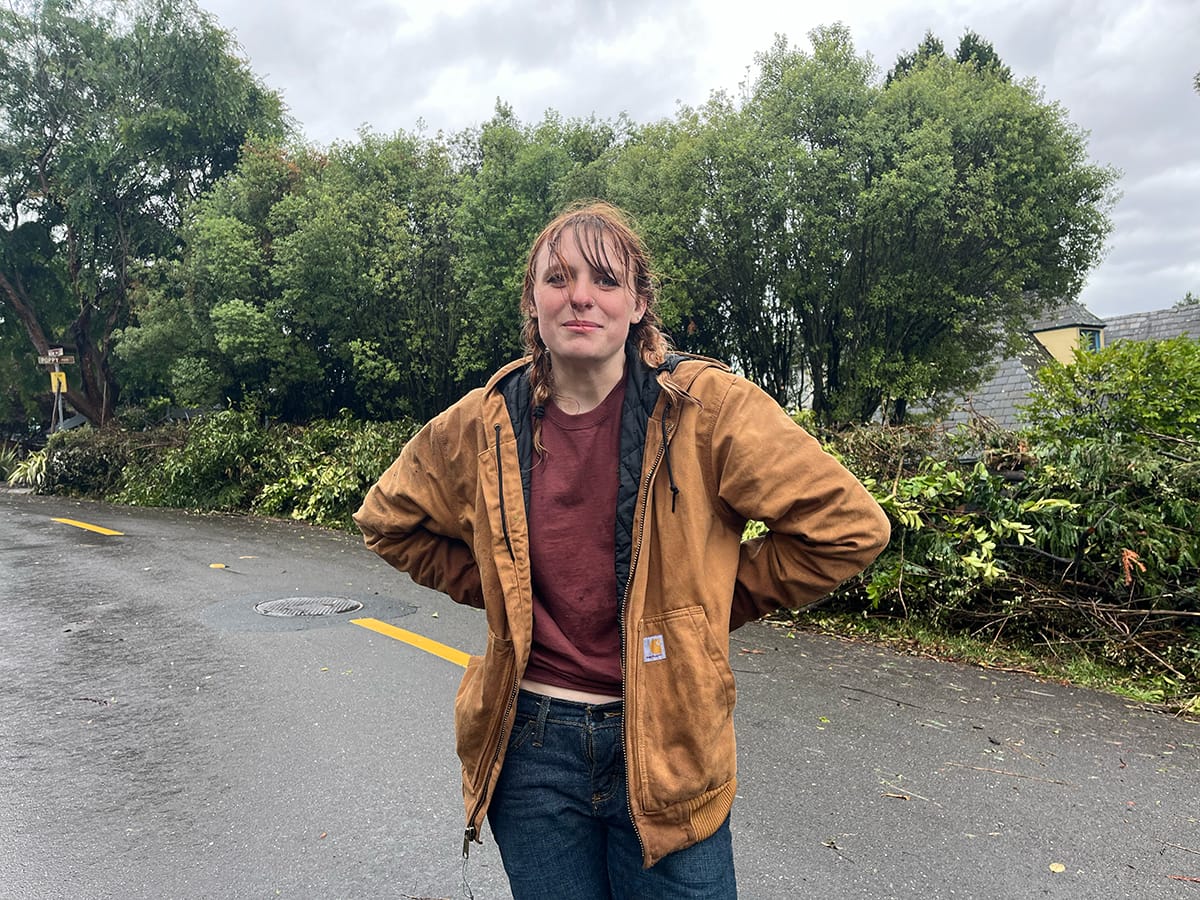
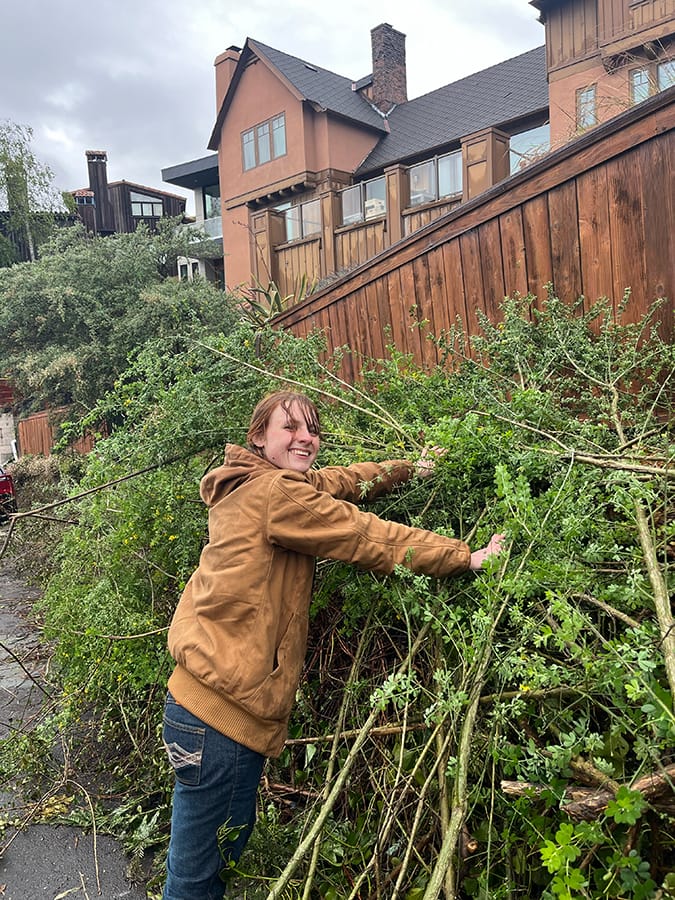
Volunteer Avery Ryan wrangles brush on Miller Avenue. She joined the cleanup on her own, not with a group. Kate Darby Rauch
The collaborative workday, an annual event, included volunteers from Berkeley Firewise neighborhood wildfire mitigation groups; Mayor Adena Ishii's new BerkeleyCorps program; UC Berkeley's The Berkeley Project, an umbrella community service hub; and the HelpBerkeley nonprofit. Students from Diablo Valley College also joined the troops.
Ryan was a solo volunteer, showing up on her own.
Clearing yards to mitigate the risk of wildfire isn't new for many Berkeley Hills residents who've been required to do this for years.
The focus Saturday was squarely on helping frail, elderly and low-income residents, along with others struggling to complete vegetation management work themselves.
It centered in one of the city's highest wildfire hazard areas, off Grizzly Peak Boulevard near the Tilden park border — a target of the Berkeley Fire Department's strictest wildfire prevention measures, called EMBER, for Effective Measures for Berkeley's Ember Resilience.
 Kate Darby Rauch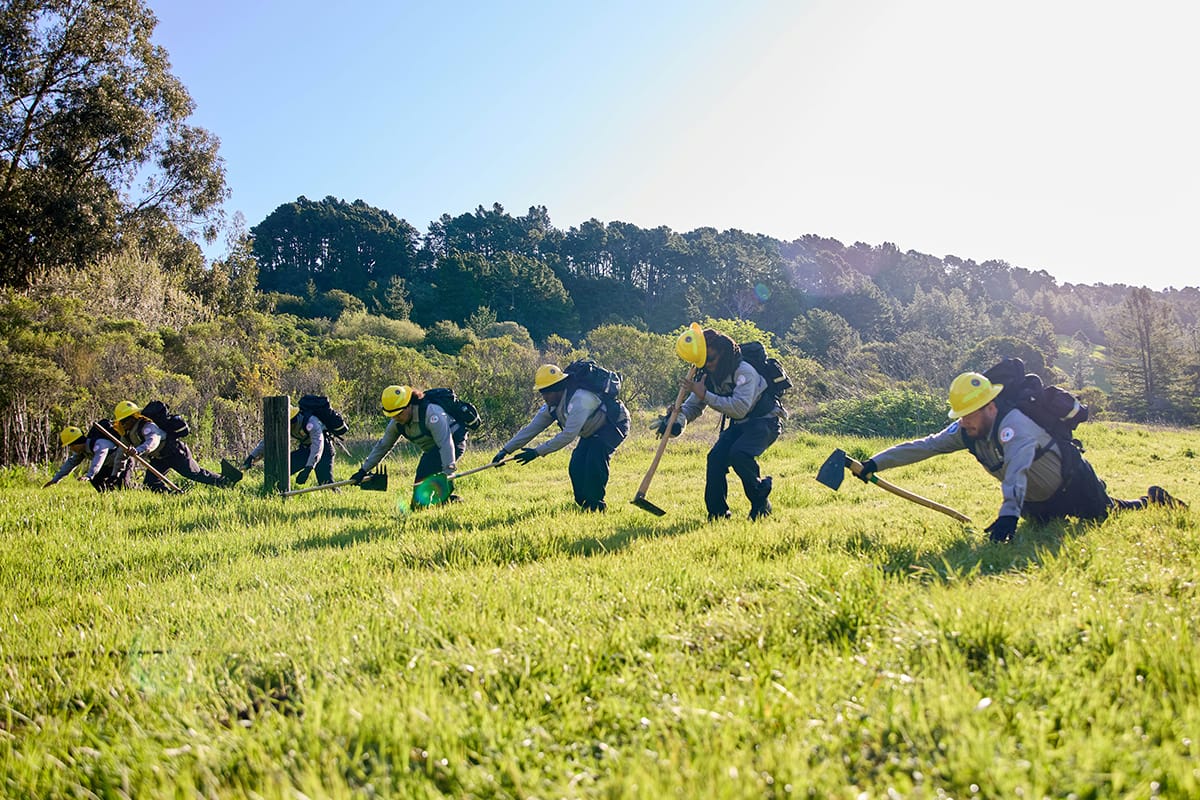
In fire department official-speak, the area is called the Grizzly Peak Wildfire Mitigation Area. Berkeley's other highest fire hazard neighborhood is the Panoramic Hills Mitigation Area.
The majority of the property owners who took part in Saturday's event were eligible for the fire department's defensible space financial assistance program, funded by a CalFire grant.
This year, around 24 properties received help, said Michel Thouati, a lead organizer, resident of the area and founder of HelpBerkeley, a nonprofit that primarily helps distribute food, but is adding wildfire prevention to its services.
This is out of an estimated 1,000 properties in the Grizzly mitigation area, he said. A couple of public spaces, including pathways, were also cleaned.
Property owners gave advanced permission for the assistance. Each project area had at least one volunteer site manager.
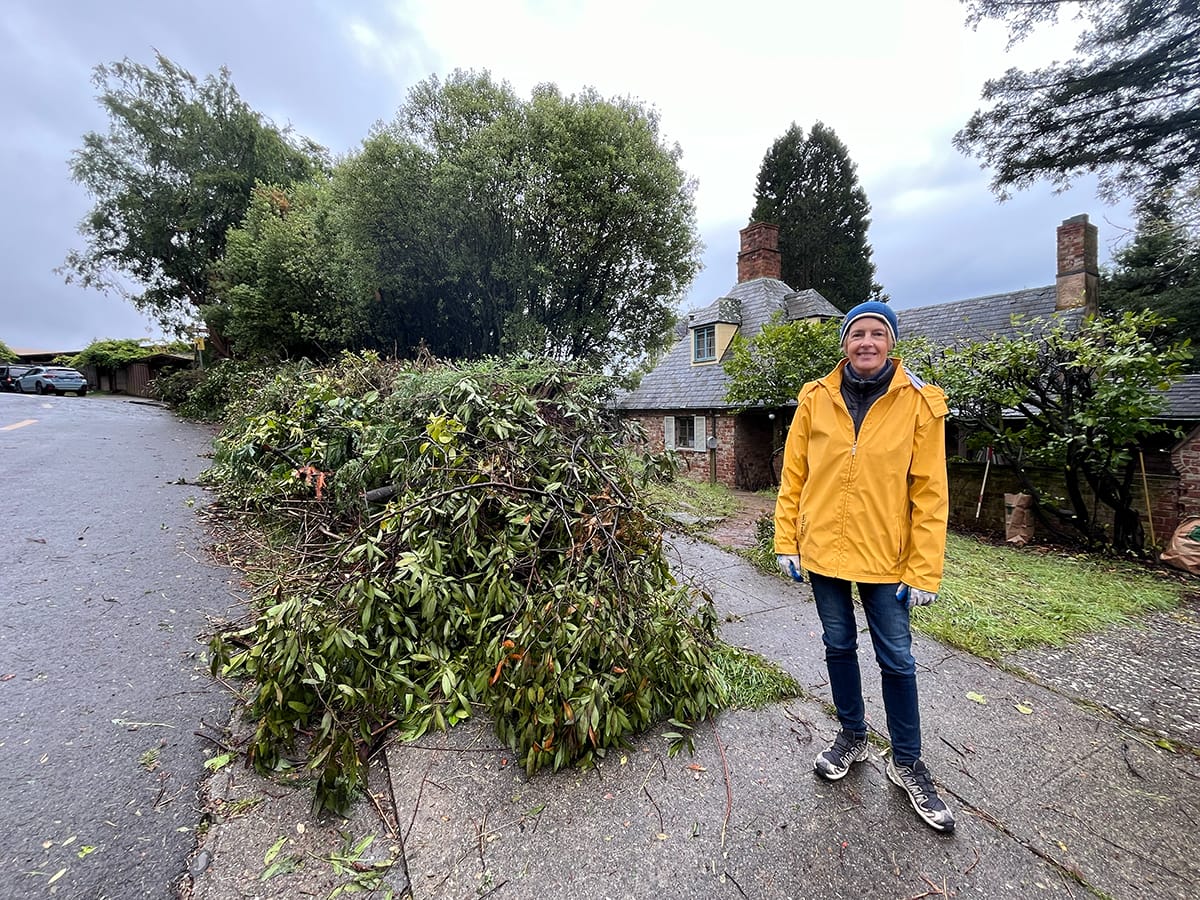
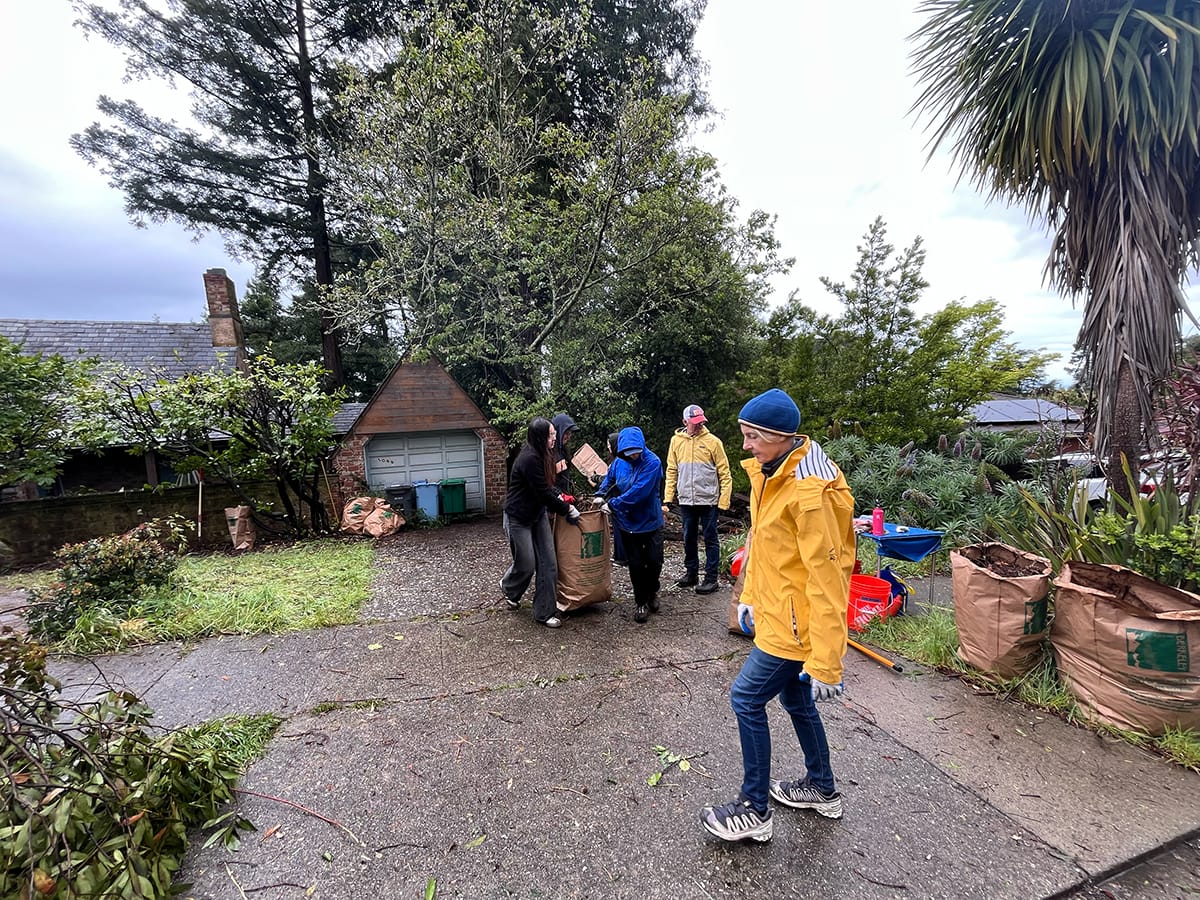
Site manager and neighbor Caroline Winnett next to a massive pile of cut branches on Miller Avenue. Kate Darby Rauch
"To know she needs this and seeing her smile, and her gratefulness. I think that's really important — to help people in need," said Omoeghie Obidah, a Cal psychology major volunteering Saturday, speaking about the elderly homeowner whose yard she worked in, cutting back overgrown brush, bagging weeds.
Obidah was with a group of volunteers from B PsychEd, a campus psychology club.
The experience brought a double benefit, she said.
"I like being in nature. I like hands-on work. It's a nice way to decompress from the stresses of school and the academic bubble. It's also good work for the community."
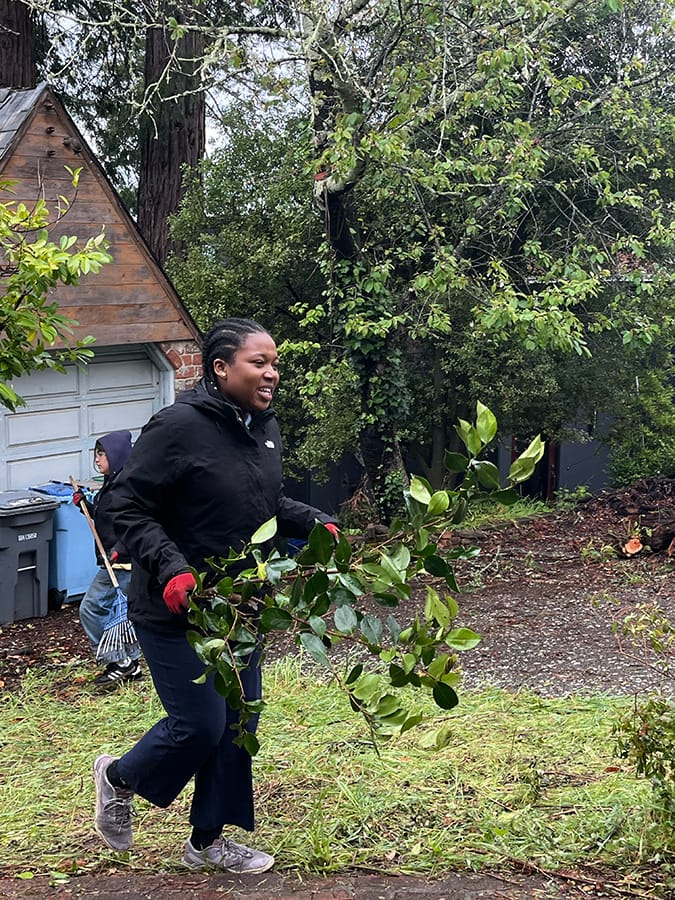
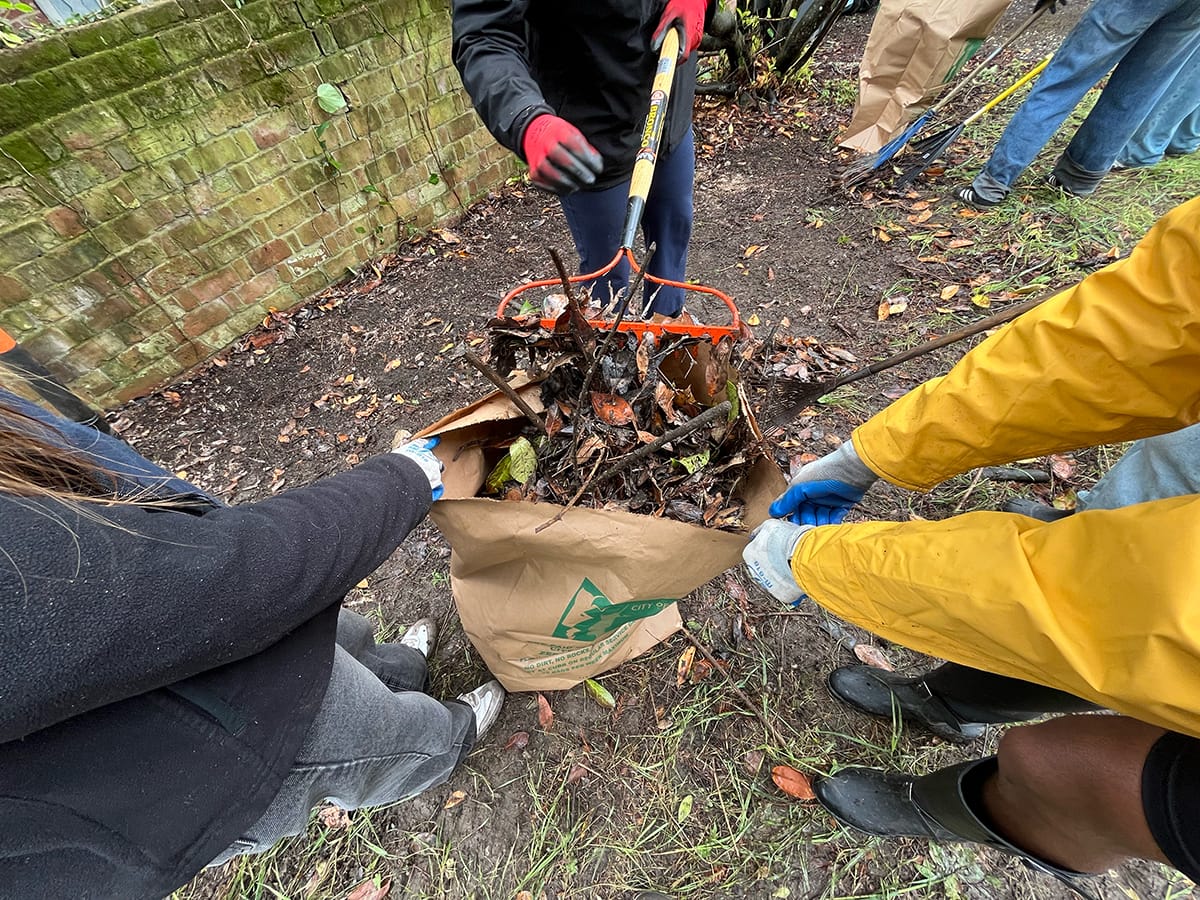
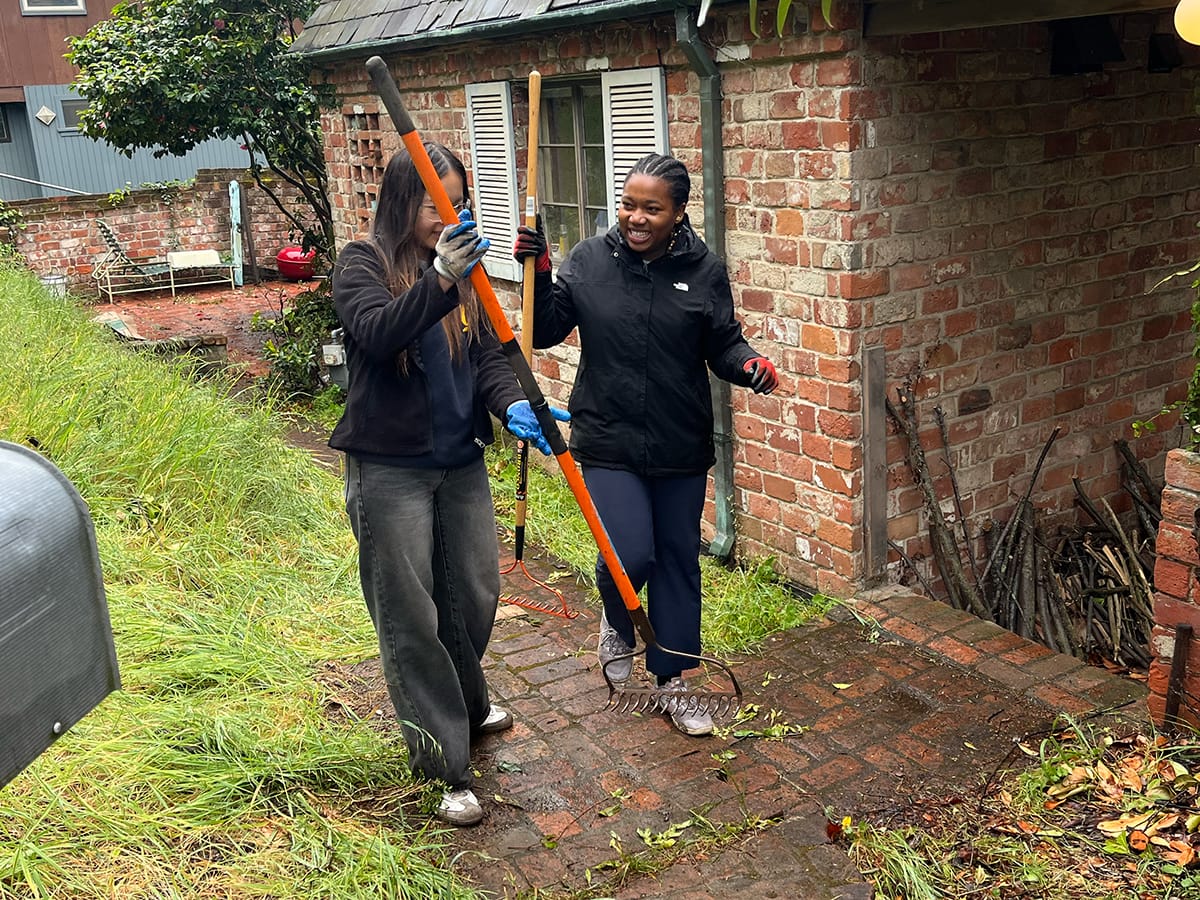
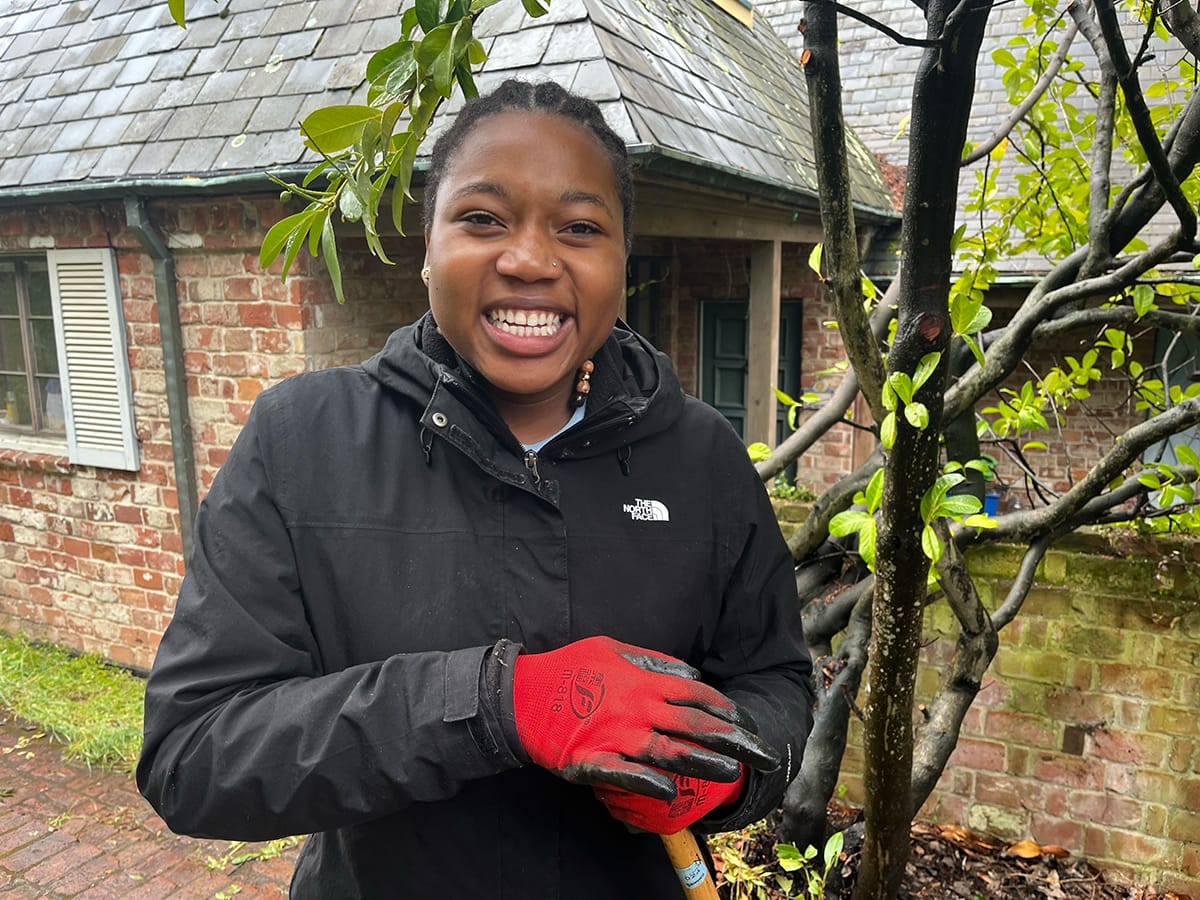
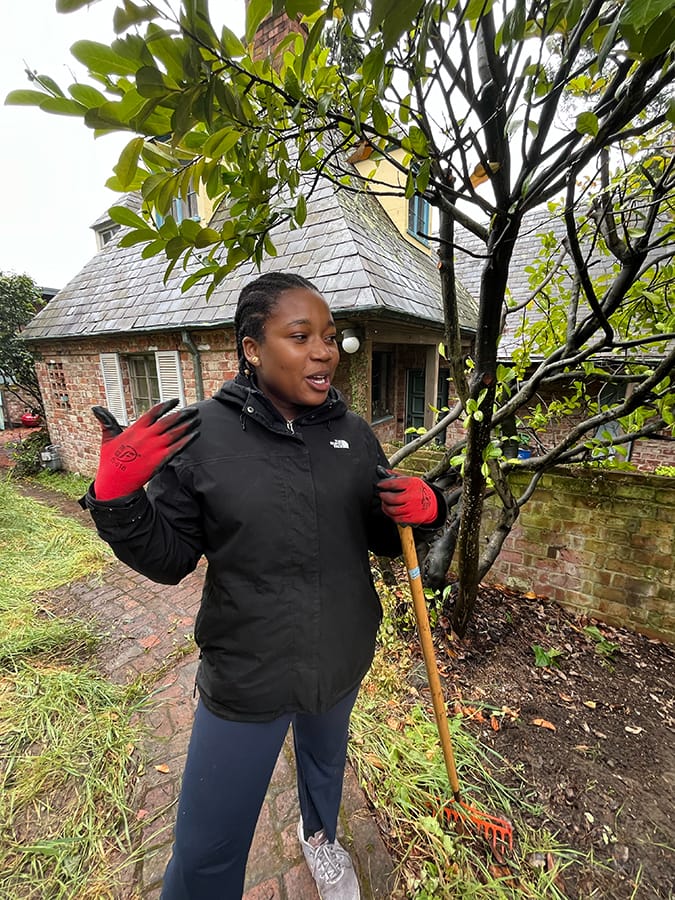
Omoeghie Obidah, a UC Berkeley psychology student, said cleanup work outside provides a peaceful break from academics. Kate Darby Rauch
Thouati called it an almost surprising success. Volunteer turnout surpassed expectations, he said.
"The rain made things harder, some of the sites are on steep slopes. Everybody who came was extremely positive about the whole thing," he said.
"It was a great day. Even in the rain and wind, having people come and pitch in made the mayor so proud," said Melissa Male, spokeswoman for Berkeley Mayor Adena Ishii.
Ishii's new service project, called BerkeleyCorps, helped recruit volunteers. She and some of her staff joined the work, including passing out pizza for lunch.
"Our community shows up for each other, and we look forward to future opportunities to provide ways to engage with their city," Male said.
Brent Blackaby, a Berkeley City Council member who lives in and represents the cleanup area, worked the whole day.
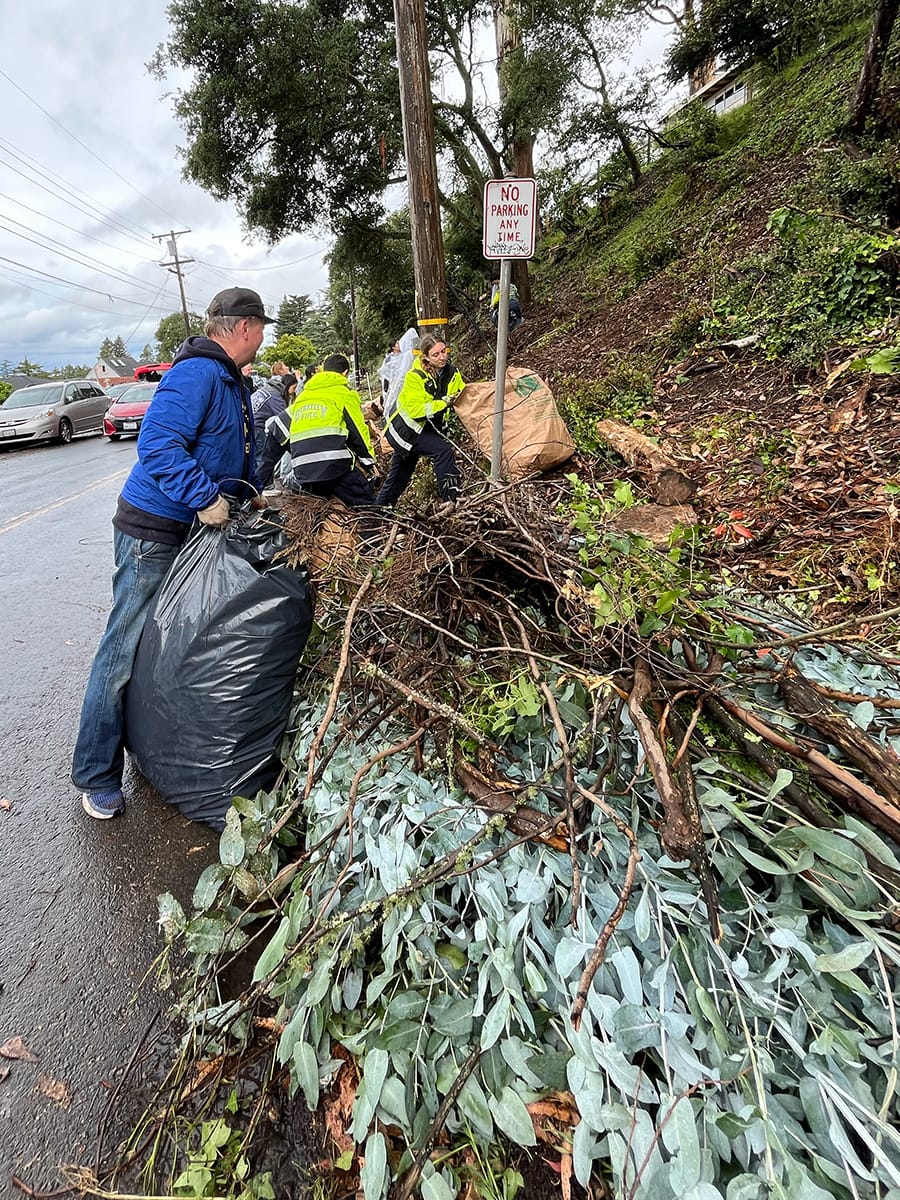
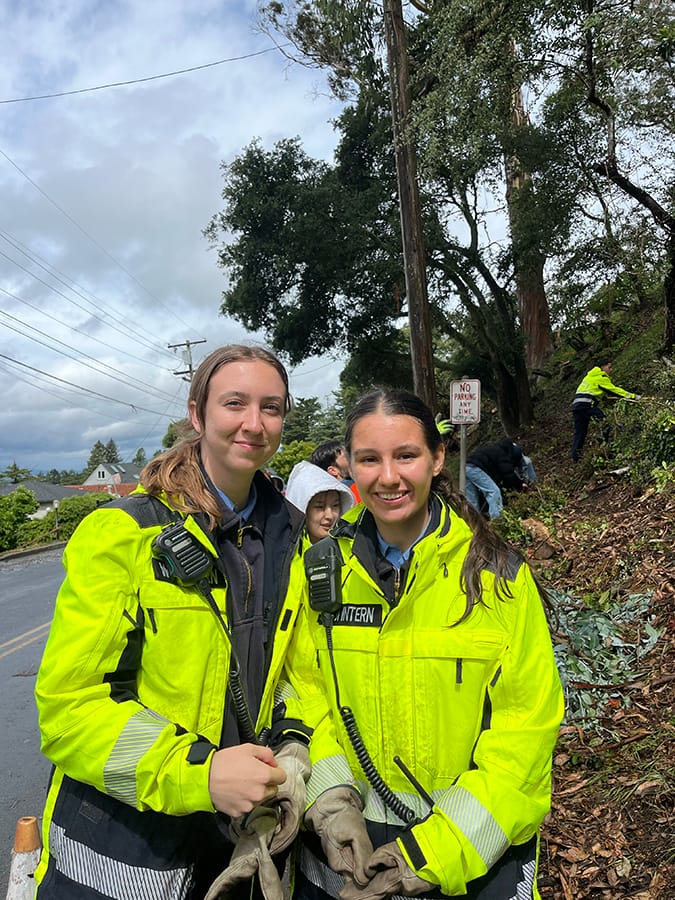
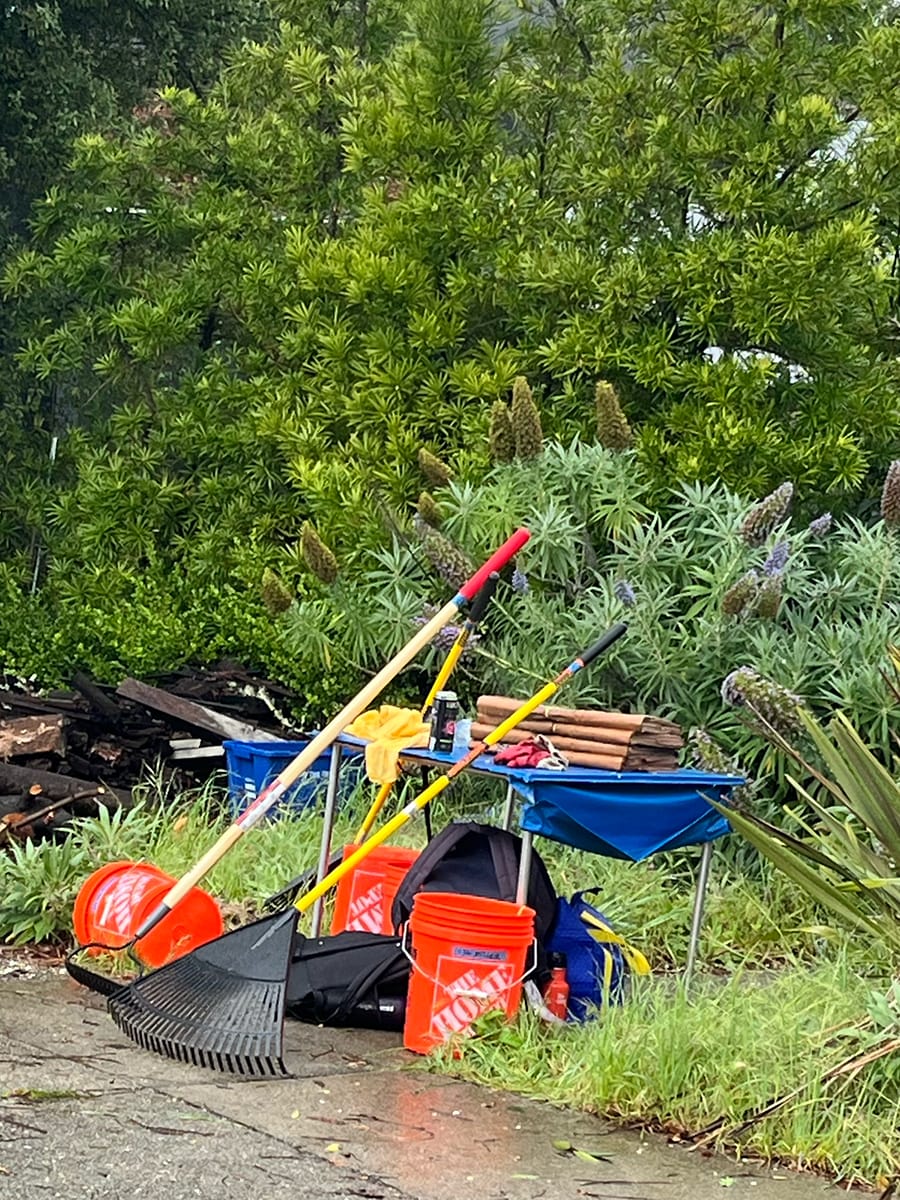
Scenes from Saturday's wildfire cleanup in Berkeley. Kate Darby Rauch
Funding for the cleanup, to cover the cost of tools, gravel, dumpsters and even some paid contractor help, came from a $12,000 2025-26 UC Berkeley chancellor's grant managed by the Firewise groups, as well as other donations, Thouati said.
The Berkeley Fire Department also loans tools, stored in a van that travels to worksites.
Maintaining defensible space is legally required in the state's highest wildfire severity hazard zones, which are set by CalFire, the state fire agency.
Cities can expand local wildfire hazard areas based on data, as Berkeley has. They can also adopt stricter regulations than the state, but they can't go weaker.
Kate Darby Rauch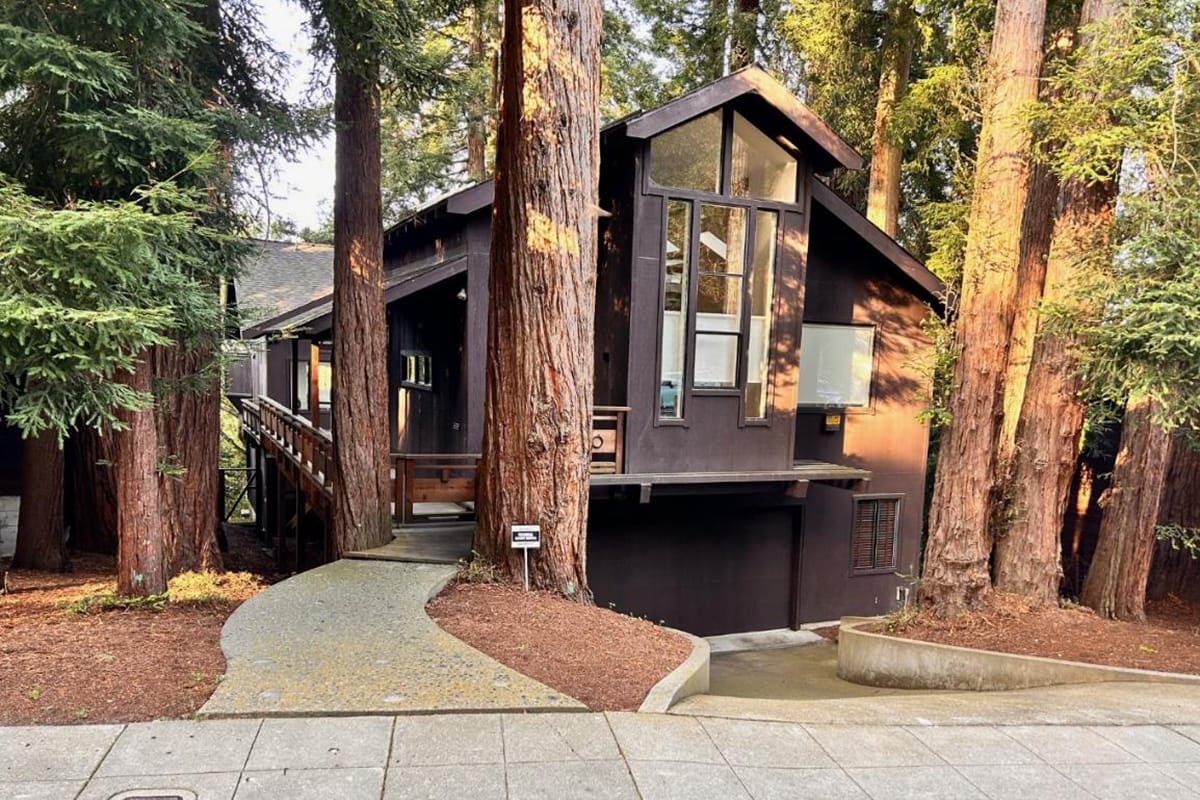
A major focus of Berkeley's EMBER regulations, which only apply to the Grizzly Peak and Panoramic mitigation areas, is on Zone 0, the area starting at the base of structures extending out 5 feet.
In a swirl of controversy, Berkeley adopted a strict approach to Zone 0 last year, prohibiting most vegetation, with exceptions for mature trees and some case-by-case conditions.
The charged debate spins largely on different views on the flammability of plants, and their role in spreading fire to structures in this zone.
A similar discussion is happening at the state level as the Board of Forestry & Fire Protection labors to set minimum standards for Zone 0, as mandated. Zone 0 as a critically important ember resistant zone is already state law.
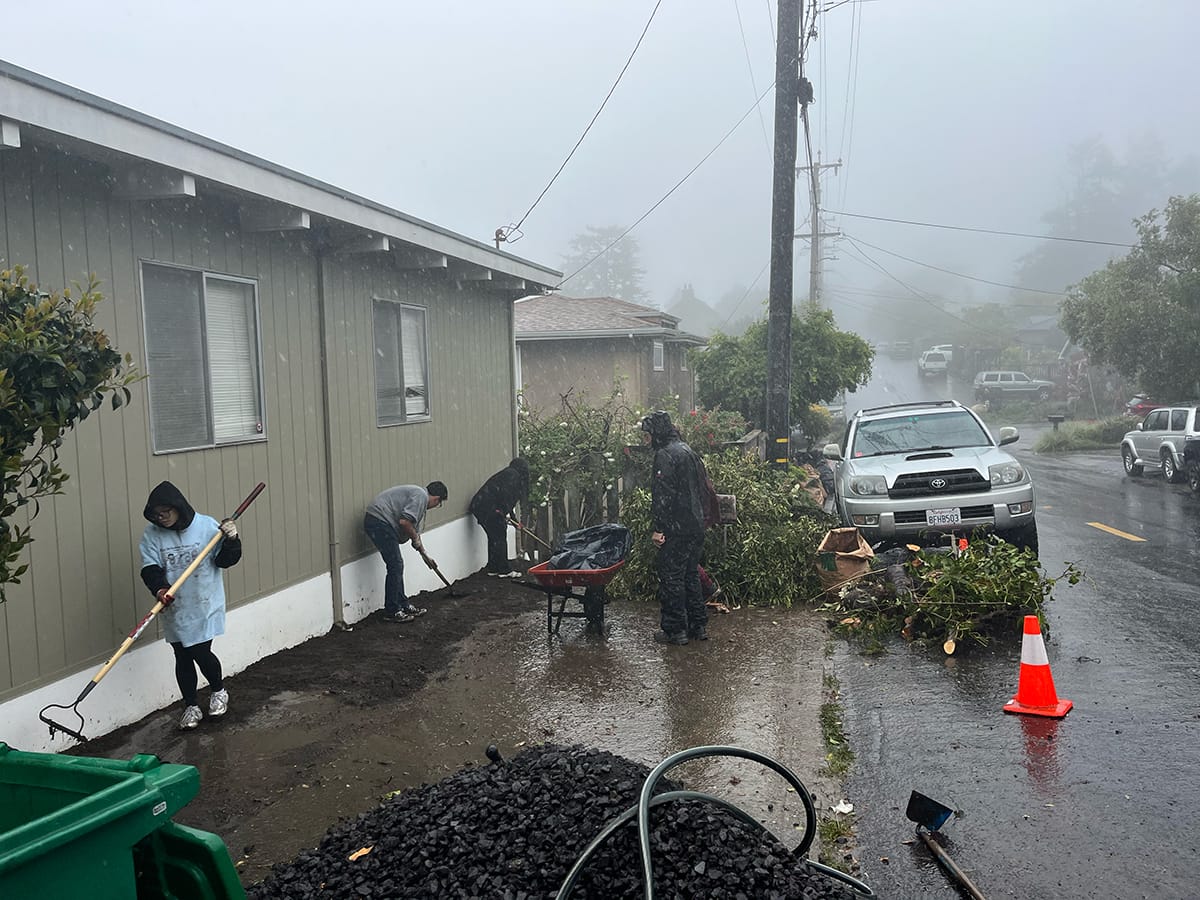
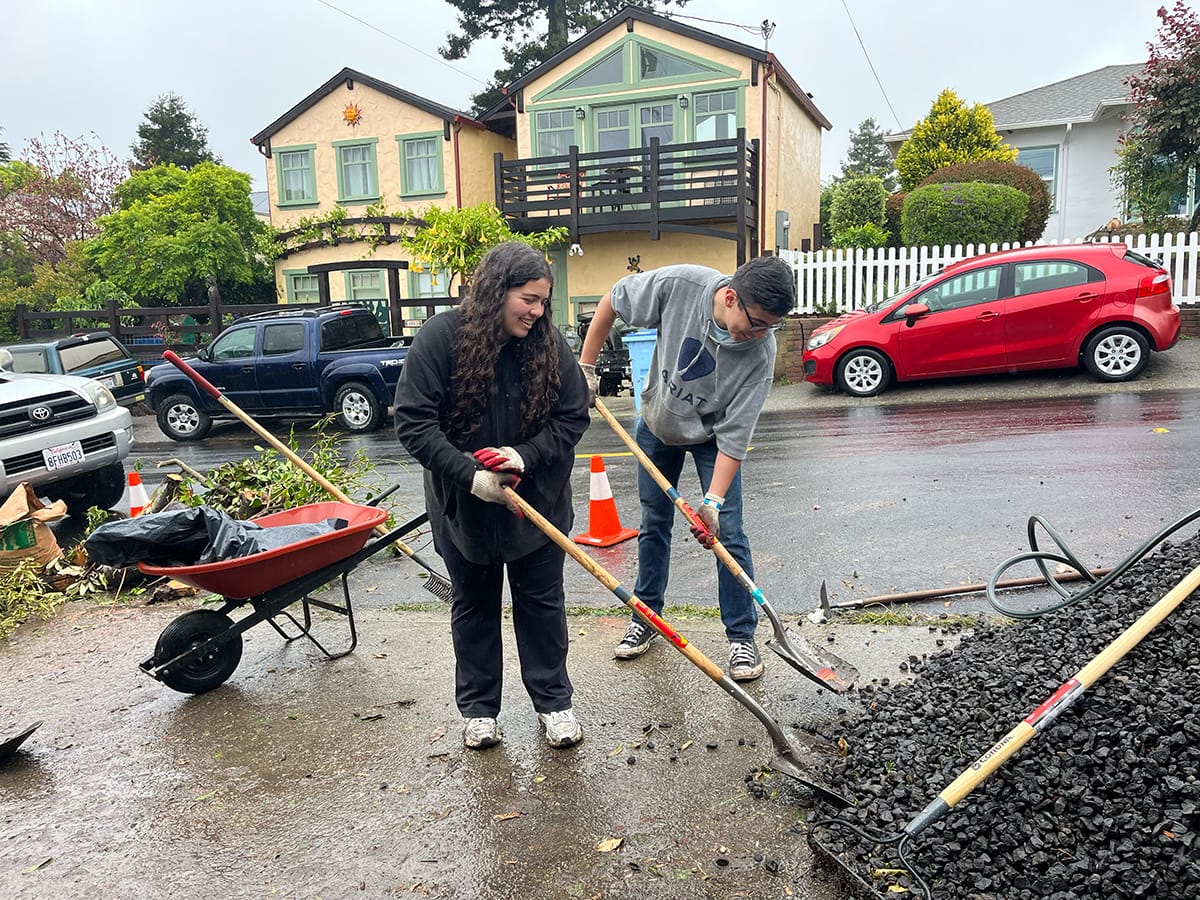
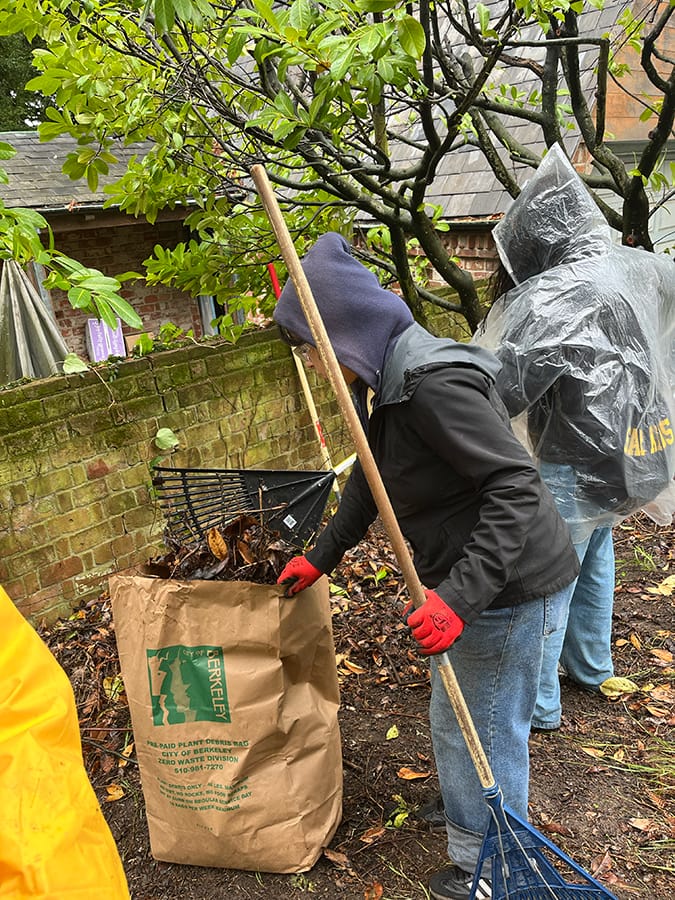
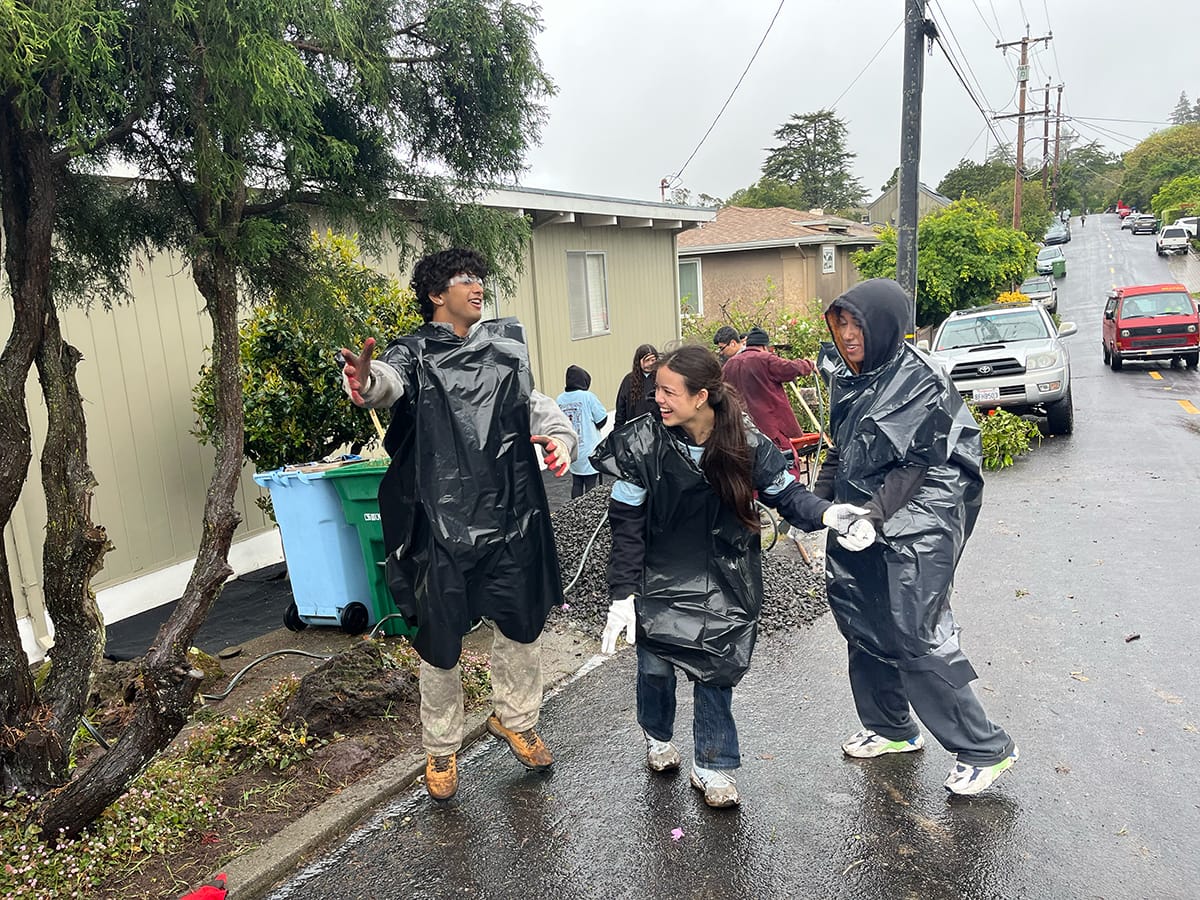
Scenes from Saturday's wildfire cleanup in Berkeley. Kate Darby Rauch
But in downpours Saturday, contentiousness around plants and fire seemed far from people's minds, as they hauled piles of branches, pulled up weeds and scooped gravel.
"It's nice to do something that has a definite purpose, like if it's going to help stop wildfires," said Brendan Tonomura, a UC Berkeley senior, who volunteered through the university's Asian American Christian Fellowship.
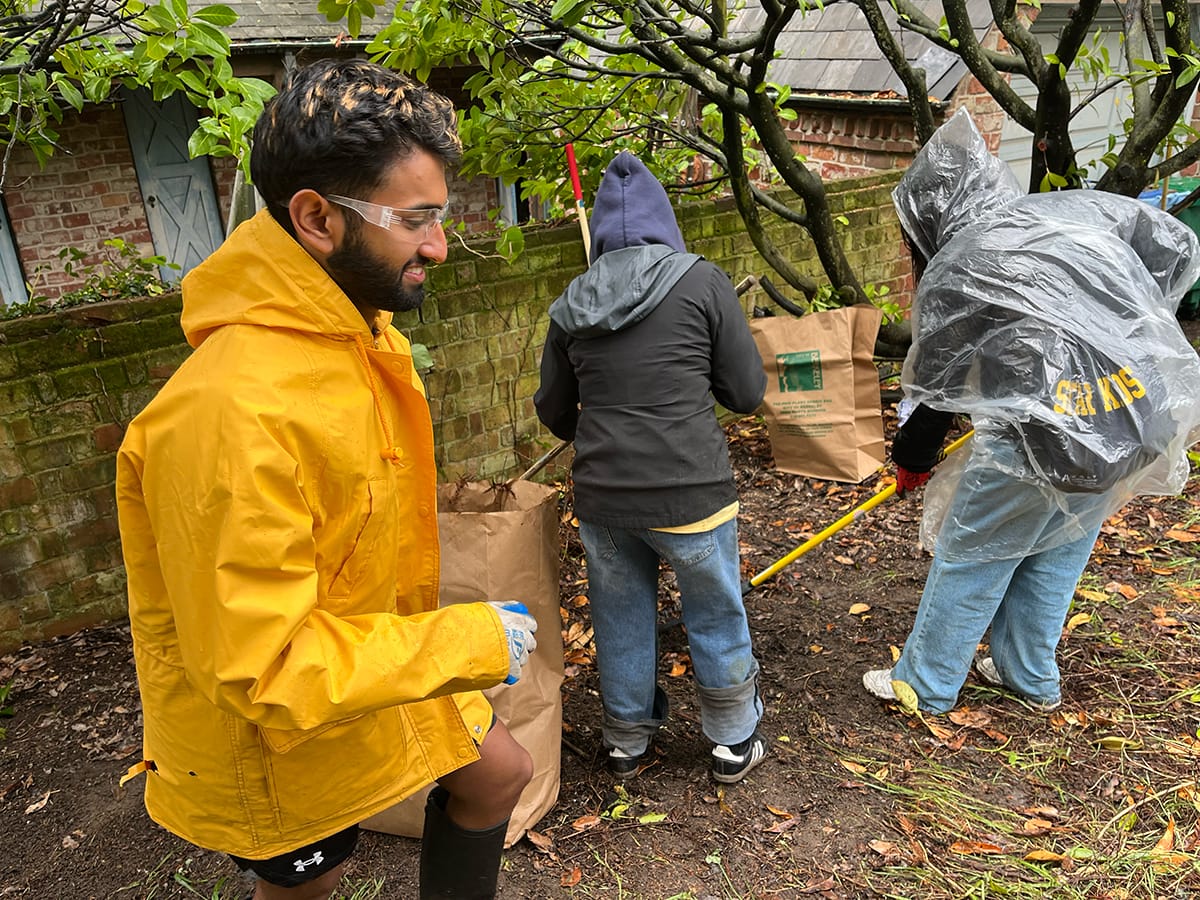
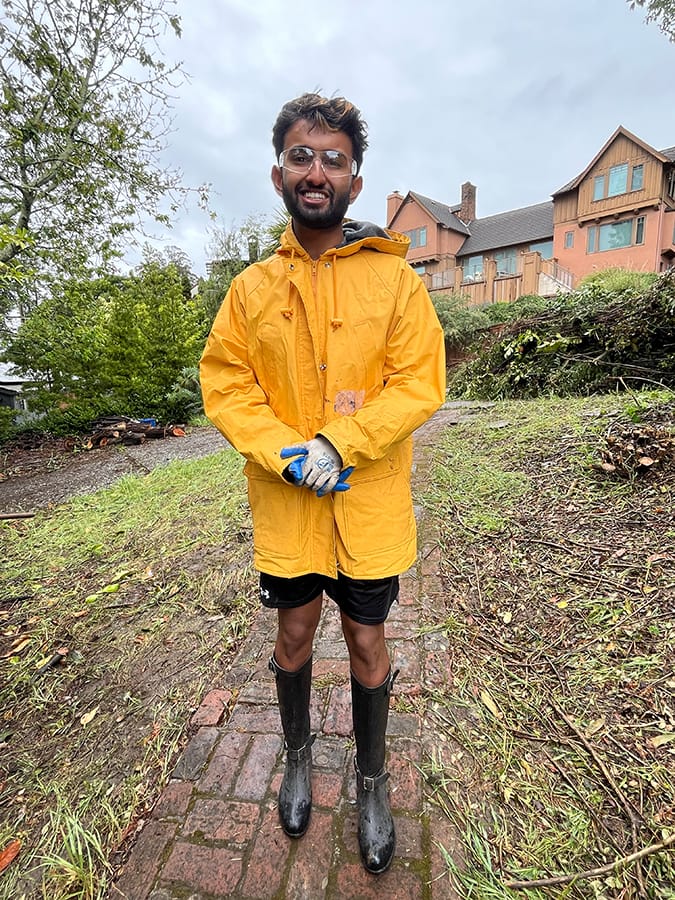
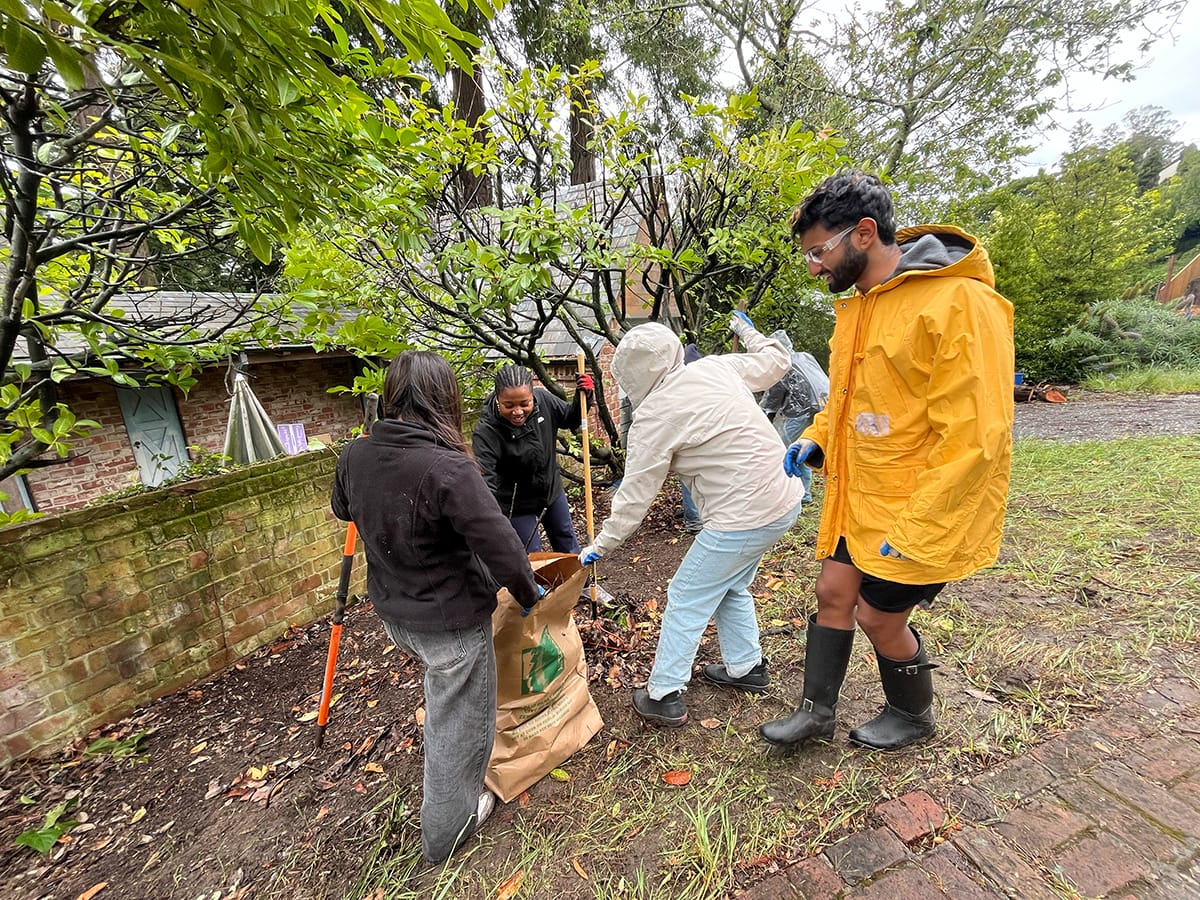
Ajay Krishnan, a UC Berkeley psychology student volunteer (wearing safety glasses) said helping vulnerable residents with wildfire mitigation is uniquely meaningful. He also said he likes doing physical labor in shorts. Kate Darby Rauch
Ajay Krishnan, a psychology major, said he'd never really considered how people with disabilities deal with living in wildfire-risk areas, until working on a vulnerable resident's yard Saturday.
"It's a beneficial impact," Krishan said. "It's also a unique impact."
Correction: Michel Thouati founded HelpBerkeley, not The Berkeley Project. The story has been fixed.