Can fire-safe yards be beautiful? Berkeley gallery says yes
A new exhibit at Berkeley's ACCI Gallery offers noncombustible art for fire-safe yards.
As months of vegetation clearing and cutting continue in the Berkeley Hills to meet strict wildfire mitigation regulations along the border with open space, many residents are left wondering if beauty can still be part of the deal.
A unique new art exhibit at Berkeley's ACCI Gallery, on Shattuck Avenue near Virginia Street, wants to help.
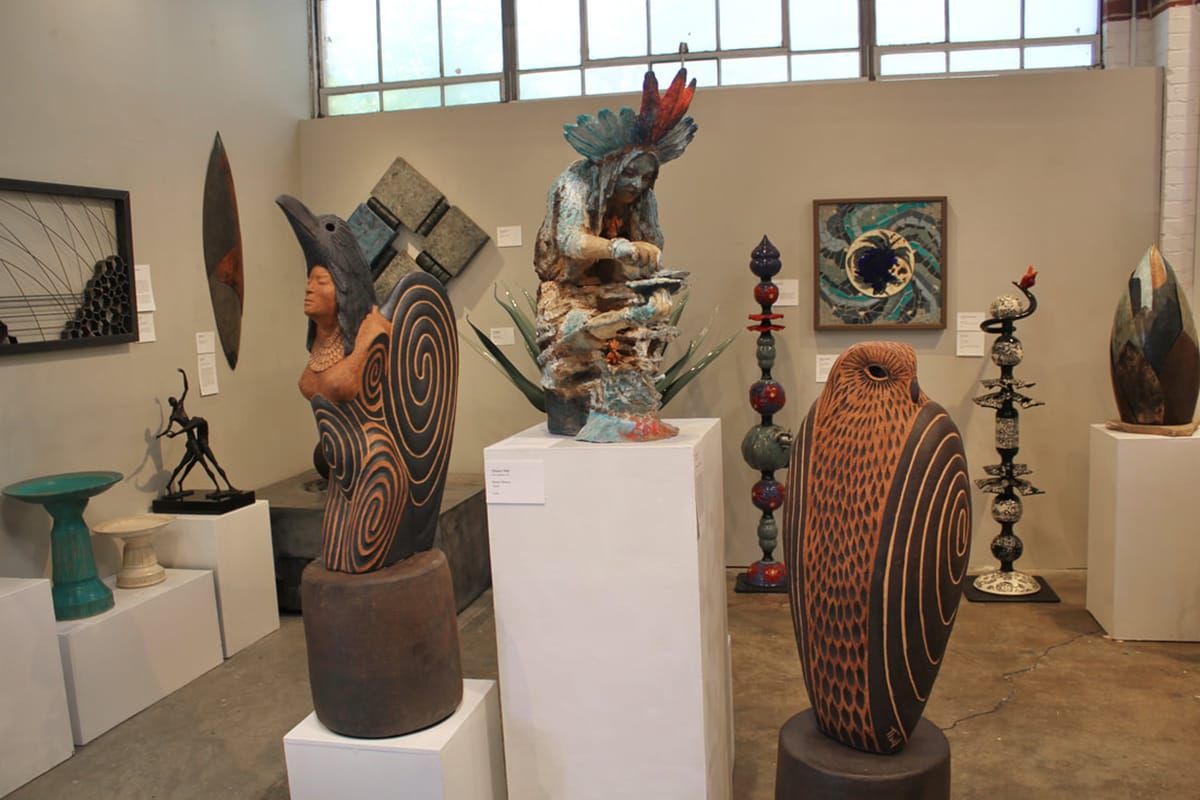
The show, called "Zone 0: New opportunities for art in the garden," features an array of carefully selected sculpture, birdbaths, wall plaques and other artistic pieces made from noncombustible materials such as ceramic, metal and glass that shouldn't burst into flames or smolder in a fire.
As such, these works are allowed in defensible space Zone 0: the area extending out 5 feet from structures, where a city ordinance bans combustible materials from most plants to mulch and wood furniture in two Berkeley neighborhoods most vulnerable to wildfire.
Defensible space is the technical term for yard clearing and maintenance to mitigate the impacts of wildfire. It's legally required in high hazard areas in California.
The strictest clearing is closest to structures or in Zone 0, based on research showing how embers blowing in from wildfire can collect here, igniting buildings.
"When you take something away from people, there is always blowback, so I thought the opportunity of replacing it with art was a nice way of smoothing the effect of the ordinance," said ceramicist Susan Gold of San Francisco, whose elegantly simple ceramic birdbaths are among works in the show.
"I really like the challenge of making something for a specific purpose," Gold adds.

"This show was conceived to give people ideas and options for what is possible. Beauty, in a new form, can be brought into your garden," writes Ruth Ehrenkrantz, the show's curator, in background information posted with the exhibit, which includes artist talks.
"The trickle of water through a fountain, a mobile moving in the breeze, ceramic totems and animals adding color to the landscape, or a bird feeding or taking a bath. These elements can connect us to the garden along with a more curated grouping of plant life that maintains greater protection," writes Ehrenkrantz, who is also an artist.
Zone 0 inspires a new kind of garden art
The idea for the Zone 0 art show began with residents who had to do the work, said Ehrenkrantz, who has embraced defensible space at her own home in one of Berkeley's high fire hazard areas, despite being outside the Ember zone.
Someone from a local Firewise group, a voluntary national program focused on wildfire safety that has over 20 Berkeley clubs, suggested the Zone 0 theme while attending a different ACCI show.
"And I said, 'Of course we should,'" said Ehrenkrantz. And she got to work.
The show, which runs until Sept. 27, includes works from 28 artists. Some responded to a gallery call for work. Others were invited to apply.
The art ranges from large sculptural pieces to small statuettes or yard trinkets, from abstract to realistic. Some pieces are functional, some decorative. The natural world, in hues and tones and surfaces and shapes, is a common theme.
"My work is inspired by nature," said artist Terri Scheid, a show exhibitor of ceramic cairns, or stacked rock- or pebble-like shapes, colorful and intricately painted and glazed, looking like monuments or markers — in the eye of the beholder.
"I like the idea of cairns… used to mark your way, or used as a memorial," said Scheid, an ACCI member who lives in Richmond, near Wildcat Canyon, and must create defensible space in her yard.
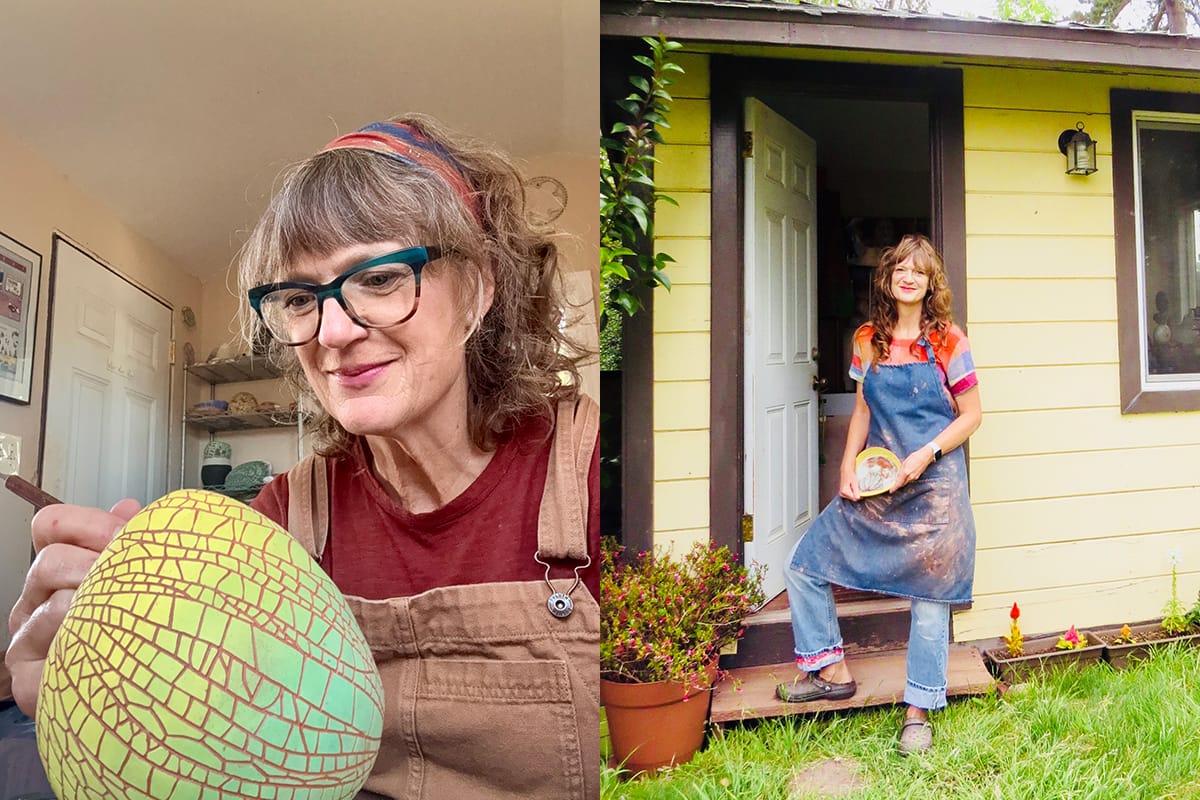
But this isn't what led her to the Zone 0 show. She always saw her work as indoor. But when asked to join the exhibit, it hit her, she said. Her work "can withstand the Bay Area climate." And is noncombustible.
"It clicked with my brain," she said.
The cairn concept came to her from playing with her son, Scheid said, stacking rocks at the beach, creating Lego towers. She has a small kiln, which suits piecing or linking together smaller objects for a whole. She described her pieces as microcosms and primordial. Reflecting microscopic elements.
"The installation part is exciting too," said Scheid, adding that she likes helping people place her work.
Rethinking the fire-safe garden
For landscape architect Ian Moore, who has a large concrete water fountain in the show, major design like public pathways came first, including civic projects.
In recent years, Moore said, he's evolved to focus on smaller, more intimate artistic projects, including for individual yards. Work he calls more immediate, tactile and within his control.
"I was contemplating producing more sculptural work, and I saw the call for projects and immediately thought: This is a good match for me," said Moore, who's experienced in working with concrete.
He created the fountain, crafted to echo the natural world with a pebble-filled basin and delicate fern leaf imprints, specifically for the gallery.
"My artistic inspiration is to integrate natural form and process into human artifacts. I like to use growth, erosion, decay, fire, fossilization; and to alter the character of objects often considered separate from nature," Moore said.
.Moore is familiar with Zone 0 from his local landscaping work. Removing plants around houses and adjusting to hardscape is challenging, he said. But he senses growing acceptance and adjustment as people learn attractive yards can be found in new ways.
"We're at a point where we've crossed a boundary or gotten over the hump a little bit," Moore said.
Michel Thouati, an active Berkeley Firewise leader and Zone 0 advocate, was one person who encouraged Ehrenkrantz to do the show.
Among his neighbors, he said, yard art has long been part of the discussion.
"A lot of us have talked so much about what we're going to do about our zone zeroes, how are we going to make this work?" Thouati said. "From the beginning we talked about using noncombustible art."
A year or so ago, he started a Pinterest site devoted to the concept, intended to be shared.
The city, on its FireSafe wildfire preparation website, also shares landscaping ideas that include noncombustible art.
Ehrenkrantz said she intentionally included works for different budgets in the show, knowing not everyone can afford pricy outdoor installments.
She also promotes making your own noncombustible art, and hopes the show will inspire people.
"You can make your own fountain," Ehrenkrantz said. "You can make your own orb."
 Kate Darby Rauch
California's Zone 0 rules are nearly final
Defensible space requirements in California's highest wildfire hazard severity zones, including parts of the Berkeley Hills, are mandated by state law. Zone 0 was adopted in 2021.
Local jurisdictions such as cities can go stricter than the state, but not more lenient.
About 1,400 properties in Berkeley are subject to the city's Zone 0 rules, adopted last year as part of its Ember initiative.
The Berkeley standards took shape as the state struggled to do the same.
The state Board of Forestry & Fire Protection has taken years to come up with final regulations. As in Berkeley, it faced deep divisions, mainly over the flammability of plants near buildings, reflecting differing opinions of the research.
In August, the state adopted near-final Zone 0 standards.
Unlike Berkeley, the state calls for a 1-foot noncombustible "safety zone" without plants that can extend up to 5 feet depending on the width of eaves and the placement of doors, windows and other elements.
If eaves extend 2 feet, so does the safety zone. After this, non-woody herbaceous plants are allowed to the 5-foot mark, as long as they are well-spaced and less than 18 inches tall.
The safety zone is 2 feet from doors and windows — unless eaves extend farther; and 5 feet out from decks, stairs and pergolas.
As with Berkeley, combustible fences must have a 5-foot gap or noncombustible section against structures.
The state regulations will cover an estimated 2 million properties and apply immediately to new construction. Existing homes will have up to five years to comply.
Berkeley Zone 0 inspections focus on progress
In Berkeley, Ember inspections began in January, initially by request. In June, the fire department began knocking on doors.
Under the city ordinance, property owners have 60 days to fix violations, which can result in fees over time.
For now, the fire department has eased off hard deadlines, favoring an educational approach, said Colin Arnold, assistant Berkeley fire chief over the wildland division.
As long as steps are being taken, the city isn’t citing anyone, he said. To date, no fines have been assessed.
"This is about meeting people where they are and making progress," Arnold said.
Berkeley Councilman Brent Blackaby, who represents the Ember neighborhood east of Grizzly Peak, said the city will reconvene its Ember working group to review the state law.
He’s open to looking at differences, he said. But broad changes are unlikely.
The state, said Blackaby, "was trying to find a floor, not a ceiling," and emphasized flexibility for local jurisdictions: "We still have the same risks we still have the same topography."
He also said lessons from city inspections are already being learned, including from case-by-case exceptions. This could lead to some tweaks to the city's rules.
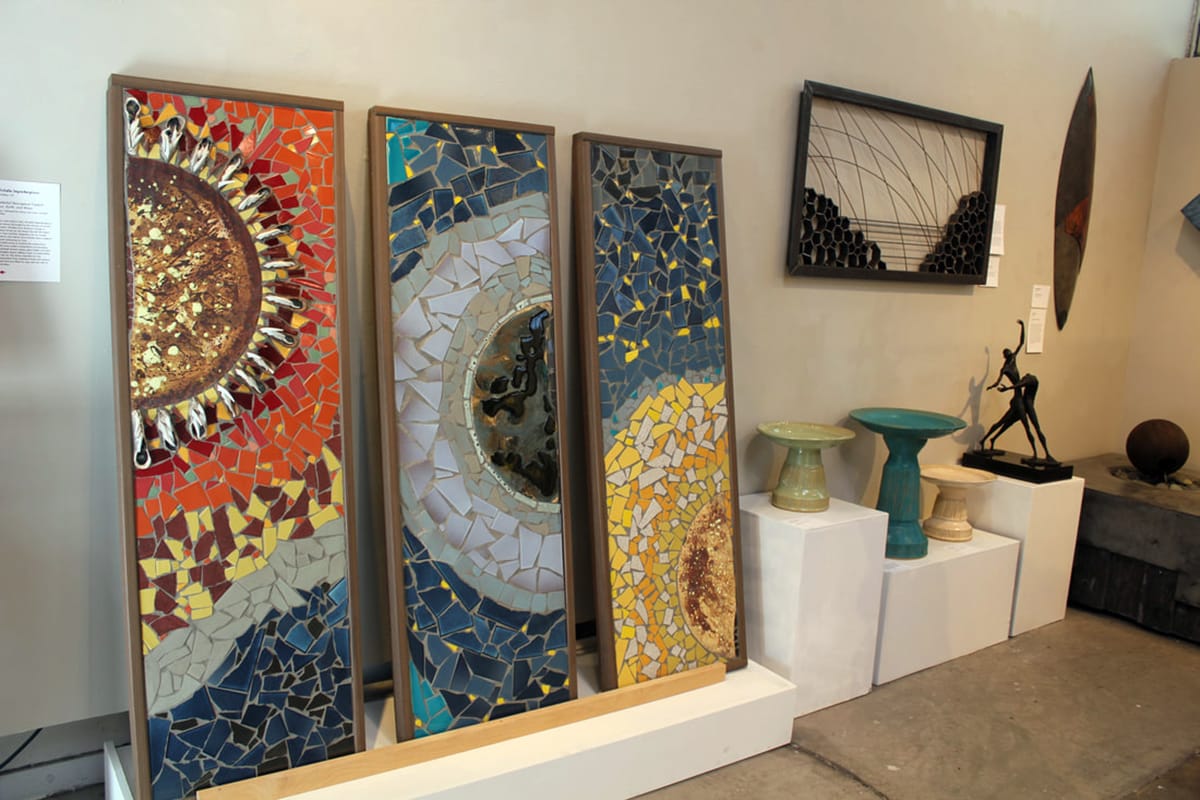
Meanwhile, Ehrenkrantz said the response to the Zone 0 art show has been good, and pieces are selling.
Blackaby said he bought some colorful mosaic birds for his yard, and Thouati said he hadn't really planned to purchase art, but "went to the show and fell in love with a piece." Mosaic panels.
Zone 0 has brought loss from removing plants, sometimes beloved and tended for years. But for some people, filling a spot with art may take away some of the sting.
The ACCI show could be "the first of many," said ceramicist Scheid. "The timing is right."