Auditor: Whistleblower reveals unauthorized ambulance buy
The investigation highlights "gaps in communication and oversight and … the need for a clearer process" around City Council notification.

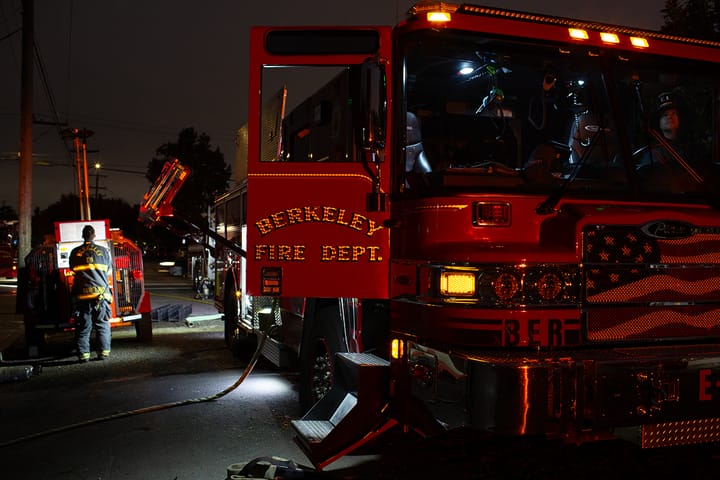
A Berkeley employee bought a city ambulance without permission — and management failed to disclose the breach publicly when requesting approval later, the auditor's office says.
The worker who made the purchase is no longer employed by the city, which said details about why the worker left are confidential under state law.
The circumstances of the nearly $300,000 ambulance buy were released Wednesday by the Berkeley auditor's office, which credited its internal city whistleblower program with bringing the violation to light.
The investigation into the purchase was the first public report to come from the whistleblower program, which launched in 2024, city records show.
According to the auditor's investigation, the Berkeley Fire Department realized it needed a new ambulance in late 2022.
A city employee then "executed a purchase agreement without City Council approval," which is required for spending above $100,000.
(The auditor's office did not provide information about the employee's city role or department, citing the need to ensure the integrity of the whistleblower program.)
The employee disclosed the $284,974 purchase to management in October 2023, the investigation found.
The city's finance department did not learn about the purchase until the "custom-build ambulance" was nearly complete.
There was no record that the City Council was informed about the lapse when it was discovered, according to the investigation.
In December 2023, the former city manager sought and received council approval for the ambulance purchase — but disclosed nothing publicly about the breach in protocol.
The auditor's office said the "delayed escalation of concerns" to the finance department and others "reduced oversight and increased risk."
"Although the purchase was eventually approved and payment completed, the sequence of events highlighted gaps in communication and oversight and demonstrated the need for a clearer process for notifying City Council when required purchasing steps have not been followed," the investigation found.
Ultimately, the auditor's office recommended several changes resulting from its probe, including "timely communication to City Council whenever a purchase moves forward outside of the established procurement requirements" and clearer "escalation and notification expectations when staff become aware that required purchasing steps have not been followed."
The report recommends "targeted training" about how these processes work and a general advisory that employees who don't follow the rules may be subject to "corrective or disciplinary action."
According to the report, city management signed off on "the overarching principles" in the recommendations — while emphasizing that no money was spent until after council approved the purchase.
Management also wrote that the city already has policies in place for purchases and that this situation arose because an employee violated the rules.
The city conducted a personnel investigation into the policy violation in 2024.
Ultimately, the city found that the employee had "acted outside the scope of delegated authority and misrepresented the City’s authorization status to the vendor," management wrote. "The employee committed a significant violation of established procurement policy and internal controls."
City management also noted that Berkeley had implemented improvements in recent years "related to fleet procurement, billing, and maintenance" resulting from a study by Mercury Associates.
(That study followed a 2021 Berkeley audit, "Fleet Replacement Fund Short Millions," which focused on the city fleet.)
On Wednesday, the Berkeley Fire Department declined to comment further on the investigation, noting that the management response accurately reflected its position.
This story was updated after publication when several additional details became available.