Familial DNA helped police solve sex crime series with 7 victims
Familial DNA searches help authorities "identify potential relatives of the alleged perpetrator" in government databases.
A Texas man police say they have linked to seven sex crime victims over 14 years is in custody this week thanks, in part, to a familial DNA search, authorities report.
The Berkeley Scanner broke the news of the case against Lashay Durisseau earlier this week. At the time, police declined to comment on the investigation.
On Friday afternoon, Berkeley police broke their silence with a late-day press release that revealed new details — although many unanswered questions remain.
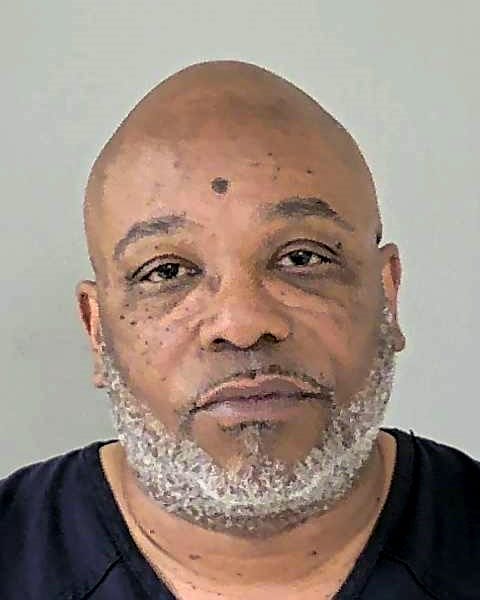
Lashay Durisseau. Fort Bend County Sheriff's Office
In the announcement, BPD said officers had arrested Durisseau on Tuesday in Richmond, Texas, with the help of "allied agencies."
The announcement did not get into the specifics of the allegations against Durisseau, now 56.
But police said he was responsible for a "series of kidnappings and sexual assaults" in four jurisdictions, including Alameda County, from 1994 to 2008.
"In the majority of the incidents, the suspect either physically assaulted the victims or threatened them with a firearm," police wrote.
The Scanner described three of the cases Wednesday in our original report, which was based on public court records.
 Emilie Raguso
According to those records, the Berkeley case took place in 2002 at the Berkeley Marina.
Berkeley police tested evidence from that case in 2015 after getting a grant from the Alameda County district attorney’s office to process untested rape kits, according to Friday's announcement.
"That testing resulted in a case-to-case DNA match linking five additional cases," BPD wrote, ultimately totaling seven victims from Berkeley, Richmond, Oakland and Beaumont, Texas.
About five years later, Berkeley sex crimes detectives got another grant, from the state Department of Justice, to do additional work on 500 cold cases — including the Berkeley case from 2002.
At that point, BPD detectives connected with police in Richmond, Oakland and Beaumont to determine how to proceed.
The agencies ultimately determined that Berkeley would take the lead on the investigation "building on the good work these departments had already done."
In 2022, the California Department of Justice "provided critical forensic support" to BPD via a "familial search" in an effort to identify possible suspects.
The familial search DNA technique is a relatively new investigative tool that helps authorities "identify potential relatives of the alleged perpetrator" in offender databases, according to an overview from the U.S. Department of Justice.
"These databases … are designed to provide law enforcement with investigative leads by comparing crime scene perpetrator DNA profiles against those collected from arrestees or convicted offenders or both."
Many people first became aware of DNA from family members being used to solve cases after it helped California authorities identify the Golden State Killer in 2018.
Since then, it's come up in a number of high-profile cold cases around the nation.
After honing in on Durisseau, the FBI eventually secured his DNA for comparison to existing evidence, securing an arrest warrant Dec. 2, 2025.
This week, Berkeley police detectives went to Texas and arrested Durisseau in coordination with a tactical FBI task force in Houston and the Fort Bend County Sheriff’s Office, "bringing a decades-long investigation to a close."
In Friday's announcement, Berkeley police credited a long list of agencies for their assistance: the Alameda County district attorney's office, Serological Research Institute, the Jan Bashinski Laboratory of the California Department of Justice, the Oakland and Richmond police departments, the Texas Department of Public Safety, the Fort Bend County sheriff's and DA's offices, and the Houston and Beaumont police departments.
As of this week, Durisseau remains in custody in Texas awaiting extradition.
The Scanner has asked the Fort Bend County Sheriff's Office for a booking photograph and will update this story if it becomes available.
Update, Jan. 20: A booking photograph has been added to this story.
Correction: Familial search, the type of DNA analysis through offender databases used in this case, is different from forensic genetic genealogy, which combines DNA analysis "with traditional genealogy research" to generate leads. They "both use kinship relationships to generate leads but differ significantly in scope and application." This story has been corrected.