Berkeley delays controversial Flock vote to June 2
"Fatigue and time constraints do not support thoughtful, sound decision-making," the mayor's office said Wednesday.
A Berkeley City Council minority blocked a contentious vote early Wednesday morning on whether local police can continue to use Flock Safety cameras and expand their use in Berkeley.
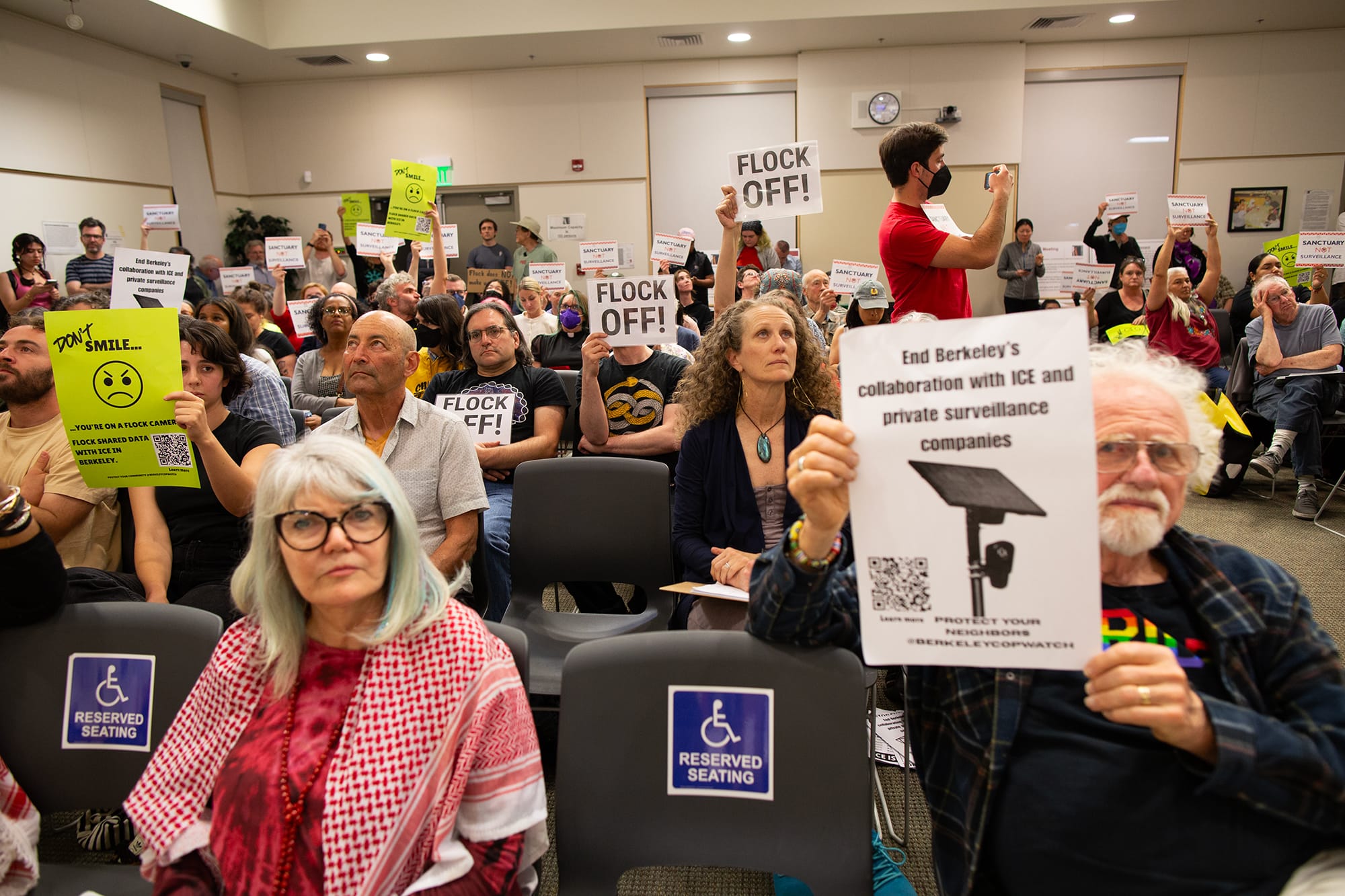
The vote, just before 1:30 a.m., followed hours of public comment that was nearly unanimous in its staunch resistance to Flock, which many described as part of a federal agenda targeting immigrant communities.
"It's not about creating an airtight contract," one woman told officials, voicing sentiments that were echoed throughout the night. "This is a moral decision — in a unique political moment of state-sponsored terror and government overreach."
"This seems to me like a real assault on the psyche of this city," another woman said. "We've seen headline after headline about the dangers of this technology."
Much of the news coverage has focused on concerns about data sharing with federal agencies — including problems with Flock changing local settings without permission.
Berkeley authorities have said they will be able to avoid those pitfalls because of their carefully-constructed contract with Flock.
But critics have said the city is foolish if it believes even the best contract can protect local data — or local residents, by extension.
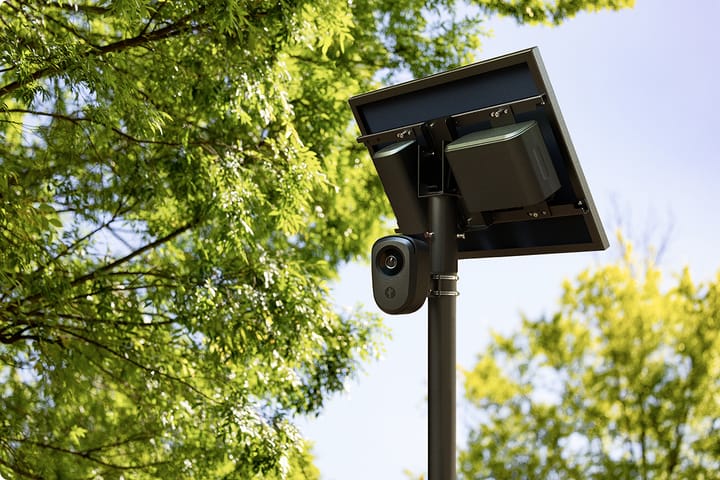
BPD began using Flock license plate readers in 2024 and has been looking to expand the contract, by adding an in-house drone program and fixed surveillance cameras to the mix, along with Flock Nova, a consolidated new platform to review all the gathered evidence.
The current Flock license plate reader contract is set to end in July.
Since the program launched, Berkeley police say Flock cameras have played a crucial role in helping officers solve cases and make arrests.
But community pushback to Flock has only grown since last summer, when police said they had selected Flock as the vendor for an expanded fixed-camera program police have been working to develop.
The City Council was set to vote on that contract in September — but the city abruptly pulled the item before the vote, saying it needed more time for public input and policy work.
In the months that followed, Berkeley police expanded the scope of their plans, resulting in the new contract — on Tuesday night's agenda — for license plate readers, drones, fixed cameras and Flock Nova.
The department has said it will use salary savings from open positions to pay for the technology package.
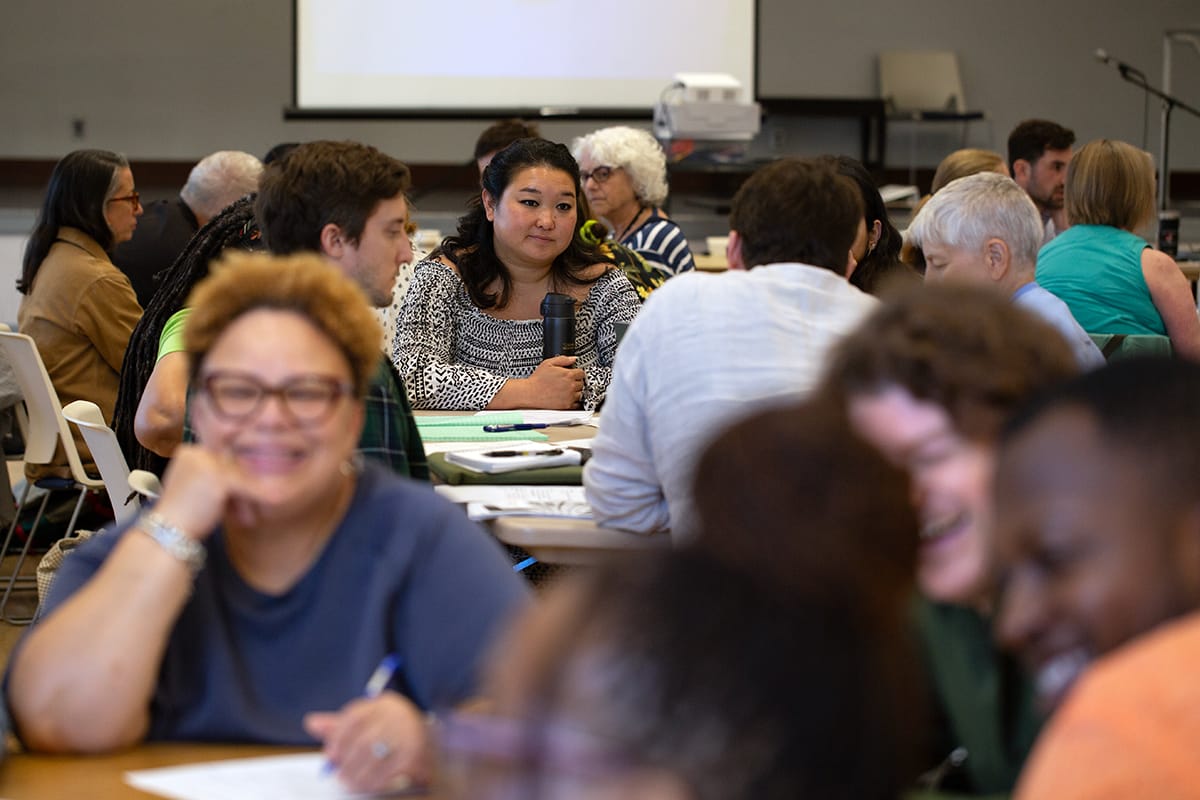
Last week, Berkeley Mayor Adena Ishii organized a "community conversation" about BPD's public safety technology package, which activists and privacy advocates have continued to condemn.
On Monday, the mayor brought forward a new proposal (with council members Cecilia Lunaparra and Councilman Igor Tregub) to end the city's relationship with Flock altogether.
The same day, five other council members — Rashi Kesarwani, Terry Taplin, Shoshana O’Keefe, Brent Blackaby and Mark Humbert — voiced support for a stronger version of the Flock contract they said would address many of the concerns.
The only remaining council member, Ben Bartlett, brought forward his own version of the tightened contract Tuesday night.
But the vote never happened.
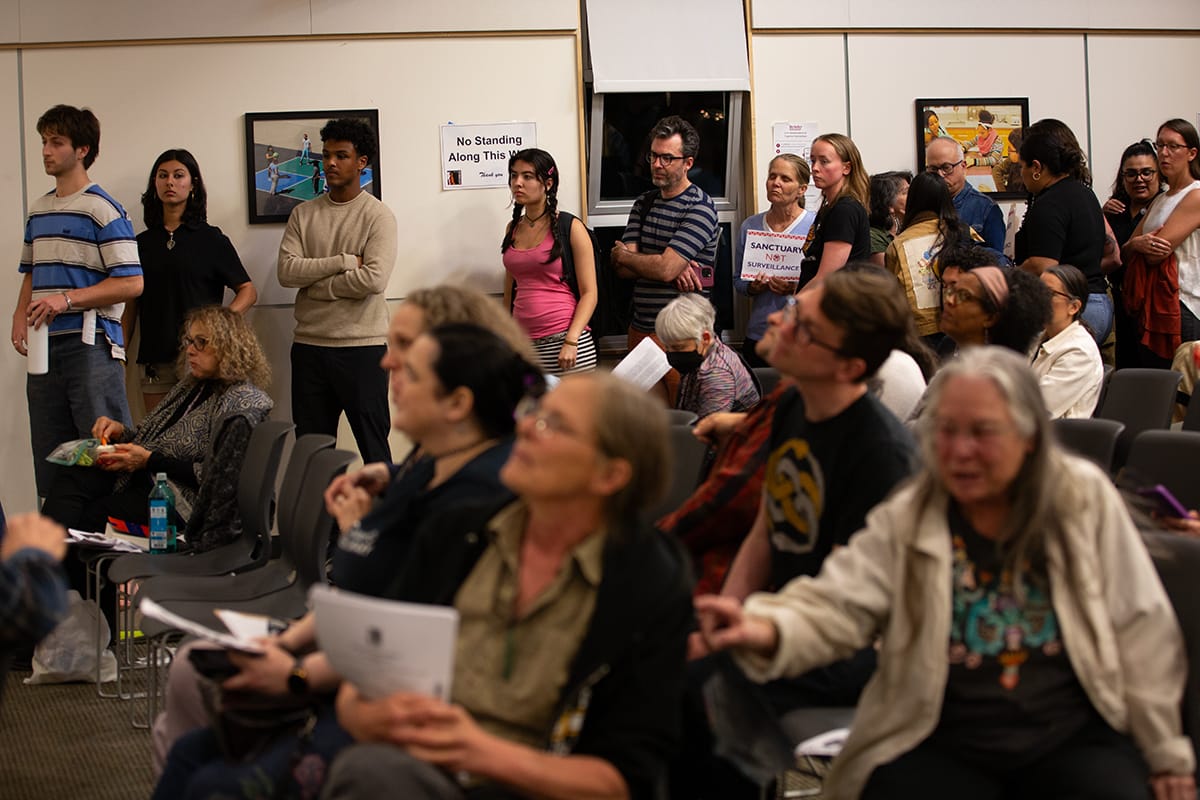
Ultimately, public comment largely ran out the clock and, shortly after 1 a.m., the mayor's minority faction (Ishii, Lunaparra and Tregub) voted with Bartlett not to extend the meeting to allow the vote.
Under council rules, a two-thirds "supermajority" is needed to extend the meeting past the agreed-upon end time.
As a result, the five officials who did vote to extend — Kesarwani, Taplin, O’Keefe, Blackaby and Humbert — lost the motion and there was no time for council questions or discussion.
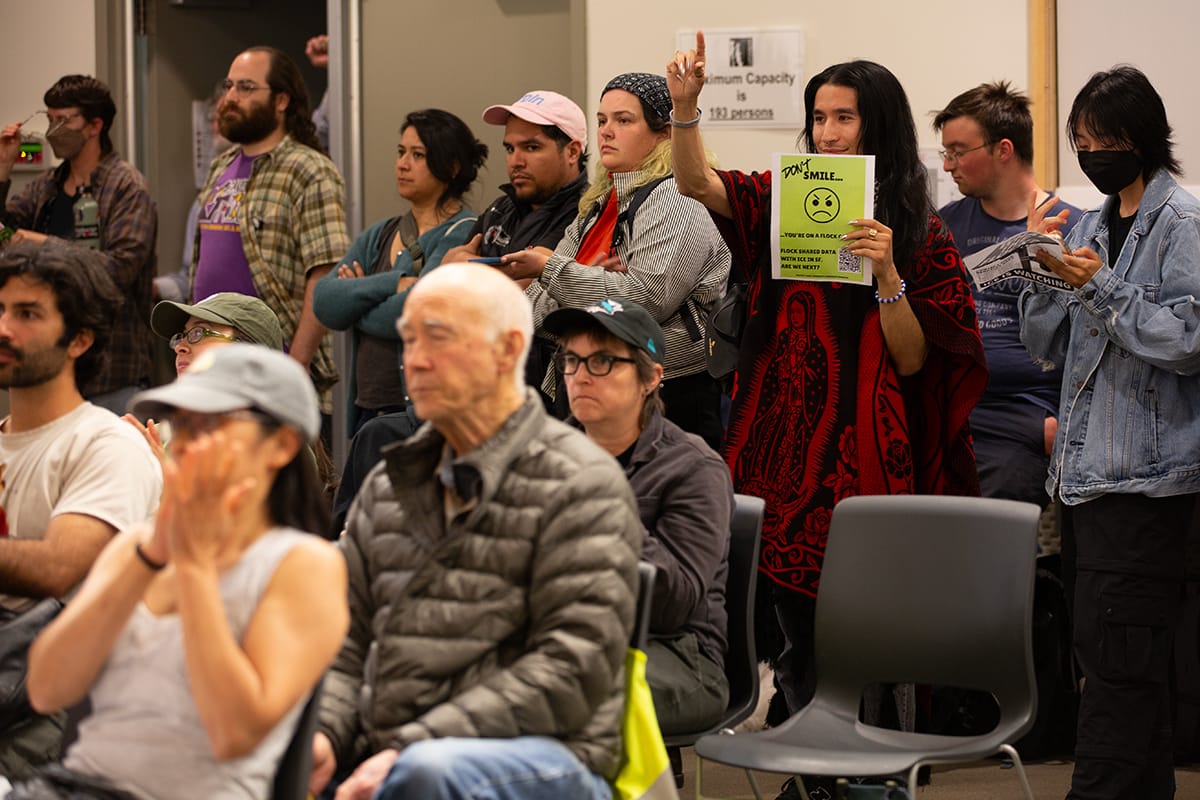
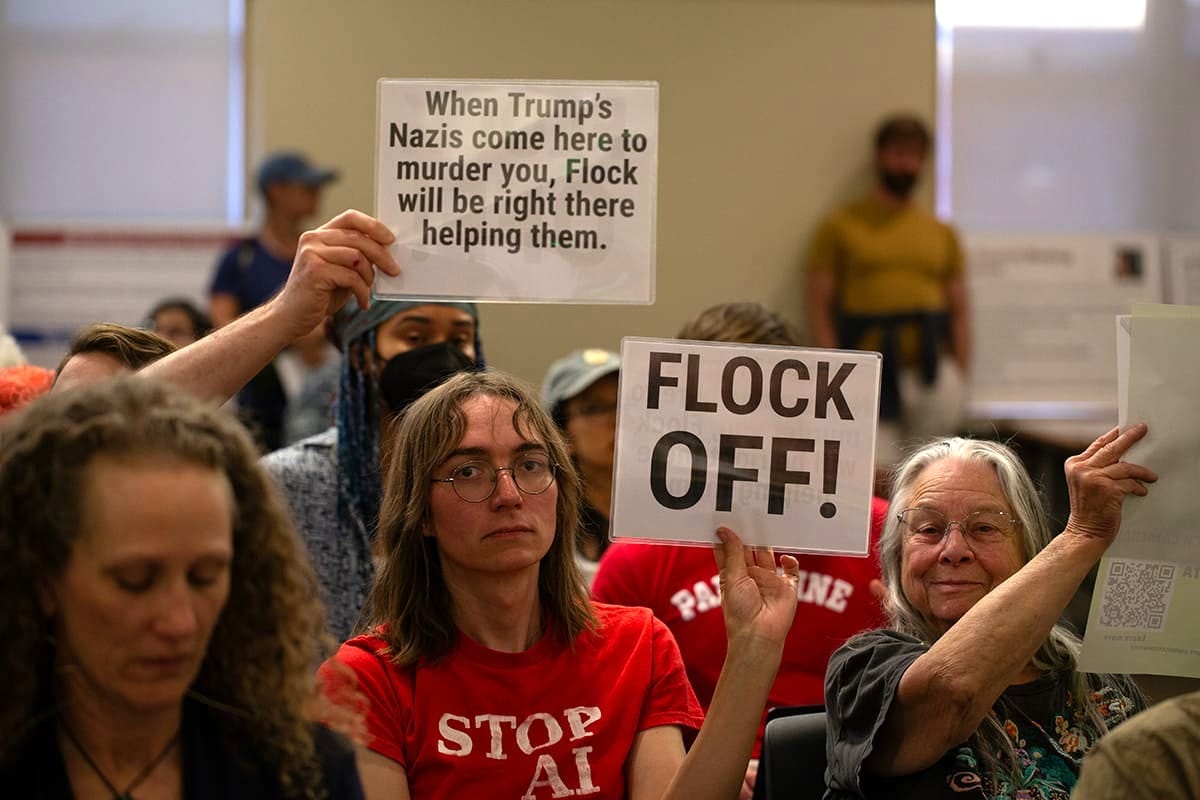
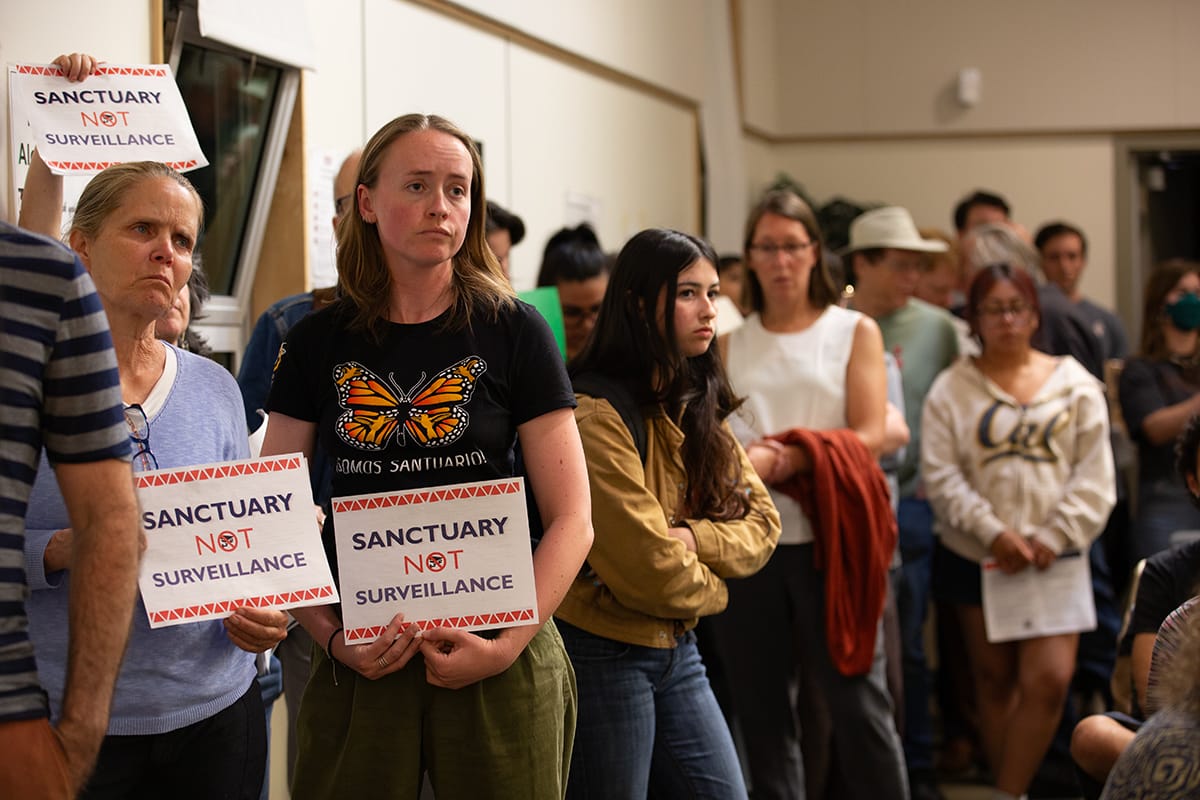
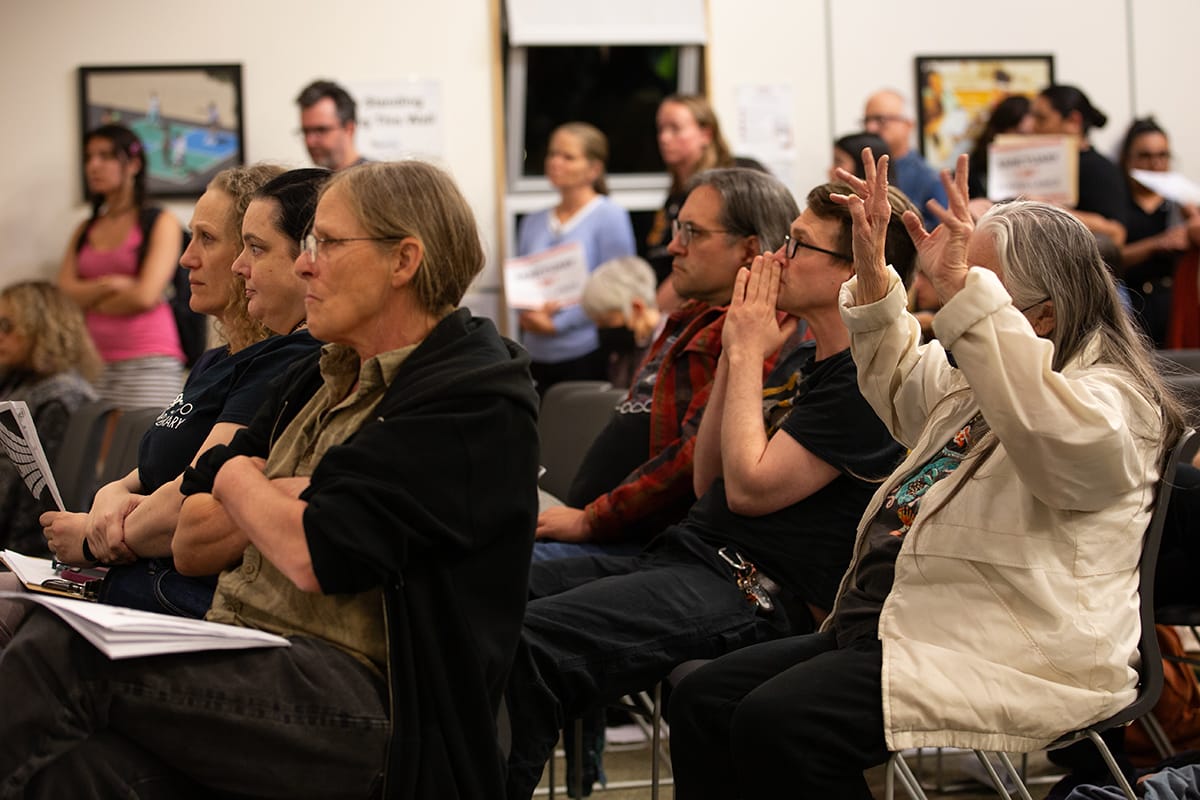
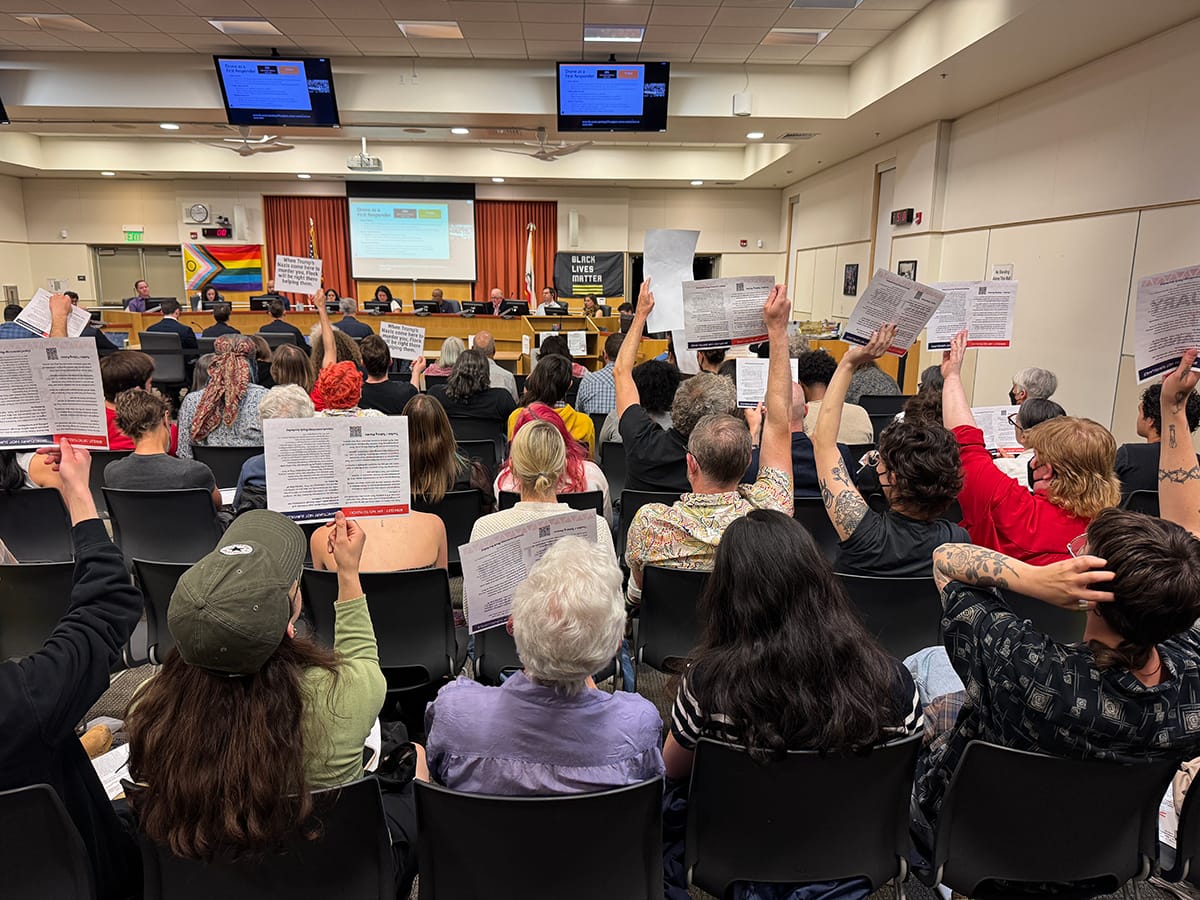
Scenes from Tuesday night's City Council meeting. Emilie Raguso/TBS
Council didn't even begin the Flock item until after 9 p.m., starting with a 20-minute presentation from police and fire officials.
The Police Accountability Board then gave a 30-minute presentation about why it opposed the Flock contract and why officials should delay the vote.
During the discussion, council agreed to extend the meeting to 1:30 a.m., beyond the normal end time of 11 p.m.
After the PAB presentation, council members went over their proposals and revisions for about 40 minutes.
At that point, at 10:30 p.m., the mayor turned to public comment instead of allowing council questions, which typically happens first.
Because there were so many public commenters — more than 60 people got in line to start, with many others waiting until later to join the queue — each person received 1 minute to make their remarks.
Community members burst into song to oppose @flocksafety during a Berkeley City Council meeting tonight. Officials are expected to vote tonight on the Flock contract. #berkeley #flock pic.twitter.com/BG1pO4dxMu
— The Berkeley Scanner (@BerkeleyScanner) March 25, 2026
After an hour of public comment, the mayor called for a 10-minute recess — which lasted more than 20 minutes and ended shortly before midnight.
Nearly an hour later, at nearly 1 a.m., public comment was still going, although it had shifted from in-person speakers to Zoom.
That's when Councilman Humbert asked to extend the meeting until 2 a.m. so officials would have time to discuss the items and vote.
But, with only five votes in favor, one short of the supermajority needed, the motion failed, and council returned to public comment on Zoom.
At that point, seven people had raised their hands to speak. But, more than 10 minutes later, the clerk noted that there were still seven people waiting in line.
"We keep having more people join," Mayor Ishii observed.
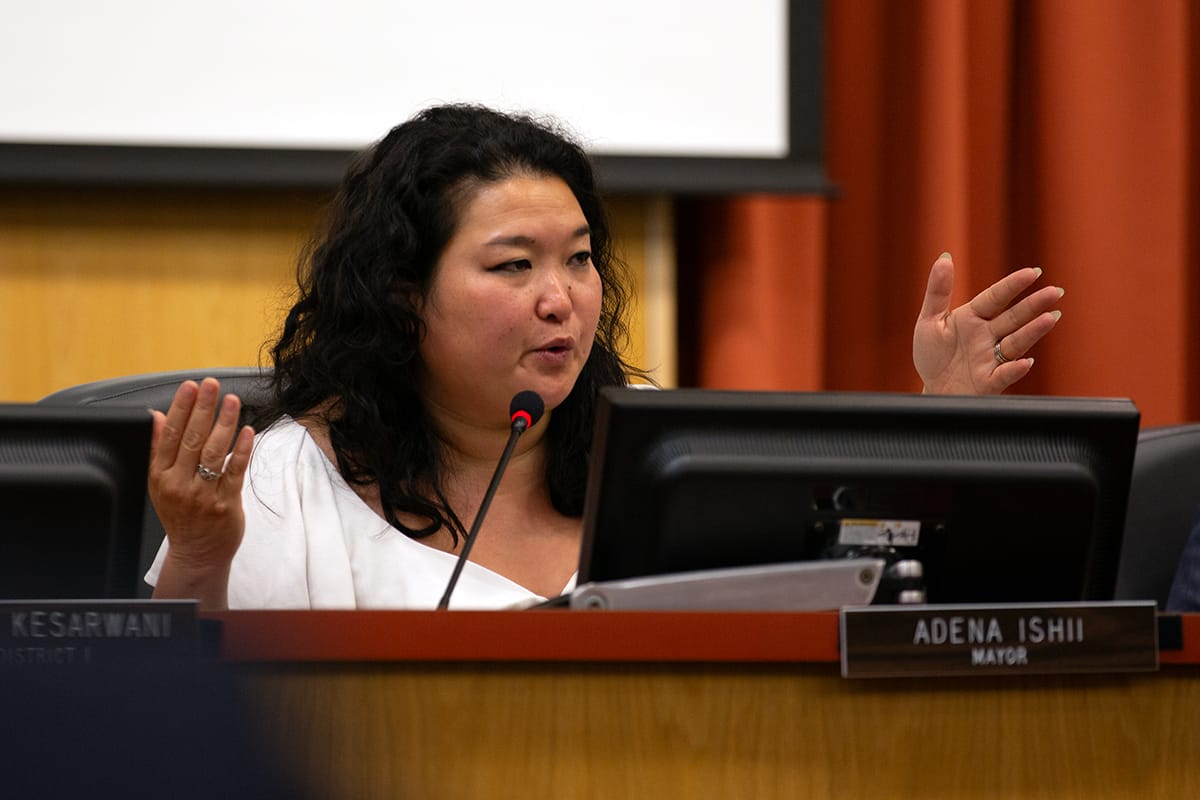
Under council rules, the meeting must end when the clock runs out if there has been no vote to extend.
Shortly before 1:30 a.m., Ishii suspended public comment and officials agreed to return June 2 for a special meeting about the Flock contract.
Why did Berkeley delay the Flock contract vote?
On Wednesday afternoon, in a prepared statement, the mayor's office said Ishii's decision not to extend the meeting had been guided by "the late hour" — particularly as public comment was still underway.
"Fatigue and time constraints do not support thoughtful, sound decision-making," her office said. "Council had not yet had the opportunity to ask questions or engage in a meaningful discussion. This is an issue of significant importance to our community, and rushing a decision under these circumstances would not only be unfair to those who want to be heard, but would undermine a transparent and democratic process."
Tregub said, even had council extended to 2 a.m., it wouldn't have been enough time.
"It was not at all clear to me how a responsible vote on an item of this gravity and complexity would be possible given these time constraints," he said. "I do not find it prudent to make decisions of this caliber at 2 a.m. following a 16-hour workday, particularly when we owed it to our constituents to carefully consider all proposals and ensure the strongest protections for our residents in light of the recommended vendor's history."
Lunaparra expressed a similar view.
"I believe these policies and contracts deserve a careful and nuanced discussion," she said. "By 1:30 a.m., more than nine hours after the meeting began, we still had over 10 raised hands for public comments on Zoom, then Council questions, complex discussion, and debate — involving four separate supplementals — which may have lasted hours longer."
She said the June 2 public meeting would be more responsible and transparent, particularly given the complexity of the contract under review.
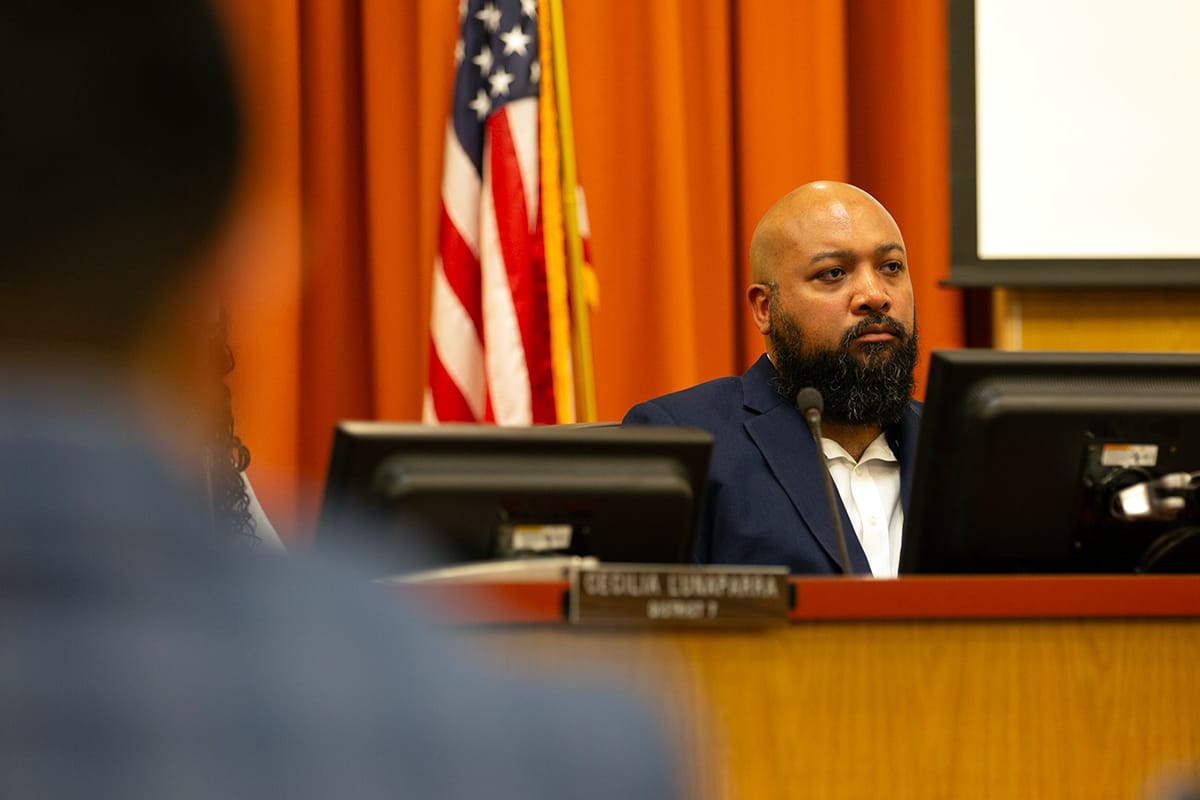
Other council members expressed dismay that they had been unable to resolve the item Tuesday night — or at least put their questions on the table.
"I am disappointed that the choice not to extend the meeting effectively ran out the clock on such a critical vote," said Taplin, adding that the new special meeting date was now too close for comfort to the current Flock contract's expiration date.
Taplin said he would have liked to have been able to ask police, the city attorney's office and the Police Accountability Board detailed questions Tuesday night about the many issues that had been raised.
"It behooves the city to have a process that daylights the facts, clarifies the utility of these tools, and foregrounds the protections in each proposal," he said.
O'Keefe said she, too, had been disappointed in the process.
"Even if it was too late in the night to have effectively worked out an agreement, I wish I could have had a chance to ask my questions," she said. "I had a number of questions designed to clarify some of the murkier issues at stake, and also to help clear up some of the misinformation I heard throughout public comment."
Humbert said he understood why some of his colleagues had elected to end Tuesday's meeting — but continues to view the contract as a priority.
And he said he hoped council would make time to do its critical work during the special meeting in June.
"I think we owe it to Berkeley residents and businesses to treat this with the urgency and seriousness it deserves," he said. "For that reason, I feel strongly that we must pick this back up before the planned June 2 date and that, since we've already heard hours of testimony, we should thus reasonably limit the duration of public comment so council has adequate time and mental energy to deliberate."
Note: The Scanner added photographs to this story after publication.