Berkeley mayor says no to Flock. Will council follow suit?
A new proposal from Mayor Adena Ishii "opposes the renewal, approval, or authorization of any contract with Flock Safety."
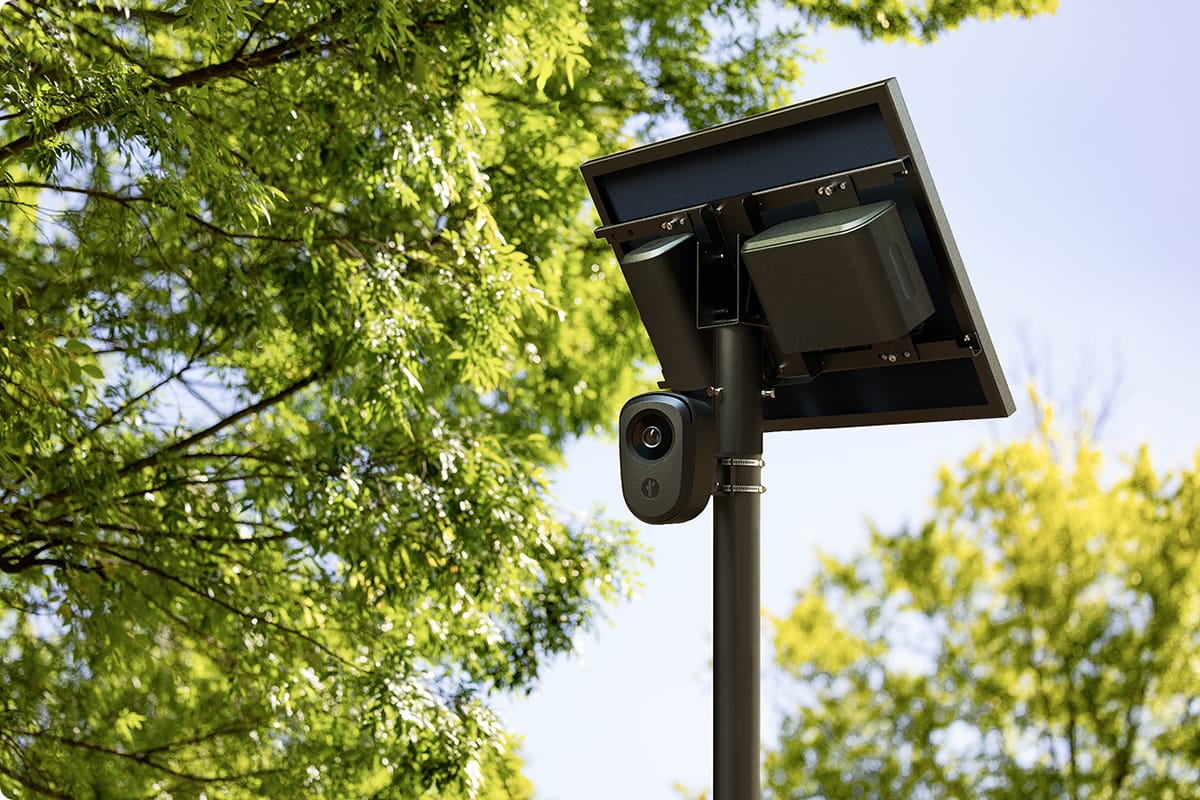
Officials are poised to vote Tuesday night on how, or if, to move forward with Flock Safety cameras as Berkeley police look to expand their use.
The vote is part of a broader discussion on drones, private security cameras and other "public safety technologies" Berkeley police say will help fill the gap posed by a longstanding staffing crisis.
Berkeley already has an active license plate reader contract with Flock, which police credit with helping officers make hundreds of arrests in recent years.
Officials have also pledged to roll out an expanded security camera program, which would use video footage — not just license plate "hits" — to help police solve crime.
But that program, approved in concept, has been slow to launch, particularly after police said Flock was their preferred vendor and there was no viable alternative.
In recent months, as concerns about Flock data breaches have been reported elsewhere, including in Ventura County, activists and privacy advocates have stepped up their opposition to an expanded Flock contract.
They have repeatedly cited immigration crackdowns by the federal government and increasing state surveillance as their chief concerns.
On Monday, Berkeley City Council members put forward three separate proposals that would revise the omnibus public safety technology package from Berkeley Police Chief Jen Louis in various ways.
All but one Berkeley City Council member is already represented across the three items: one that says no to Flock entirely and two that are more moderate.
Supporting an item does not necessarily translate into a vote, but it does reflect potential alliances and positions.
The most far-reaching proposal, written by Berkeley Mayor Adena Ishii and Councilwoman Cecilia Lunaparra, with support from Councilman Igor Tregub, would cut Flock out of the city's program altogether.
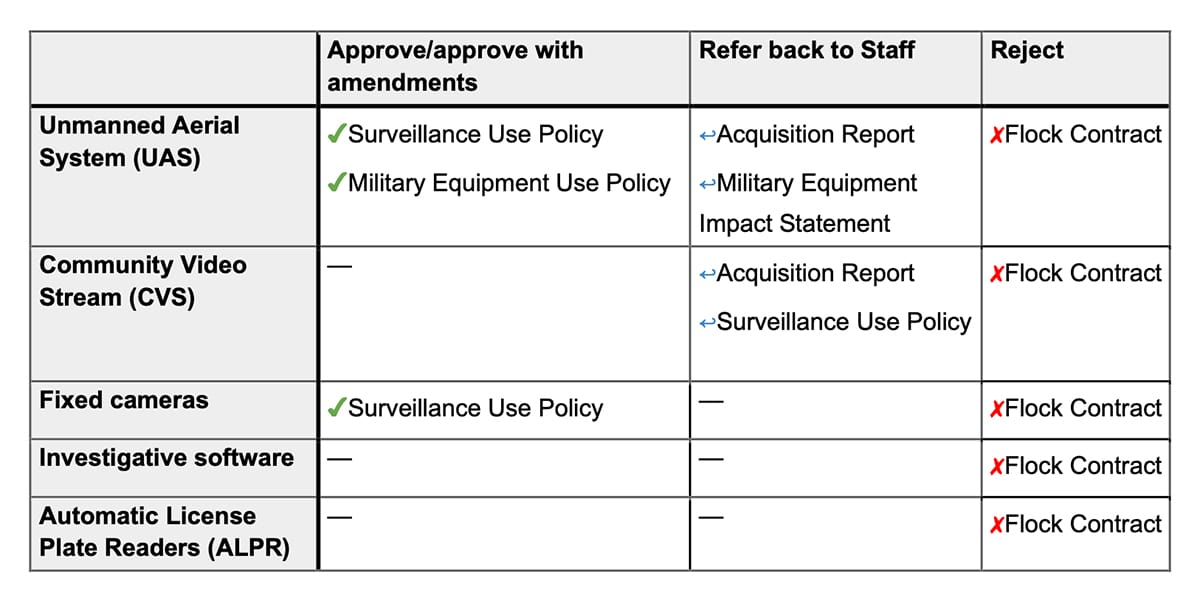
The two others — which have five supporters between them, potentially representing a council majority — tighten the terms of the Flock contract, doubling Flock's financial penalty for unauthorized data sharing and making it easier for the city to terminate the deal.
Of the two more moderate items, Councilman Brent Blackaby's proposal also requires increased auditing and reporting "to maximize oversight during implementation and reduce the chances of long-undetected data breaches."
The other — from council members Mark Humbert, Shoshana O’Keefe, Terry Taplin and Rashi Kesarwani — tightens the contract language, requiring City Council approval for any modifications, along with written consent from the city before Flock changes any network settings, among other proposed revisions.
On the dais, council members often work together to find a middle way before a vote, blending aspects of proposals to build consensus.
The Flock contract is just one piece of Tuesday night's public safety technology package, but it has drawn the most scrutiny.
The initiative also includes language and guidelines for Berkeley police to launch a new in-house drone program (with Flock), extend its license-plate reader and fixed surveillance camera contracts with Flock, and expand its use of "community video streams" — private cameras that can be hooked into the BPD system or more easily accessed by police.
The Scanner will attend Tuesday night's council meeting and continue to report on this issue. See the full agenda and meeting details.