Berkeley calls off Harrison homeless camp closure for now
The city confirmed just before publication that no cleanup operation would take place this week at Eighth and Harrison.
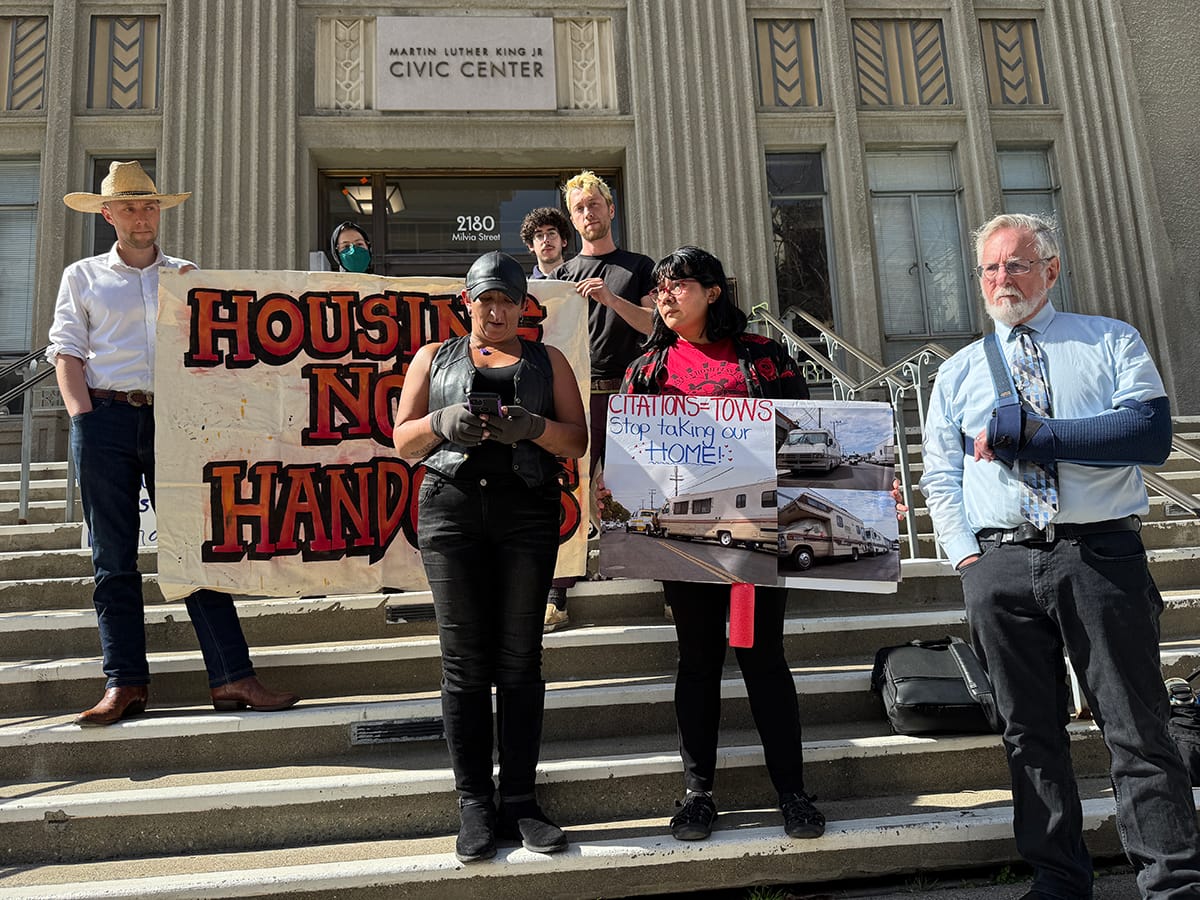
On Monday, critics held a press conference to decry city plans to clear Berkeley's last big homeless camp this week. Now, the plan is off.
The Berkeley Homeless Union, which is already fighting the city in two separate court battles, pledged to do what it takes to keep the encampment from closing.
"It ain't gonna happen, not on our watch," said Anthony Prince, lead organizer and general counsel for the Berkeley Homeless Union.
Just after noon, Prince said he had asked the city Monday morning to postpone the operation for at least a week.
Just before publication, the city confirmed to TBS that no cleanup operation would take place at Eighth and Harrison this week. No further details were provided.
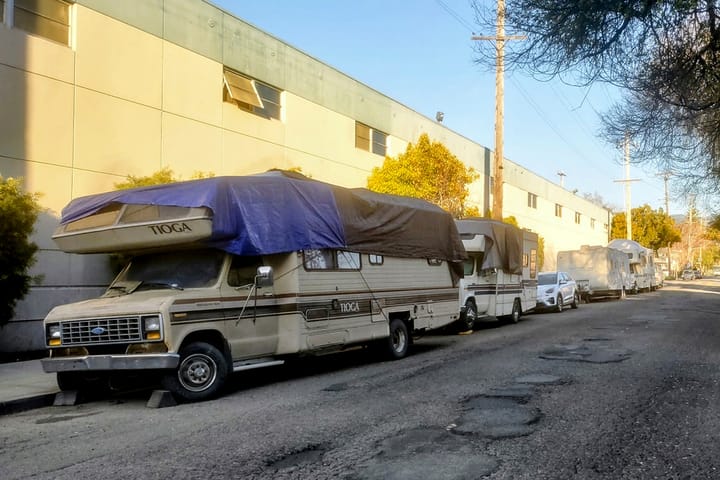
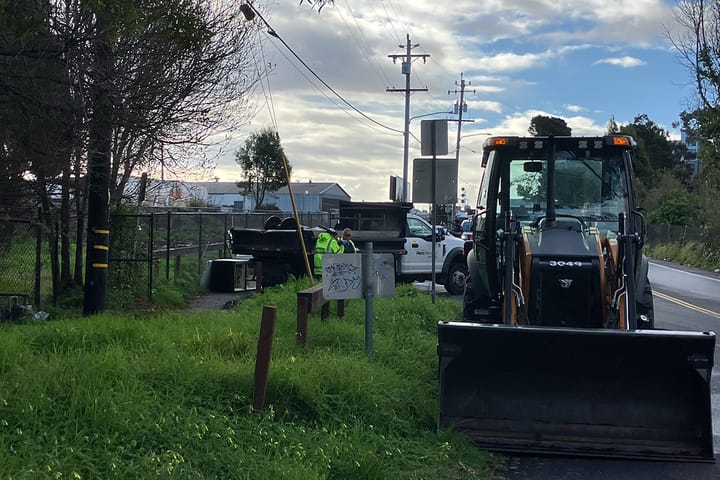
Last week, city staff posted closure notices around the neighborhood, requiring everyone to leave the encampment by Feb. 24 — aside from eight people who are under a judge's protection order based on disability claims — due to "the presence of Leptospirosis," a potentially deadly bacteria.
 Emilie Raguso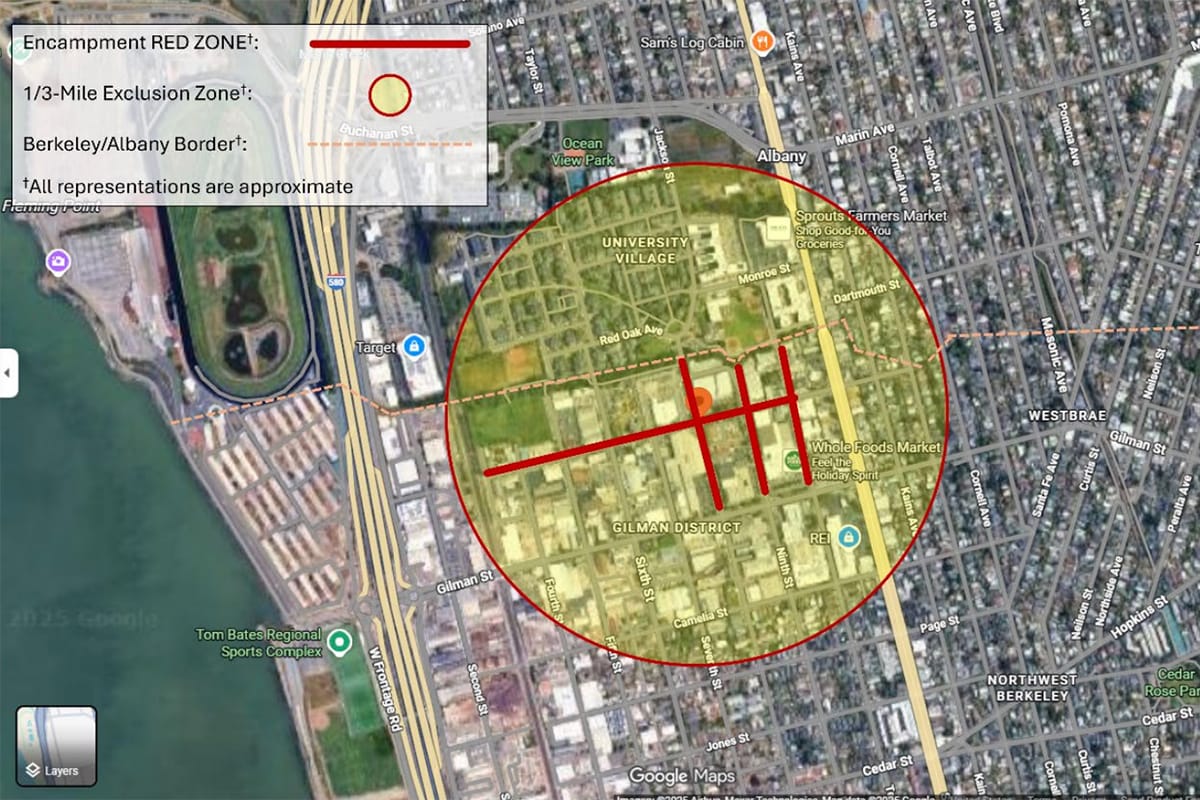
In the closure notice, the city said anyone camped or parked between San Pablo Avenue and the railroad tracks from Codornices Creek down to Gilman Street must move at least one-third of a mile away so the city can complete critical "rodent abatement" work.
Prince — who also represents the California Homeless Union Statewide Organizing Council — called the city's approach nonsensical.
"They can't say it's a deadly bacteria and the place is contaminated and then say, yeah, but we're gonna push everyone out into the city of Berkeley," he said. "They can't have it both ways."
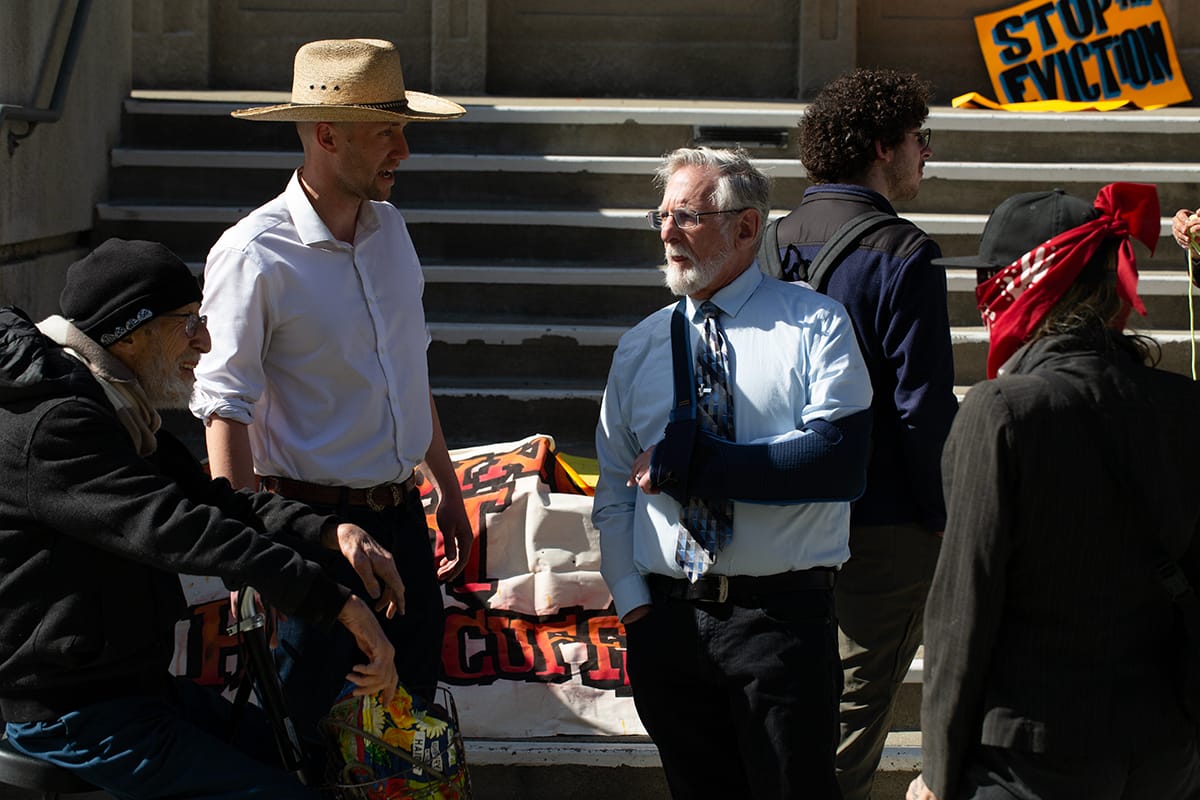
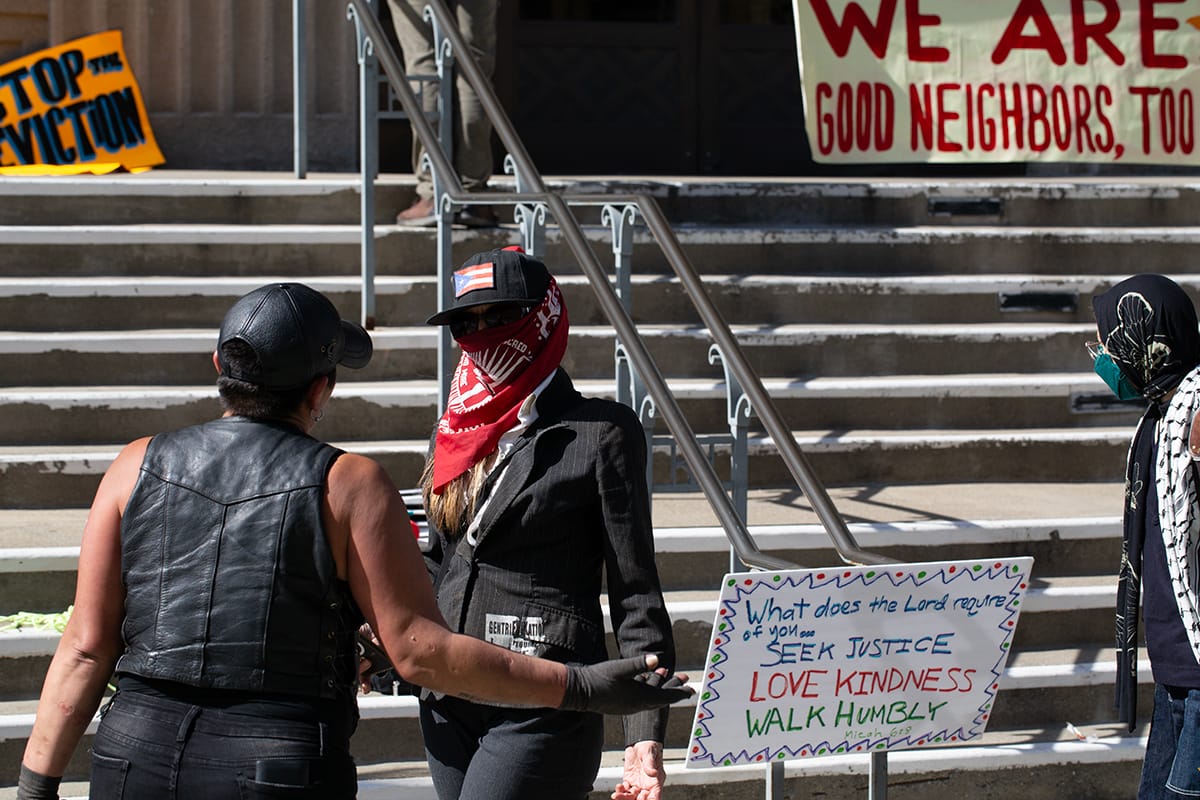
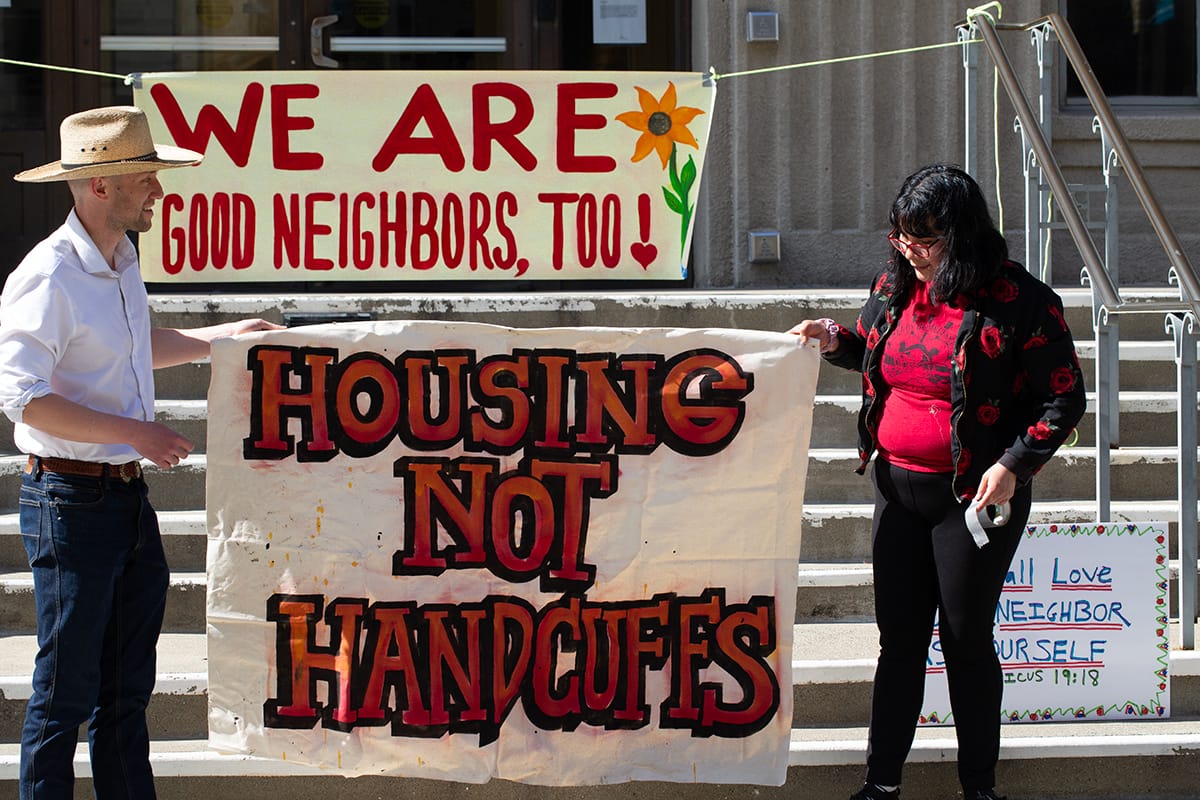
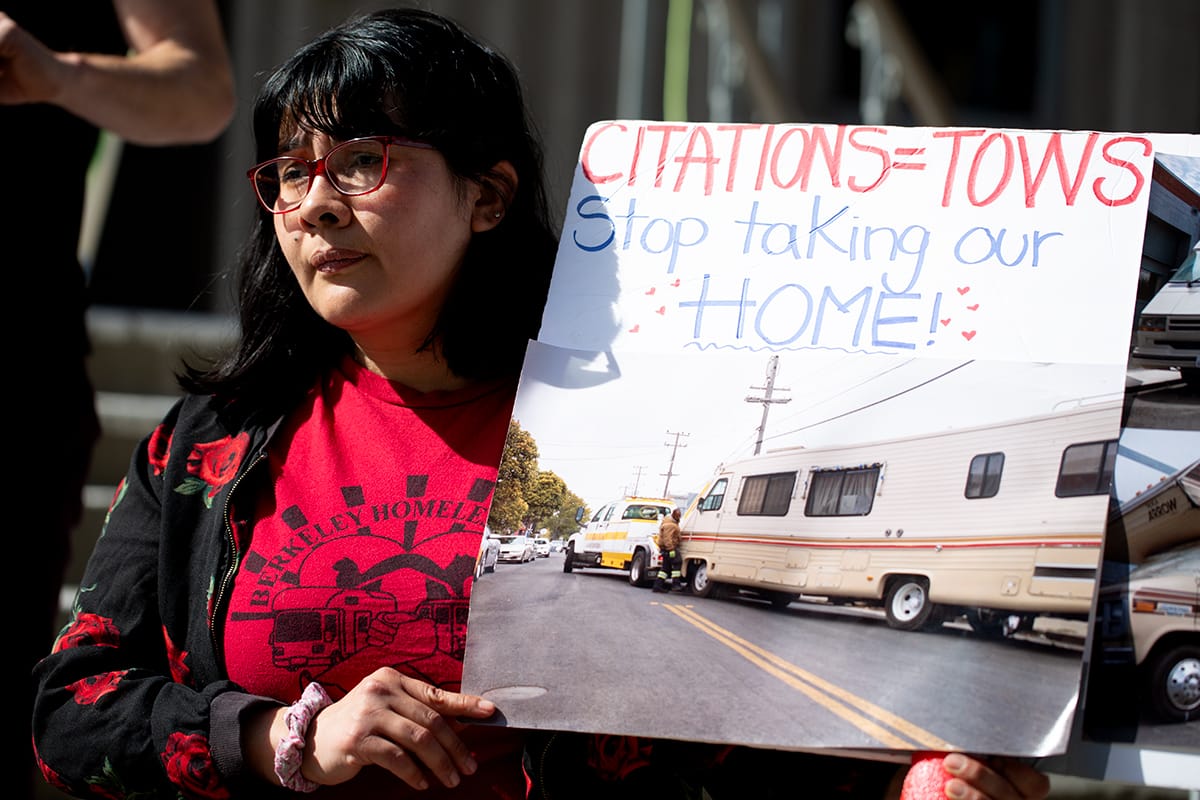
Members of the Berkeley Homeless Union held a press conference outside Berkeley City Hall at noon Monday, Feb. 23, 2026. Emilie Raguso/The Berkeley Scanner
It's been more than a year since the Berkeley Homeless Union filed its most recent lawsuit against the city demanding that Berkeley do more to provide disabled encampment residents with the accommodations they need before forcing them to move.
On Monday, speakers argued that the city had exaggerated the public health risks of the bacterial outbreak, and withheld area cleanup services, in order to push its own plans to clear the camp where, according to the BHU, about 40 people live.
" We are demanding designated relocation sites, sanitation and real accommodations," said Amber Whitson, a plaintiff in the other active BHU lawsuit. "Not displacement disguised as an effort to ensure public health."
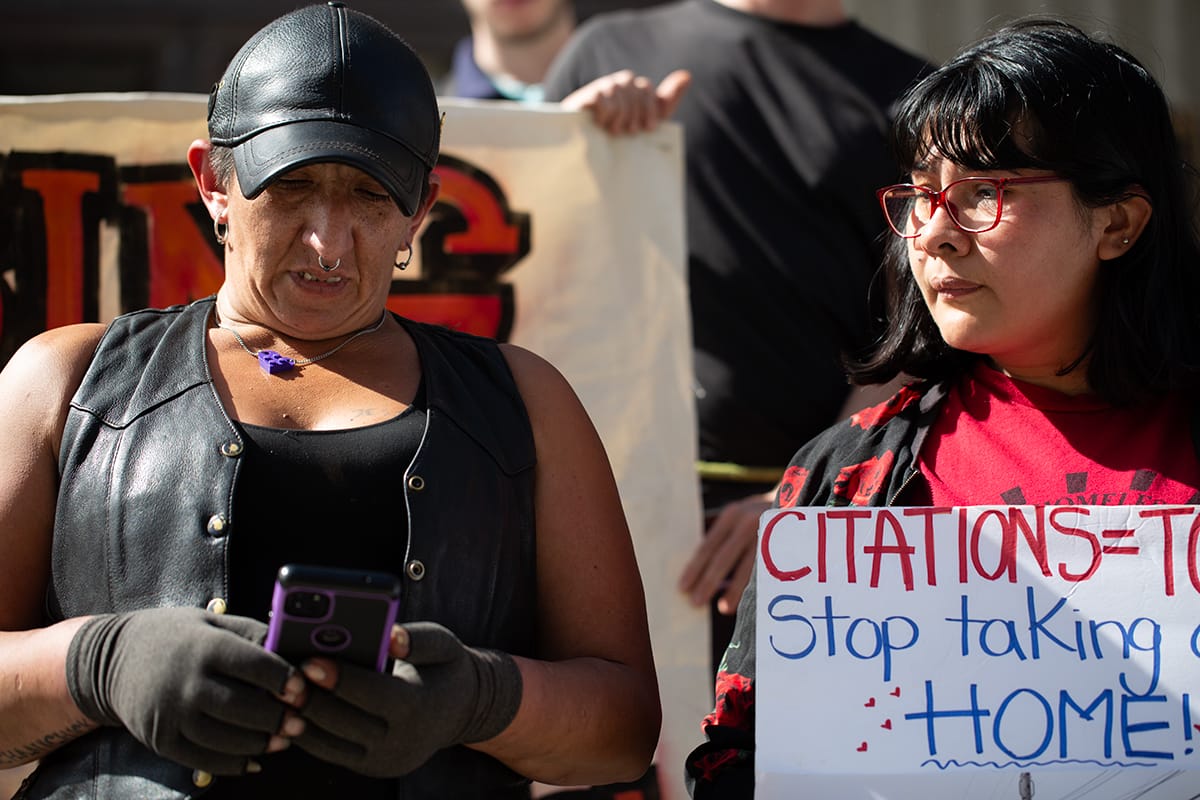
In extended remarks, Prince explained how the Berkeley Homeless Union had "weaponized" the Americans with Disabilities Act to push the city to do more.
"These rights exist," he said. "Not to sit on a piece of paper, not to have cities violate them. They exist for us to say, hey, this is our right and we're gonna be damned if we're gonna let someone take those rights away from us."
"This is a crucial, existential fight for the rights of people who are homeless in Berkeley."
-Osha Neumann
Prince said the encampment at Eighth and Harrison streets in northwest Berkeley had "become a battleground" that residents would fight to protect.
"It was the birthplace of the Berkeley Homeless Union," Prince said. "And they know it. And that's why it's so important to them to close it down with whatever excuse they come up with."
"We defend the encampments because we turn them into staging grounds for battle," he said. " For survival, for our rights: The rights that everyone should have."
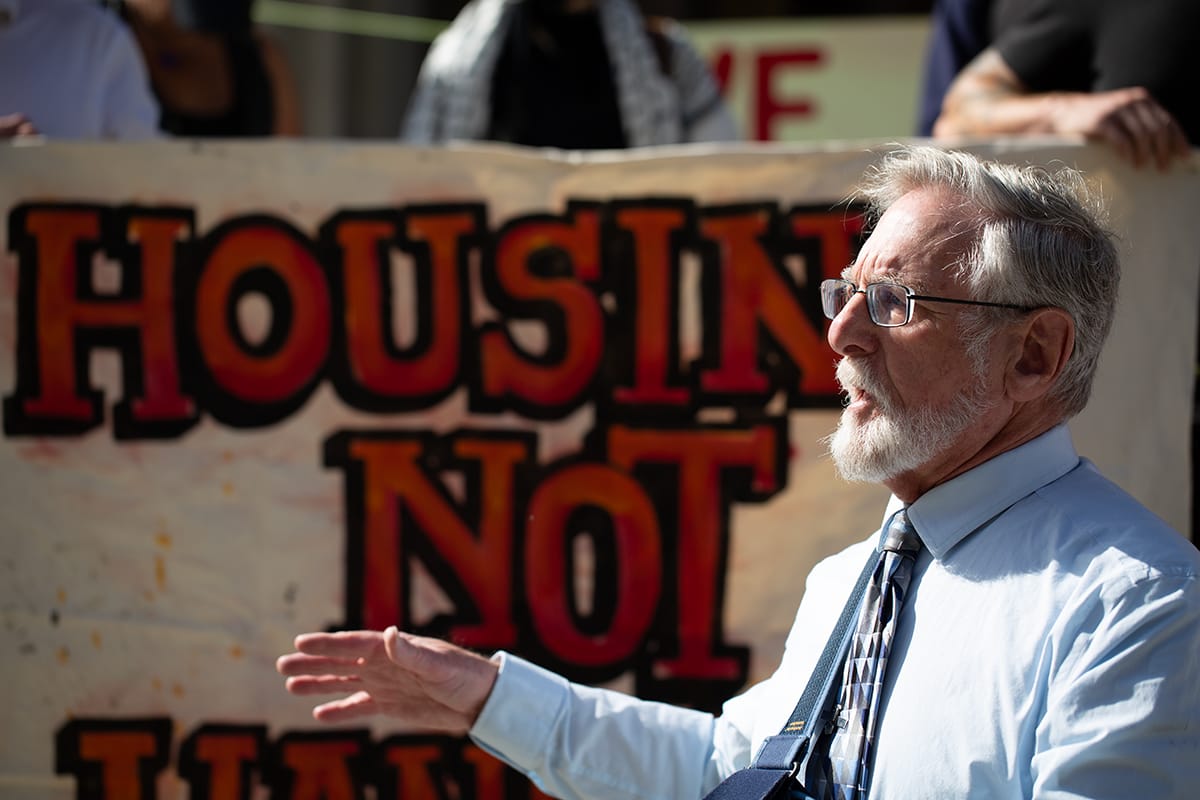
In mid-January, according to court papers, U.S. District Judge Edward Chen ordered the city to "identify at least three areas" where the eight named encampment residents in the ADA lawsuit can move — "or demonstrate why such identification is not a reasonable request."
Chen also directed the city to explain, among other things, why it can't provide "limited moving assistance" and interim trash disposal services until the relocation happens.
Chen also asked the city to go into detail about how tents on sidewalks and parked RVs would affect its current sidewalk and parking programs, as well as street access.
Most of the judge's demands in the mid-January order appeared to fall to the city.
But Chen also directed the Berkeley Homeless Union to "clearly explain why their disabilities prevent them from complying" with various city rules, and to spell out the nexus between their disabilities and the accommodations they have requested.
All of this is leading up to a March 20 court hearing before Judge Chen that's expected to result in a ruling on the ADA lawsuit.
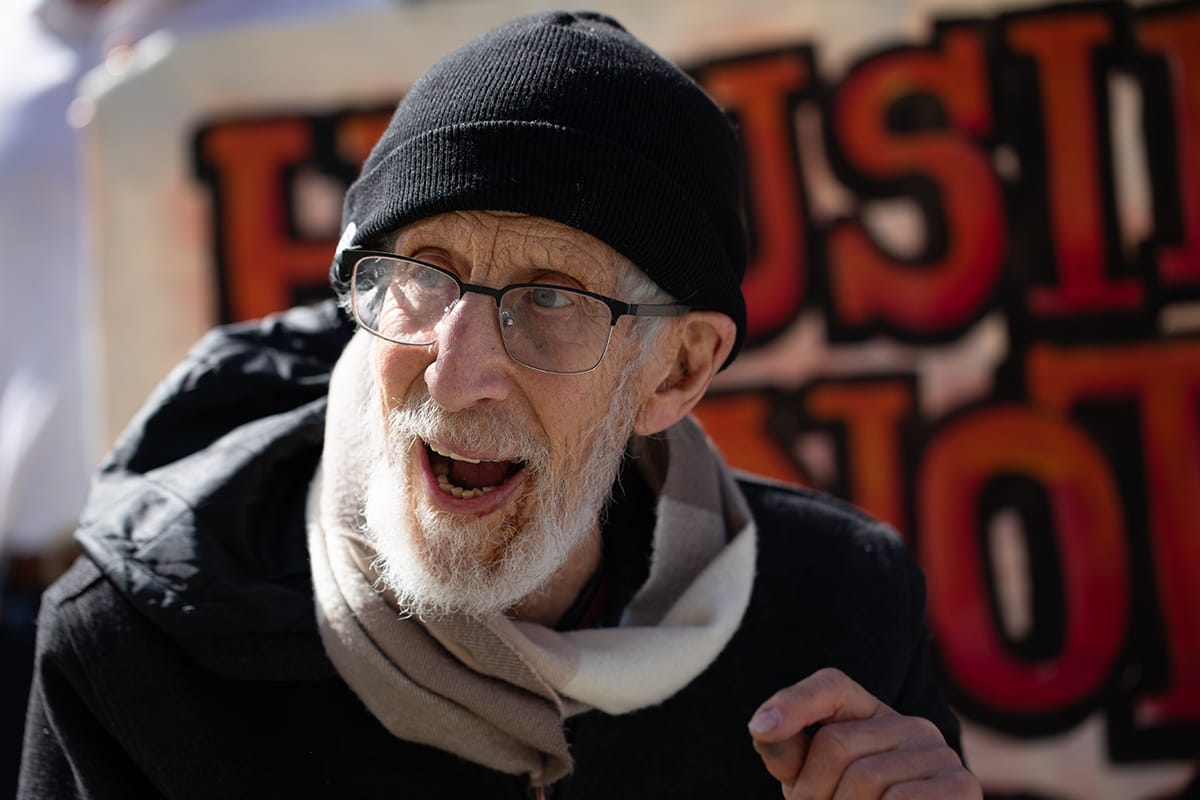
At Monday's press event, Osha Neumann — Berkeley's most prominent legal advocate for homeless denizens — briefly took the stage to denounce the city's overall approach to unhoused residents.
" This is a city that couldn't bring itself to condemn the genocide in Palestine, and this is a city that has systematically, basically, driven homeless people out," he said. " It used to be — on Telegraph Avenue, in downtown — you'd see homeless people. You'd see people panhandling, people sitting around. They've swept them away."
Neumann said the encampment at Eighth and Harrison is Berkeley's last " street community where people can come together and support themselves."
"If they succeed in disrupting that, of throwing people out of there with no place to go, that's it for homeless people in Berkeley," he said. "This is a crucial, existential fight for the rights of people who are homeless in Berkeley."
The Scanner will continue to follow the story.