Berkeley 'Tesla Takedown' trial: Ricardo Ruiz found not guilty
Update, Feb. 9: The jury came back with a not guilty verdict for Ricardo Ruiz, saying they found his self-defense argument credible.
A criminal case centered on a heated conflict that made national headlines last year, between a Trump supporter and an older woman at a Berkeley protest, is now in the jury's hands.
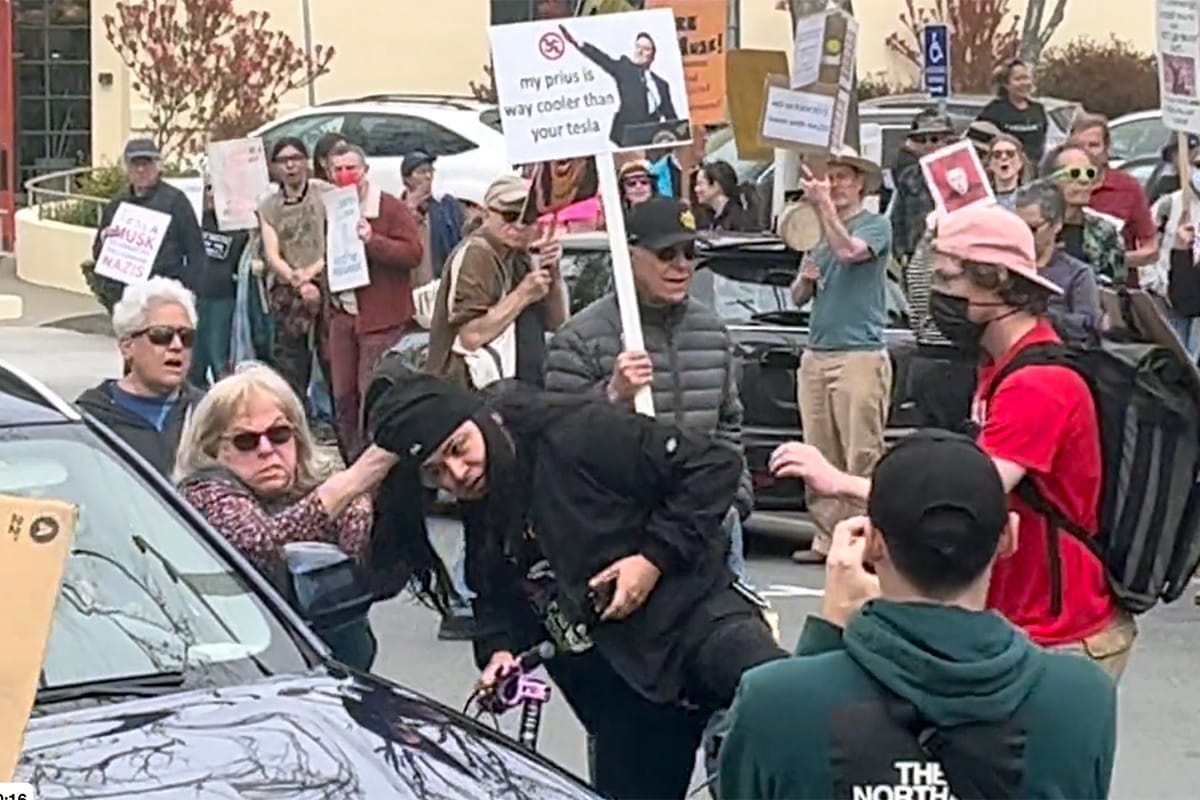
Video that quickly went viral showed the Trump supporter — Ricardo Ruiz — jabbing a stun gun toward several people outside the Berkeley Tesla showroom on Fourth Street.
In response, the older woman seized Ruiz by the hair and ripped him off his bike, an attempt, she testified this week, to get him to drop the weapon.
Scroll down for an update to the story.
Through his attorney, Amber Vincent, Ruiz has argued that he pulled the stun gun in self-defense after several protesters surrounded him and shouted at him to leave the area.
According to court testimony, Ruiz had been the lone counter-protester in the crowd that day, March 22, 2025.
During the event, he elected to express himself by riding back and forth through the demonstration while blasting music to disrupt it, according to testimony.
It wasn't his first attempt to cause a stir.
On his YouTube channel, Ruiz documented numerous attempts last year to "troll" Berkeley protests — often provoking a response.
Those activities came to an abrupt end in April when police shot Ruiz while investigating a domestic violence report at his Berkeley home.
He's been in custody ever since facing separate felony charges.
 Emilie Raguso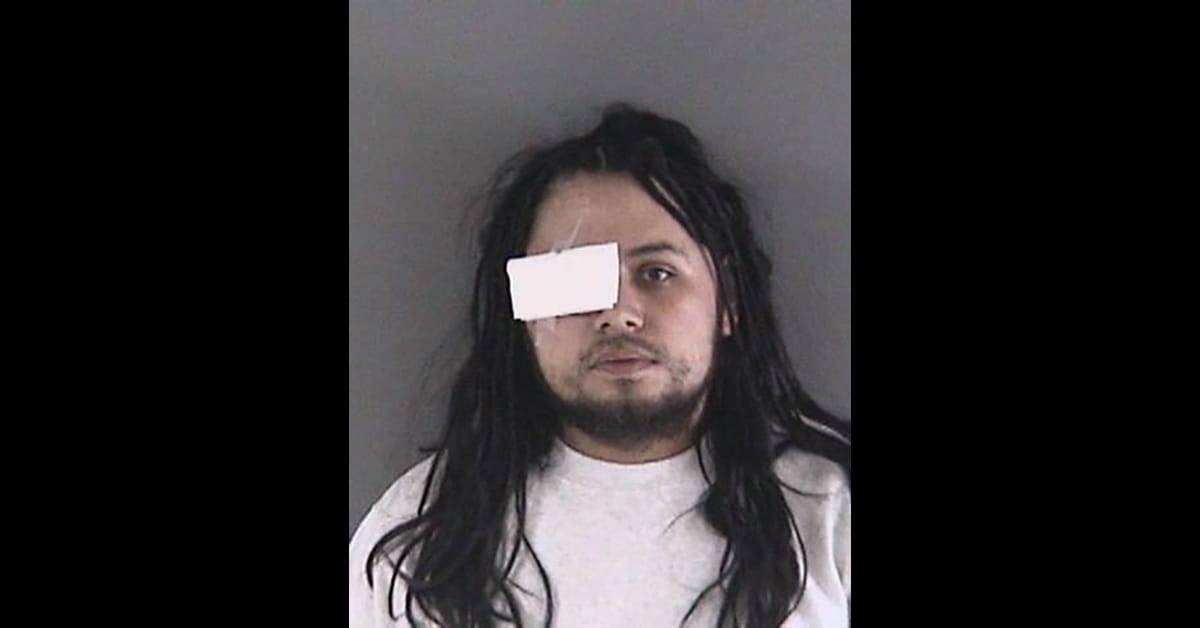
Ruiz's arrest during the Tesla protest sparked national interest due to the broader political context along with dramatic bystander video (first published by The Scanner) in which many online commenters focused on the much older woman's apparent domination of Ruiz before police swooped in to arrest him.
In the end, the case resulted in a single misdemeanor assault charge with a maximum potential sentence of 180 days.
This week, The Scanner sat in on the proceedings as attorneys argued forcefully before Judge Pelayo Llamas about all aspects of the case.
Jury selection too proceeded slowly, with questions about prior protest activity, the weight they would give to police testimony and whether jurors could be impartial when passing judgment on a defendant of a different political persuasion.
Once those matters were decided, the pace picked up. Opening statements began Wednesday morning followed by two days of evidence in the case.
Closing arguments took place Friday and deliberations then kicked off.
The prosecution's case featured testimony by two of the protesters — Susan Kegeles and James Richardson — along with a Berkeley police officer who worked the protest and an investigator from the DA's office.
Ruiz ultimately declined to testify, though at one point it seemed to be a possibility. The defense ultimately put on no witnesses.
During opening statements, prosecutor Lily Sinclair argued that Ruiz had "made a series of choices that turned a peaceful demonstration into a moment of fear."
"In that moment of fear," Sinclair told the jury, Kegeles "chose to fight."
"Not because she wanted conflict, but because someone had just brought a stun gun into a peaceful protest," she said.
 Emilie Raguso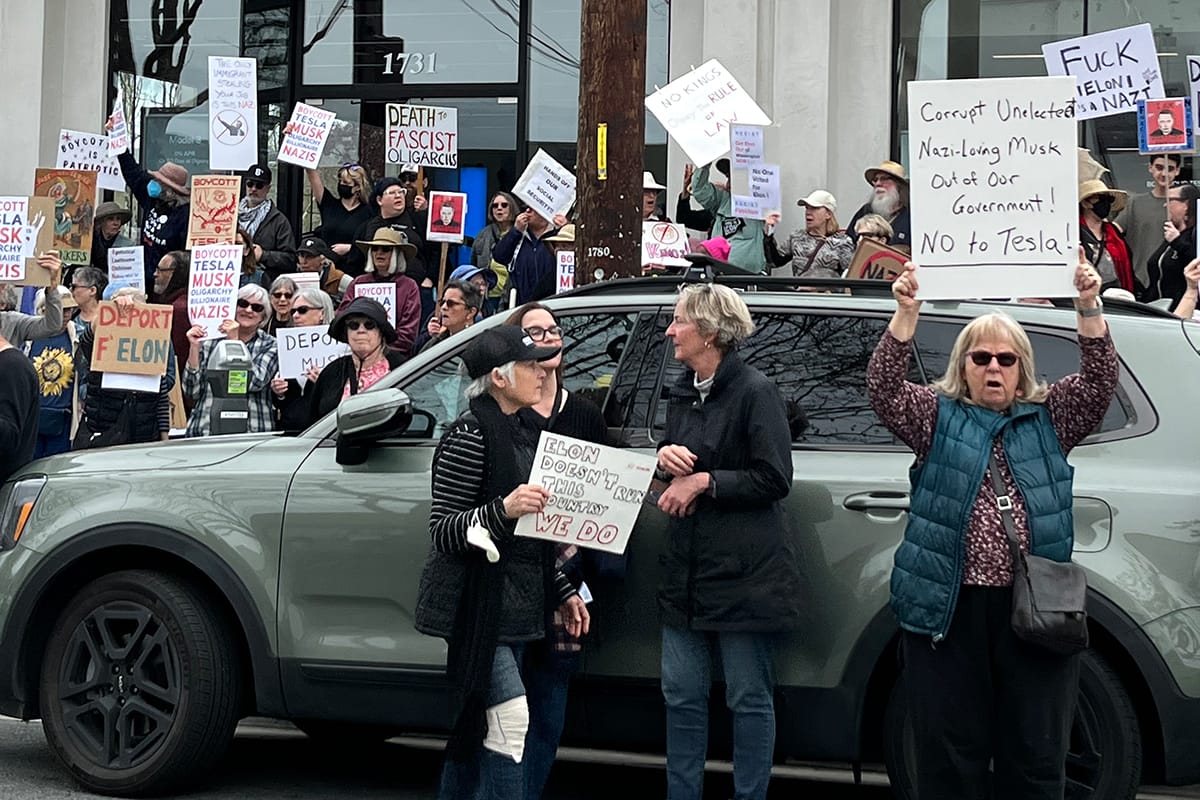
Defense attorney Vincent, with the public defender's office, took a different tack.
She said Ruiz was simply defending himself when he found himself surrounded by opponents.
She said, yes, Ruiz had been riding through the protest — but in a public street — "playing music that the protesters there found annoying."
But his conduct, she went on, while perhaps irritating was "perfectly legal."
"He didn't injure anyone," she said. "He didn't touch anyone."
"The irony in all of this is that everybody wants their voice heard," Vincent told the jury. "But, if your voice is in the minority opinion like Mr. Ruiz's was that day… well, that's not OK. That's unwelcome. And people can take action against you to silence you."
 Emilie Raguso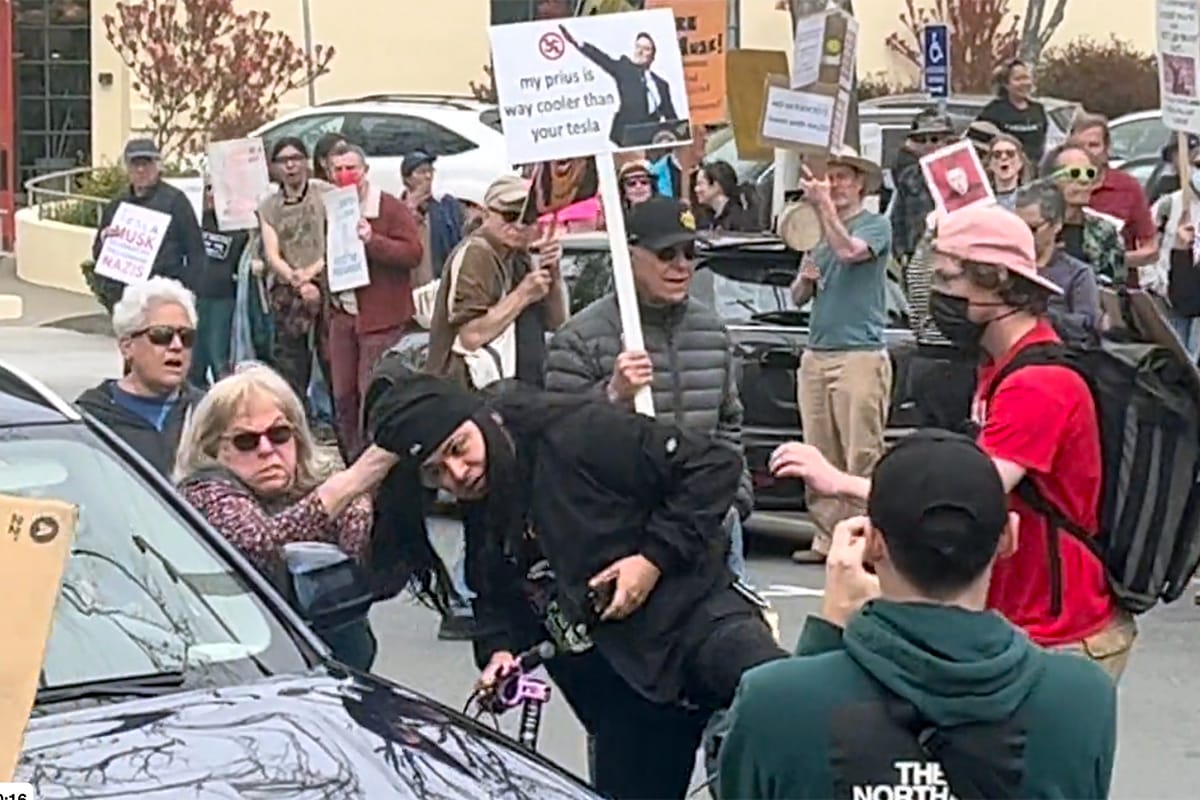
Unsurprisingly, each attorney argued their own version of the same events.
According to the prosecution, Ruiz rode up to protesters on his bike and made no attempt to de-escalate the situation or remove himself before pulling out his stun gun and activating it in their faces.
The defense said the protesters provoked the conflict by blocking Ruiz, shouting at him and demanding that he leave the area.
One of those protesters, James Richardson, admitted he had repeatedly pursued Ruiz in the street to "annoy him into leaving" — even before the situation with the stun gun erupted.
"Mr. Richardson did not want Mr. Ruiz there — and he was making that clear," Vincent told the jury.
Both attorneys played a brief portion of the same high-definition bystander video, filmed by A. Mark Liiv — arguing that it helped prove their case.
"Watch it intently," Vincent said. "Watch every second of this interaction. Because every second of this interaction matters."
The first witness to take the stand was Susan Kegeles, 72, a longtime Berkeley activist and retired UCSF professor.
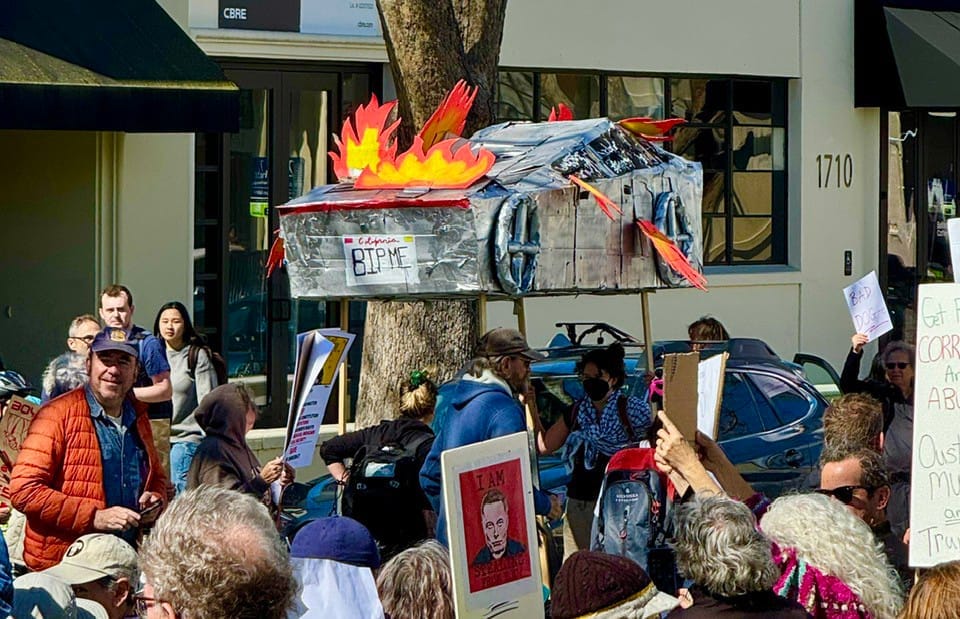
Aside from Ruiz, Kegeles testified, the "Tesla Takedown" event that day had started out peacefully, with people chanting and singing on both sides of Fourth Street. Drivers passing through the area honked in support.
The demonstration sometimes spilled into the roadway due to the size of the crowd.
Not long after she arrived, Kegeles said, she noticed a man biking through the crowd "making a lot of noise."
From what she saw, she added, he caused multiple people to fall off their bikes as a result.
"I saw people sort of yelling at him and being bothered by him," she said. "He was clearly in opposition to the demonstration."
At a certain point, she saw several people trying to talk with Ruiz. That's when she decided to get involved and joined them.
"I wanted him to hear what they had to say instead of just bicycling right off," she said.
Kegeles said she never planned to get into an argument with Ruiz, and never said anything to him.
As others nearby shouted at him, however, he pulled out what she thought was a Taser and shoved it in her face.
"It was flashing and sparking," she said. Frightened, she stepped back. "I thought I was in real danger at that moment."
Kegeles said she didn't know much about Tasers or stun guns but believed they could result in unconsciousness and potential head injury.
After Ruiz shoved the activated stun gun at her, she said, he poked it at two other people.
She quickly assessed the situation, grabbing his long dark hair and yanking him off his bike.
"I was trying to dislodge this weapon from him," she said. "I wanted to pull him off so he couldn't do it again."
Prosecutor Sinclair asked Kegeles if the "fight or flight" instinct had kicked in. Kegeles said it had.
"I felt like I needed to fight," she said. "I thought he could do something with the Tase gun to really harm me."
Jury deliberations resume Monday.
Update, Feb. 9: On Monday shortly before noon, the jury came back with a not guilty verdict for Ricardo Ruiz, who had been charged with misdemeanor assault after "trolling" protesters at a Tesla Takedown event last year.
Jurors said they found his self-defense argument credible.
Ruiz remains in custody at Santa Rita Jail in connection with charges stemming from a separate domestic violence report in Berkeley last year.